Barracks Lifesaver Field-True First Aid Manual - Yellow Cover
13 sold in last 24 hours
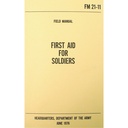
August heat, metal bleachers, a Friday night scrimmage on a small-town field. When a bad cut or busted ankle shows up, this reprint Army first aid manual gives you calm, step‑by‑step help instead of guesswork. Clear 1976 field-tested guidance on bleeding, burns, and shock in a high‑visibility yellow cover that won’t disappear in a truck cab, range bag, or aid kit. It’s the kind of quiet insurance Texans keep close, then hand down.
Field Proven First Aid for Real Texas Emergencies
A pickup bed will pass for an aid station often enough in this state. A ranch road mishap outside Sonora, an axle giving way on I‑35, a busted hand at a weld shop in Pasadena—the first few minutes decide how bad the story gets. That’s where this Barracks Lifesaver Field-True First Aid Manual earns its spot. It’s an authentic reprint of the U.S. Army’s 1976 “First Aid for Soldiers” field manual, written for the kind of days when help is far off and the dust is already in your teeth.
The yellow cover isn’t decoration. It’s easy to see on a cluttered workbench, the floorboard of a high-mileage F‑250, or next to a med kit in a deer blind. Inside, you get straight, no-nonsense instructions: stopping bleeding, handling shock, bandaging wounds, dealing with burns, and moving injured people without making things worse. It was built for barracks and battlefields, but it reads just as clean in a barn aisle or at a Hill Country lease.
Why This Manual Belongs Beside Any Texas OTF Knife
In a state where an OTF knife Texas buyers carry might open feed sacks one minute and cut a seatbelt the next, blade and book go together. One handles the cut. The other handles what comes after. This softcover field manual slips into the same truck console, range bag, or go-bag where you already keep a Texas OTF knife, tourniquet, and tape.
The Army laid it out for soldiers who might be bleeding, tired, and worried when they crack it open. Big headings, plain language, and step-by-step diagrams walk you through what to do on the side of a Farm-to-Market road or at a hog lease two pastures from the gate. No fluff, no theory—just actions you can follow under stress until EMS makes it through the gate or down the caliche road.
Texas Ground, Texas Distance, and First Aid That Keeps Up
Out past Fort Stockton, between Karnes City pads, or across the Panhandle, distance is its own problem. You may be forty-five minutes from a clinic on a good day, and that’s before weather or traffic. This yellow manual is built for that kind of space. Every section assumes you might be the only one standing who remembers what they read.
It covers the basics Texans actually face: deep cuts from barbed wire or sheet metal, burns from a slipped cutting torch or hot exhaust, heat issues on August job sites, and the kind of blunt-force injuries that happen when livestock kick or equipment shifts. It won’t turn you into a medic, but it will keep you from making common mistakes—like moving a neck injury wrong or ignoring shock until it’s too late.
How Texas Buyers Pair a Texas OTF Knife and First Aid Manual
When Texans look to buy OTF knife Texas style, they’re thinking about fast access and hard use. The same mindset applies to this book. It’s not something you shelve and admire; it’s something you dog-ear and keep where sweat and dust might hit it.
The softcover binding flexes when you cram it into a door pocket or the side pouch of a range bag. The minimalist, black-on-yellow design means you can flip to what you need under a flashlight in the barn or in dim parking-lot light after a game. It becomes part of the same everyday system: knife, light, tourniquet, manual. Gear that fits how Texans actually live, drive, and work.
Texas First Aid and Texas Law: What Matters When Seconds Count
How First Aid Complements Texas Knife Carry Culture
Texas knife laws opened up wide—automatic knives, OTFs, and even full-size blades are legal for most adults as long as you respect restricted locations and the 5.5-inch rule where it applies. The result is simple: more Texans than ever carry serious cutting tools every day. When the blade side of that culture grows, the responsibility side has to grow right along with it.
This manual is part of that balance. The same person who checks whether OTF knives are legal in their city, who knows where they can and can’t carry in a school or courthouse, can just as easily take ten minutes and learn how to stop a heavy bleed or treat a burn correctly. That’s the quiet difference between someone who just likes sharp things and someone who’s actually prepared.
Training for Texas Ranges, Rigs, and Rodeos
Shooting ranges outside San Antonio, lease roads outside Lufkin, county fairs in Gonzales—anywhere there’s livestock, firearms, tools, and heat, there’s room for injury. This reprint makes it simple to run basic first aid refreshers for a ranch crew, a 4H group, or a church security team without chasing down new theory every year.
Because it’s standardized Army content, you can mark sections for the scenarios you’re most likely to see in your part of the state. Out west, you might flag heat and dehydration. On the coast, you might highlight cuts, punctures, and transport. Dallas and Houston crews might focus on vehicle incidents and workplace injuries. Same book, tailored to your Texas reality.
Questions Texas Buyers Ask About OTF Knife Texas Gear and First Aid
Are OTF knives legal to carry in Texas?
Yes. Under current Texas law, OTF knives and other switchblades are legal to own and carry for most adults. The main statewide limit is on blades over 5.5 inches, which are classified as “location-restricted knives” and can’t be carried in certain places like schools, polling locations, and secured areas of airports. Cities can’t outlaw OTFs outright, but you’re still responsible for knowing where you’re walking in with one—and for what you’ll do if that blade ever draws blood by accident.
How does this manual fit into a Texas truck, range bag, or kit?
The slim, softcover build rides flat behind a truck seat, inside a glove box, or in the map pocket of a door without bulking things up. In a range bag, it tucks alongside ear pro and ammo, ready to grab if someone catches a hot casing or trips over a bench. In a ranch or rig med kit, that yellow cover shows up fast under dust, oil, or loose tape when nerves are already high.
Why this manual over a glossy modern first aid book?
Most glossy books are written to look good on a coffee table. This was written to live in a barracks footlocker and on the hood of a truck during field exercises. The 1976 Army content is blunt, field-tested, and set up for people who might be tired, scared, or untrained when they open it. For Texans who work, drive, and hunt far from instant help, that kind of clarity beats full-color padding every time.
From Barracks Standard to Texas Standard
Picture a storm-spooked steer punching through a fence on a place outside Vernon. You’ve got a torn forearm, a rattled crew, and one bar of service. The OTF knife on your belt got the shirt cut away clean. The Barracks Lifesaver manual in your truck walks you through the rest in plain steps: control bleeding, calm them down, keep them breathing right, get them moving only when it’s safe.
Same story in a Houston shop when a grinder jumps, or at a Hill Country campsite when someone takes a bad fall on rock. This little yellow book doesn’t shout, doesn’t brag, and doesn’t care where you bought your gear. It just sits there, waiting for the day a Texan cracks it open with bloody hands and finds something worth more than all the fancy packaging in the world: clear, calm instructions that work on Texas dirt.