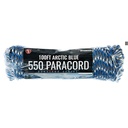
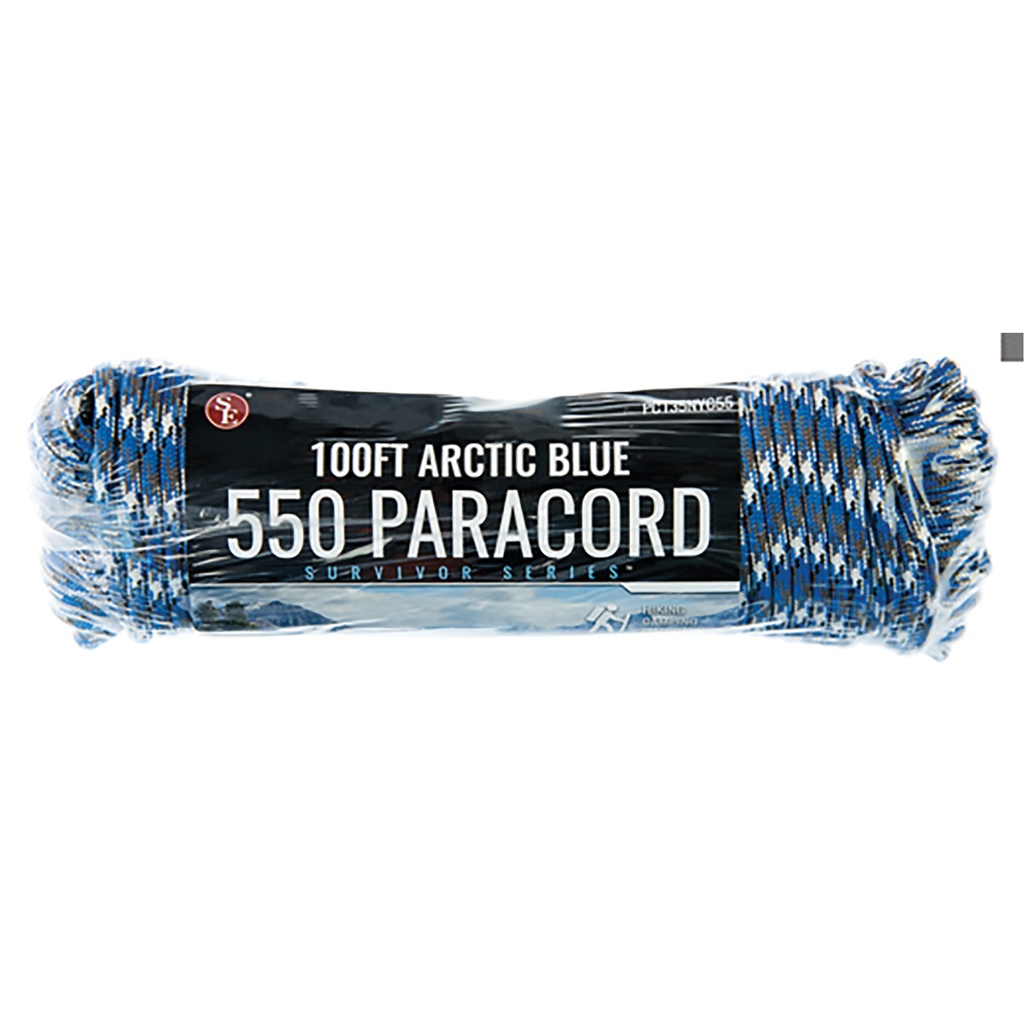
Blue Norther 7-Strand Survival Cordage - Arctic Camo
14 sold in last 24 hours
A blue norther can drop the temperature forty degrees between Abilene and Albany, and this 550 paracord is built for that kind of swing. The Arctic camo weave stays visible against frost, dirt, or limestone. Seven nylon strands, 100 feet long, 220-pound working load—strong enough for tarps, gear lash, or a bootlace fix at camp. It knots clean, holds tight, and rides easy in a truck kit or pack. This is the cord Texans reach for when the weather turns fast.
When a Blue Norther Finds You Halfway Between Towns
Out on a lease road north of Coleman, the sky can go from washed-out blue to gunmetal in an hour. One minute you're glassing mesquite draws, the next you're tying down gear before the wind slams the gate. That's where a hundred feet of reliable survival cordage earns its keep. This Arctic camo 550 line isn't for craft tables or keychains. It's for the nights when a front hits harder than the forecast and you still have fence, tarps, and camp to secure.
The blue, white, gray, and black pattern stays visible against frost-dusted grass, caliche, or the bed of a white work truck. Seven inner strands give the 5/32-inch diameter some real bite, with a 220-pound working load and a 550-pound break strength that means you can trust it when the wind starts testing knots. It feeds smooth through gloved hands, cinches down tight, and doesn't fight you when it's time to untie.
Survival Paracord That Makes Sense in Texas Country
Most cord looks the same hanging on a pegboard in an air-conditioned store. Out past the last stoplight, differences show up quick. This 7-strand survival cordage was built for the way Texans actually use line: stretched between cedar posts, run through eyelets on an old canvas tarp, or pulled from a truck kit when somebody's gear finally gives up.
At 100 feet, it's enough to run a solid camp in the Hill Country—ridgeline for a rainfly, guy lines for a tent, and spare length for hanging game away from the creek. The 5/32-inch nylon sheath stays supple even when the temperature drops on a Panhandle deer hunt. It doesn't turn into wiry plastic the first time it sees a hard freeze. And because it's a true 550 paracord with seven core strands, you've got options when things go sideways: strip the outer sheath and you suddenly have multiple lengths of finer line for snares, gear repair, or stitching a torn pack strap in the field.
Texas-Ready Cordage for Camp, Ranch, and Road
Ask anyone who keeps miles under their tires between Fort Stockton and Alpine—cord is either a toy or a tool. This Arctic camo survival cord falls squarely in tool territory. The 220-pound working load gives you honest capacity for real tasks: securing a load of cedar posts, guying out a shade tarp at a hot West Texas campsite, or lashing a cooler when the ranch road turns into a washboard.
On the Gulf Coast, salt air and humidity test cheap nylon. Here, the dense outer weave helps shed moisture and grit, so it doesn't turn fuzzy and weak after a few weekends on the bay. Run it from a boat cleat to a makeshift stake on the bank, and it holds. Tie off a kayak, rig a stringer, or run a clothesline at a beach camp—same cord, no drama.
In the Piney Woods, it threads through hammock hardware and tent loops without fraying, making it an easy upgrade from stock guy lines that slip in the first real storm. In the Big Bend backcountry, that same 100-foot hank becomes a bear-bag line, a backup bootlace, and a way to rig a windbreak between scrub and rock. One length, dozens of uses, all of them rooted in the way Texans actually camp and work.
How This Survival Paracord Fits Texas Everyday Carry Culture
Texans talk a lot about what rides on the belt or in the pocket, but the quiet gear in the truck bed and pack matters just as much. A bundle of 550 survival cordage like this doesn't draw attention; it just sits behind the seat, waiting for the day someone's tie-down fails on 281 or a gate chain finally parts ways with its weld.
Paracord isn't bound up in Texas knife laws or carry restrictions. It lives in glove boxes, saddle bags, bug-out bags, and tackle boxes without a second thought. Toss a hundred feet of this Arctic camo line into a suburban SUV in Round Rock or a ranch truck outside San Angelo, and the role is the same: backup when store-bought straps, brittle twine, or sun-rotted bungee cords let you down.
For hunters, it pairs naturally with a good Texas OTF knife in the field. That knife handles the cutting; this cord handles the hauling, hanging, and securing. You cut a length clean, melt the ends with a lighter, and it stays put in a pocket or pack, ready for the next use.
Texas Conditions Demand Honest Specs, Not Hype
When somebody walks into a shop off I-35 asking for paracord, they don't want catchphrases. They want numbers and what those numbers mean out here. This line runs a full 100 feet, so you're not stuck splicing short pieces together when a real job shows up. The 5/32-inch (roughly 0.156-inch) diameter hits a sweet spot: thick enough to bite into itself and hold knots, slim enough to tie with cold fingers or gloves when a front blows across the Panhandle.
The seven-strand nylon core is the heart of true 550 cord. Each inner strand can be pulled for finer work—improvised fishing line on a stock tank, emergency stitching on a torn jacket in the Davis Mountains, or tying on a new trailer-light bracket in a hardware parking lot when you don't want to lose another evening to electrical tape.
The 220-pound working load is a promise about how much you can reasonably ask from this cord, day in and day out. The 550-pound break strength is the last line of defense, the point you hope never to reach but are glad exists when you're towing a stray gate panel off a county road and need every bit of strength the line can offer.
Questions Texas Buyers Ask About Survival Paracord
Are OTF knives legal to carry in Texas?
Yes. Under current Texas law, OTF knives and other automatic knives are legal to own, carry, and use for most adults. The old switchblade restrictions are gone. The main limits today are around "location-restricted" knives—those with blades over 5.5 inches—in specific places like schools, certain government buildings, and some events. Most Texas OTF knife blades fall under that length, and paracord like this isn't restricted at all, which is why you see it riding in so many Texas trucks and packs.
How does this survival paracord hold up in Texas heat and sudden cold snaps?
Texas doesn't do mild changes. It does full swings: blistering sun in August, wet chill on a January stock check, blue norther in November. The nylon construction of this survival paracord handles that push and pull. It won't crumble the first summer it's left in a truck bed, and it stays workable when a cold front drops temperatures fast. You may see some normal surface wear over time, but the 7-strand core and 550 rating are built for repeated use in this kind of climate.
Is this 100-foot bundle enough for my Texas hunting and camping kit?
For most Texas hunters and campers, a single 100-foot hank is the right starting point. It's enough to run a ridgeline between oak trees at a Hill Country campsite, hang quarters in a Panhandle windbreak, stake out extra guy lines in a thunderstorm, and still have spare line for quick fixes—a broken pack strap, a loose tailgate latch, or a makeshift bowline on an ice chest. If you're running big group camps or long backcountry trips in places like Big Bend, many Texans keep two bundles: one for camp duties, one reserved for emergencies.
Where This Cord Really Belongs
Picture a cold morning outside Junction. Breath hangs in the air, and the post oak leaves are still. You've got a canvas tarp half-secured over gear in the truck bed, a front creeping in from the north, and a long drive on two-lane roads ahead. You reach behind the seat, pull out this Arctic camo survival paracord, and start running clean, tight lines—no frays, no guesswork, just solid knots biting into good nylon.
By the time the wind hits, everything's lashed down and you're already rolling toward town. That's how this cord is meant to live: in the background, in the truck, in the pack. Quiet, ready, and proven the first time Texas decides to change the weather on you mid-day.