BrushLine Sawback Field Knife - Coyote Rubber
5 sold in last 24 hours
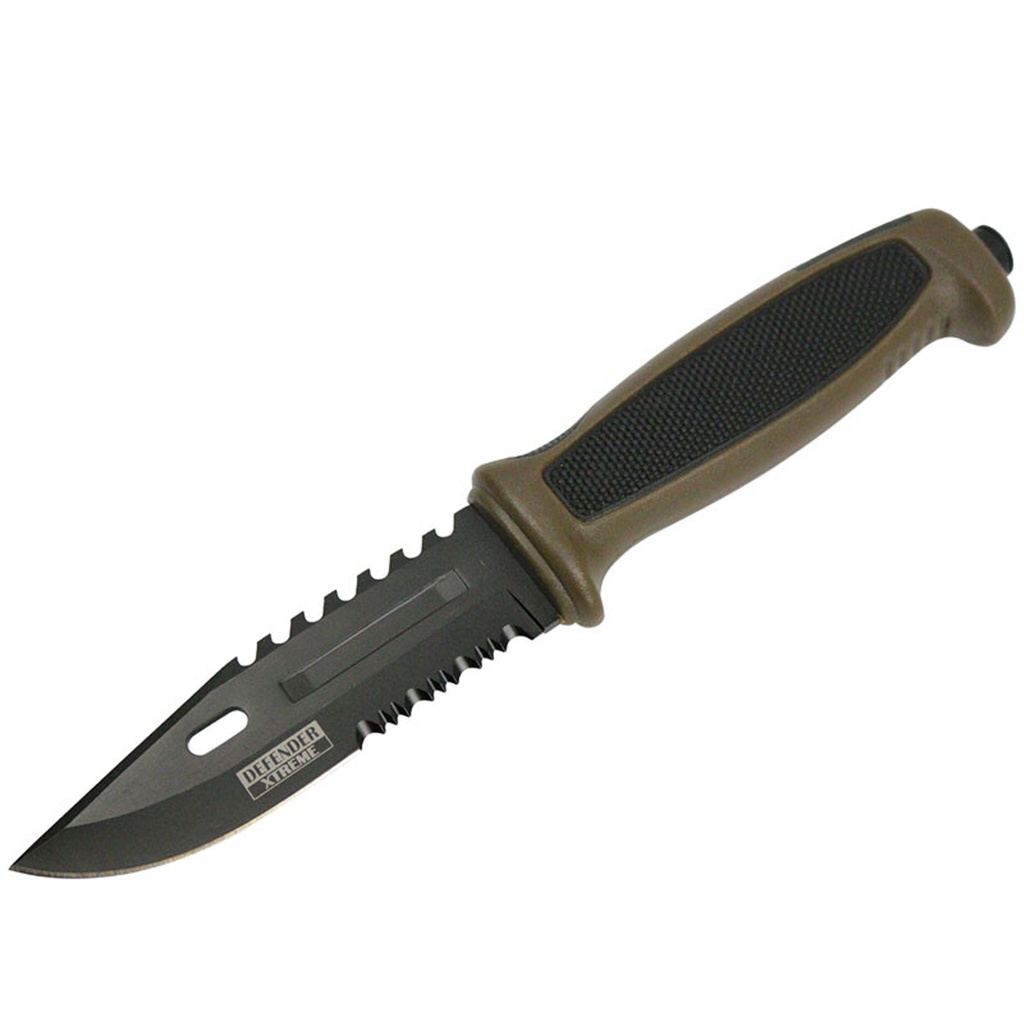
South of San Angelo, in mesquite and prickly pear, this fixed blade earns its keep. The 4.5-inch black drop point bites clean, while the sawback and lower serrations chew through brush, bone, and rope. A coyote rubber grip stays put when your hands are wet, and the exposed pommel gives you a field-ready striker. This is the knife that rides in the truck door and on the belt—part hunting blade, part ranch tool.
BrushLine Sawback Field Knife in Real Texas Country
Out past the last gas station, where the road turns to caliche and mesquite starts leaning over the fence line, this is the kind of knife that actually gets used. The black 4.5-inch drop point rides light but works heavy, built for the mix of hunting and ranch chores that fill a long day outside town.
You feel the intent as soon as you pick it up. A full 9.5 inches overall, with a matte black blade and coyote rubber handle that fits a gloved hand, it isn’t a showpiece. It’s the knife that rides in the truck console, gets hauled into deer camp, and lives on a belt when you’re checking fence or easing through a cedar thicket before first light.
Why This Fixed Blade Works Where Texans Actually Hunt
Deer in the Hill Country, hogs along the river bottoms, rattlesnakes where the rock starts showing through—the work changes, but the tool stays the same. The drop point gives you control when you’re working inside a rib cage or along a joint. It’s long enough to matter at 4.5 inches, short enough to stay nimble in tight brush or a crowded blind.
The lower partial serrations near the handle chew through tough stuff: sun-hardened rope on an old gate, heavy nylon straps, roadside brush that needs clearing when a storm drops a limb. Up top, the sawback teeth earn their keep on small limbs for a ground blind, cutting notches, or working through light scrub without reaching for a separate saw.
Coyote-colored rubber on the handle doesn’t slip when your hands are bloody, sweaty, or slick with rain. Textured black inset panels lock your grip without biting your palm, and the integrated guard keeps your fingers from sliding forward when you bear down to pry, twist, or punch through tough hide.
Texas Carry Reality for a Hunting Fixed Blade
Across the state, from pine leases in the east to wind-scoured leases near Ozona, a fixed blade like this usually rides three places: on a belt, in a boot, or stuffed between the seat and console in a truck. At 9.5 inches overall it’s big enough to trust but not so long it catches on everything when you climb into a stand or swing a leg over a fence.
The non-reflective matte black blade keeps glare down when the sun comes low and sideways, and the low-profile coyote handle doesn’t shout for attention if you’re in town after the hunt grabbing fuel or a late plate of enchiladas. It’s the kind of fixed hunting knife Texans accept as part of a day’s work, not a costume piece.
How This Blade Handles Texas Conditions
This is straight steel made for use, not pampering. It’ll take an edge easily on a basic stone in deer camp or on the tailgate. The drop point profile keeps the tip strong enough for light prying and general abuse without feeling bulky when you’re feathering kindling or trimming back a stubborn bit of hide.
Between the clean edge, serrations, and sawback, you’re covered across the usual Texas mix: trimming mesquite branches around a feeder, breaking down a hog in sticky heat, cutting baling twine with cold fingers in a north wind. The exposed metal pommel at the butt gives you a striker when you need to crack ice out of a stock tank edge, tap a stuck latch, or break a window in a roadside emergency.
Rubber on the handle does its best work in the kind of weather we actually get—humid coastal air, dusty Panhandle gusts, sudden hillstorm downpours. When everything else is slick or gritty, that grip still feels planted, not pretty.
Knife Laws, Fixed Blades, and Texas Hunters
Texas law is direct about knives. The focus is on blade length, not whether it folds or stays fixed. This hunting knife comes in with a 4.5-inch blade, under the 5.5-inch line that separates everyday-legal carry from location-limited “location-restricted knife” territory under state law.
Why Blade Length Matters in Town and Out
Out on a lease, at camp, or moving around your own place, this size blade doesn’t draw a second glance. In town, staying under that 5.5-inch threshold means you have far fewer restrictions on where you can legally carry it under Texas knife statutes. It’s still on you to know the rules for schools, certain government buildings, and secured areas, but in a truck, on your own land, or heading to and from a hunt, this length keeps life simple.
Fixed Blade Confidence in Texas Country
Many Texans still trust a fixed hunting knife over any folder when animals are on the ground and words like tendon, joint, and brisket start coming into play. No moving parts to clog with grit, no hinges to fail when you twist. You draw it, use it, wipe it down, and it’s ready for the next run down that two-lane blacktop.
Questions Texas Buyers Ask About Hunting Knives
Are OTF knives legal to carry in Texas?
Under current Texas law, what used to be called switchblades and most automatic and OTF knives are legal to own and carry, as long as you respect the general blade-length rules and the list of restricted locations. Texas law doesn’t single out OTFs for a ban anymore. The real dividing line is whether your blade is over 5.5 inches, which triggers “location-restricted knife” rules. This fixed hunting knife, with its 4.5-inch blade, sits under that cutoff.
Is this hunting knife a good fit for Texas hog and deer work?
Yes. The drop point gives you control for field dressing and skinning, while the serrations and sawback cover campsite and ranch chores. It’s sized right for whitetail and most hog work across the state—big enough for clean cuts and bone work, compact enough to stay manageable in thick brush and cramped blinds.
How should I carry this fixed blade between town and the lease?
Most Texans keep a knife like this in the truck, on a belt once they hit ranch roads, or stowed with their hunting gear. The sub-5.5-inch blade helps keep you within the broad legal comfort zone, but if you’re heading into schools, courthouses, or secured facilities, leave it in the vehicle. For normal runs from house to lease, gas stops, and feed stores, this is a practical, low-profile hunter’s companion.
Where This Knife Belongs in Your Texas Day
Picture easing down a rutted lease road outside Junction as the last light leaks out of the sky. The feeder’s jammed, there’s brush hanging low over the trail, and you’ve still got a hog to quarter before the drive back to town. This fixed blade comes out of the truck door, cuts, saws, pries, and punches through the work without fuss. By the time you wash it off under a hose behind the barn or at the camp spigot, it feels less like new gear and more like something that’s simply part of how you get things done here.
| Blade Length (inches) | 4.5 |
| Overall Length (inches) | 9.5 |
| Blade Color | Black |
| Blade Finish | Matte |
| Blade Style | Drop Point |
| Blade Edge | Partial-Serrated |
| Blade Material | Steel |
| Handle Finish | Textured |
| Handle Material | Rubber |
| Theme | Tactical |
| Handle Length (inches) | 5 |
| Pommel/Butt Cap | Exposed pommel |