Campfire Mosaic Heritage Hunting Knife - Red Bone Damascus
7 sold in last 24 hours
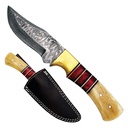
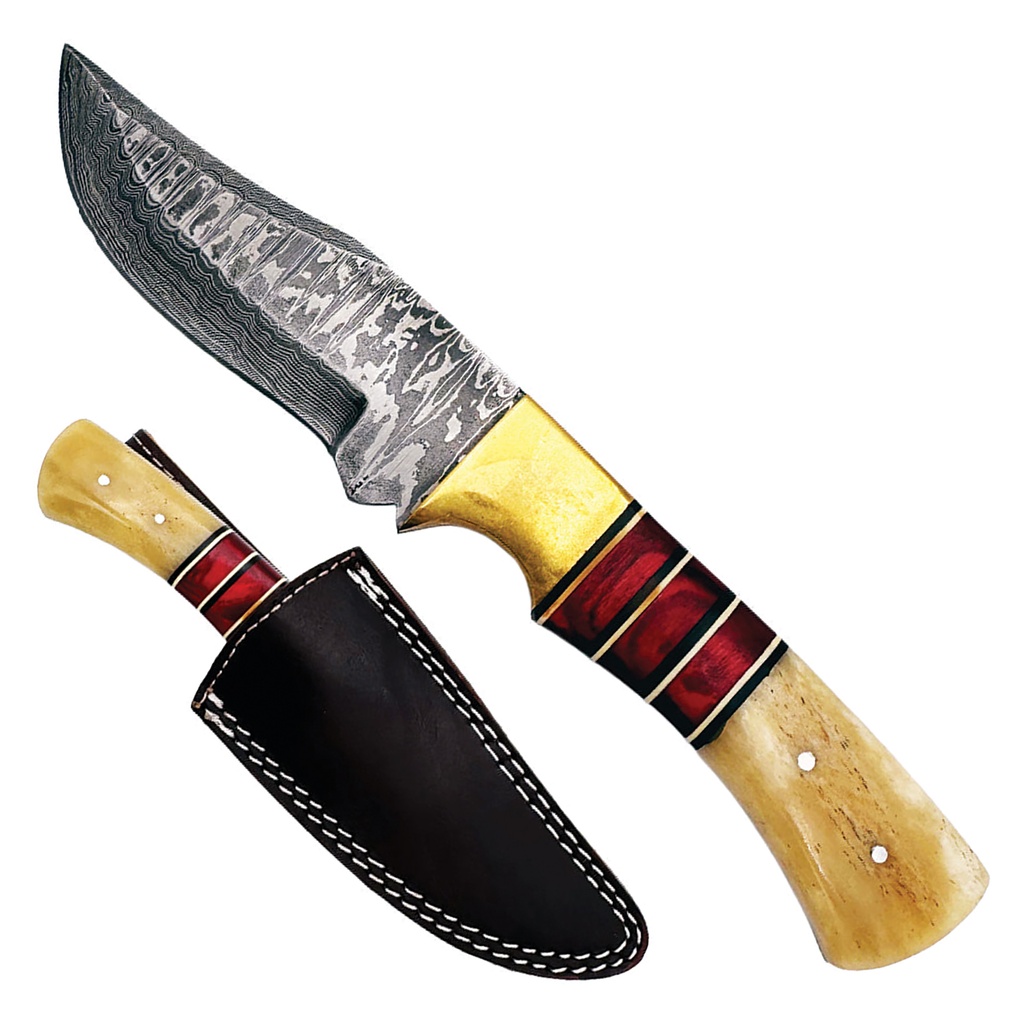
Edge of legal light in a mesquite flat, hog already down and the work just starting. This Damascus hunting knife runs a 4.5-inch clip point on a full tang, with red wood, bone, and brass that lock into your grip. At 9 inches overall with a leather belt sheath, it’s sized right for Texas game, camp chores, and years of seasons. The kind of blade that looks like it’s been on your belt for decades, even the first time you draw it.
Heritage Steel for Real Work in the Field
Dust on your boots, sun dropping behind a brush line, and a whitetail hanging from the gambrel. That’s where this Damascus hunting knife belongs—on a belt that’s seen more seasons than most folks have patience for. At 9 inches overall with a 4.5-inch clip-point blade, it’s built for the kind of field work Texans do without talking much about it.
The pattern-welded Damascus catches the last light while you open up a rib cage or work along a ham. Full-tang steel runs straight through the handle, so every cut feels anchored. Red wood and natural bone scales, broken up with brass, settle into your palm like a tool you’ve owned for years, not minutes.
Why This Fixed Blade Belongs on a Texas Belt
Across deer leases in the Hill Country, hog country creek bottoms, and mesquite-choked pastures, hunters reach for one thing when it’s time to work: a steady fixed blade that doesn’t quit halfway through a job. This knife was built for that reality.
The 4.5-inch clip-point Damascus blade walks a smart line—long enough to dress a South Texas boar or a Panhandle buck, compact enough to choke up on when you’re working around joints or trimming backstrap at a tailgate table. At 14 ounces, it has enough weight to help the edge bite through hide and gristle, but not so much it drags your belt down during a long walk to the stand.
The leather sheath rides clean on a standard belt, tucking in where it won’t snag on blind ladders, barbed wire, or cedar. You draw once, work until the job is done, then slide it back home in leather that’ll darken and soften with every season.
Clip-Point Damascus Built for Texas Game
Out here, blades don’t get babied. They ride through dust, sweat, and a truck cab that bakes all day in August. Damascus steel earns its place by how it cuts and holds that edge when the work gets long.
The clip-point profile gives you a fine tip for clean work around the brisket and shoulders, while the belly handles most of the skinning. The plain edge lets you strop it back to sharp on a truck-bed stone or a piece of leather nailed to a barn post. Pattern-welded steel isn’t for show—it spreads the workload across layers, giving you a mix of toughness and bite that stands up to bone contact and coarse hair.
From coastal marsh duck camps to high-fence ranches west of San Antonio, this isn’t a glass-case knife. It’s the one you wipe on your pant leg, rinse in a jug of water, and reach for again after the fire’s burned down to coals.
Handle and Sheath Made for Texas Hands
The handle tells you what this knife is meant for before you ever cut a thing. Red wood and bone, spaced with brass, aren’t there to dress it up for a catalog photo. They give you tactile reference points when your hands are slick or cold.
The curves lock into the web of your thumb, keeping the knife seated when you’re pulling hide toward you or pushing through tough connective tissue. Two pins lock the rear bone in place, with the brass bolster up front taking the brunt of the work when you choke up. The polished finish wipes clean easily—blood, fat, and dust come off with a rag and a little oil.
The dark brown leather sheath, stitched in contrast, carries straight and honest. Slide it on your belt before daylight, forget about it until you need it, and it’ll be right where you left it when the shot breaks and the real work starts.
Texas Knife Law, Fixed Blades, and Field Carry
Plenty of buyers quietly wonder if a hunting knife like this rides clean under Texas law. The short answer: yes, it does—if you carry it like a tool, not a stunt.
How Fixed Blades Fit Texas Carry Reality
Texas law removed old switchblade restrictions and opened the door for a wide range of blades, but fixed knives have always lived where ranch work and hunting live: on the belt, in the truck, or in camp. This knife’s 4.5-inch blade sits well under the thresholds most Texans think about when they worry they’ve gone too far.
Walk into a feed store, processor, or small-town hardware shop with this riding in a leather sheath on your hip, and you won’t turn a head. It reads as what it is—a hunting and camp knife, not a street piece. That quiet legality matters when you’re moving from lease to diner to home in the same long day.
Where This Knife Makes the Most Sense
This blade belongs on rural land, hunting leases, and working properties—places where cutting rope, breaking down game, and camp chores are part of the day. It’s as at home in a Hill Country deer camp as it is in East Texas pine country during squirrel season. In town, it rides easier in the truck console or glove box, where it’s still ready to work but not hanging in plain view where it doesn’t need to be.
Questions Texas Buyers Ask About Hunting Knives
Are OTF knives legal to carry in Texas?
Yes. Texas law removed the old ban on automatic and out-the-front knives, so an OTF knife is legal to own and carry for most adults, much like this fixed-blade hunter. The main lines you can’t cross involve restricted places—schools, certain government buildings, and a few other locations with posted rules. Outside of that, both an OTF knife and a traditional fixed blade like this ride on the right side of Texas law when carried as tools.
Is this Damascus hunting knife sized right for Texas game?
A 4.5-inch clip-point blade hits the sweet spot for the kind of game most Texans see—whitetail, hogs, exotics, and the odd turkey or small game. It’s long enough to open up a big boar without fighting for reach, but compact enough that you can work carefully along bone and around shoulders without feeling like the knife is running away from you. If you hunt deer leases, river bottoms, or high-fence outfits, this is the size that gets the most work done.
Should I carry this in the field or leave it in the truck?
If you’re on private land, it rides best on your belt in the leather sheath, so you’re never walking up on a downed animal without a ready blade. On the road or in town, many Texans slide it into a truck console or door pocket, keeping it close without making a show of it. The knife is built to be carried, not tucked away, but you get to decide whether that means hip, pack, or glove box on any given day.
Built for Seasons, Not Just a Season
Picture a cold front finally pushing through, north wind cutting across an open pasture, and you unclip this knife from a leather sheath that already carries the shape of your hip. The Damascus edge meets hide clean, the red bone and wood settle into your hand, and the work goes the way it should—steady, controlled, without fuss.
This isn’t a knife that lives in a display case. It’s the one that rides with you from first youth hunt to late-season culls, from coastal duck camps to dry West Texas blinds. Years from now, when the handle’s picked up a few scratches and the sheath’s gone dark and smooth, it’ll still feel right when you draw it in the field—and that’s why it earns a place on a Texas belt.
| Blade Length (inches) | 4.5 |
| Overall Length (inches) | 9 |
| Weight (oz.) | 14 |
| Blade Color | Silver |
| Blade Finish | Patterned |
| Blade Style | Clip Point |
| Blade Edge | Plain |
| Blade Material | Damascus Steel |
| Handle Finish | Polished |
| Handle Material | Wood, Bone, Brass |
| Theme | Damascus |
| Handle Length (inches) | 4.5 |
| Tang Type | Full |
| Carry Method | Leather |
| Sheath/Holster | Leather |