Ceremonial Lineage Samurai Sword - Black & Gold
5 sold in last 24 hours
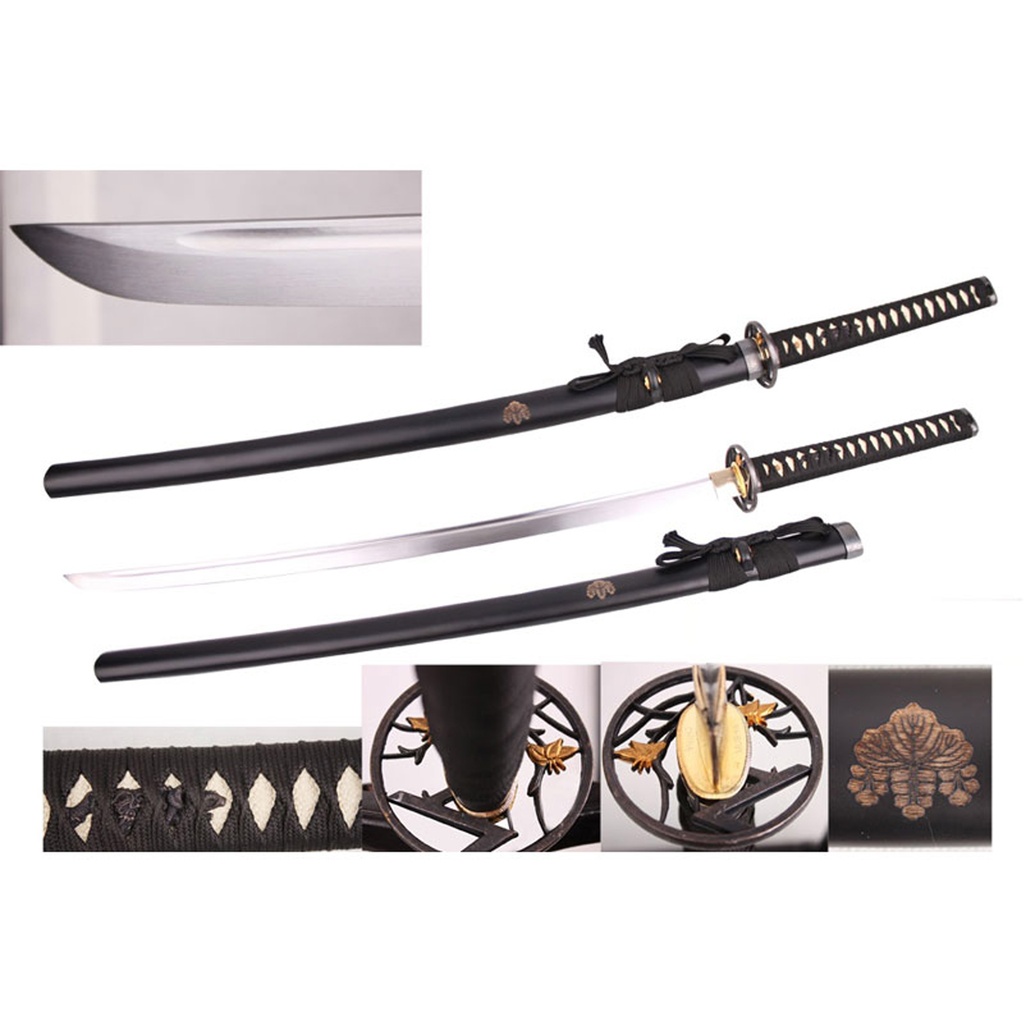
Late sun on a Hill Country fenceline, and this hand-forged samurai sword catches the light like still water. A 41-inch 1045 high carbon steel blade runs clean and sharp, shouldered by a black saya marked with a quiet gold crest. The floral tsuba and rayskin-wrapped handle feel steady in the hand, whether you train in a Dallas dojo or keep it sheathed in a study in Lubbock. For Texans who respect steel and history in equal measure.
When a Samurai Sword Belongs in a Texas Room
The first time you draw this 41-inch hand-forged samurai sword in a quiet Houston loft or a limestone ranch house outside Kerrville, the room changes. The polished 1045 high carbon steel blade pulls free of the black saya with that low, dry whisper steel makes when it’s been ground right. It’s not a wall trinket. It’s a piece that carries weight, even when it never sees a target.
The black scabbard, finished in a soft sheen with a single gold crest near the mouth, doesn’t shout. It just rests on a stand on a bookshelf in Austin, above a row of dog-eared history books and maybe one battered copy of Lonesome Dove. That’s where this sword makes sense in Texas—among people who respect craft and story more than shine.
Samurai Craft, Texas Collector Standards
Texans who collect blades tend to be blunt about quality. A samurai sword gets judged the same way a ranch knife or a Texas OTF knife does—by balance, materials, and whether the build holds up over time. This Hideyoshi-pattern blade runs 41 inches overall, with a curved single-edged katana profile done in 1045 high carbon steel. That steel choice matters. It takes a clean edge, will tolerate light cutting practice if you know what you’re doing, and forgives a bit more than higher-carbon showpieces when someone new wants to feel the weight.
The fuller runs the length in a shallow line, taking just enough weight out of the blade so it doesn’t feel like a crowbar. In a San Antonio dojo or a backyard practice session under a live oak, the sword tracks where your wrist sends it, without fighting back. The edge comes sharpened, ready for controlled kata work or soft-target cutting if your training calls for it.
Details That Earn Their Place on a Texas Wall
On the handle, black cord wraps over off-white rayskin in a tight diamond pattern that feels secure, even when your hands are slick from a Houston summer. The rayskin panels aren’t just for looks; they give the tsuka a subtle, uneven bite that keeps it from twisting in your grip. At the guard, an openwork tsuba with floral and branch motifs sits dark and deliberate, gold accents catching light from a single lamp in a Fort Worth den.
The black saya carries a simple gold crest, more family mark than decoration. A black sageo cord is tied cleanly around it, the kind of detail a Texas collector notices when they’re lining several blades on a rack in a climate-controlled room in El Paso. At the base of the blade, a gold-colored habaki locks the fit. Draw and resheath it a few times and you’ll feel it—no rattle, no slop. The sword rides in its scabbard the way a good revolver rides in leather: tight, but not stiff.
How a Samurai Sword Fits Texas Carry and Display Culture
In Texas, blades live in three places: on the belt, in the truck, or on the wall. A samurai sword belongs on that third hook—display and training, not daily carry. Where a Texas OTF knife rides in a jeans pocket through a day of errands in San Marcos or a shift in the Permian, this Hideyoshi-style katana sits on a stand, out of reach of kids, yet close enough to be appreciated every time you cross the room.
This isn’t a fantasy prop. It’s hand forged, sharpened, and capable. That matters for Texans who host martial arts friends from Dallas or Midland and actually put steel to target on a private range outside town. The sword holds up under light, respectful use: clean bottle cuts, tatami mats, or focused solo practice. When the work’s done, it wipes down and slides back into its black saya, the gold crest flashing once under the porch light as you step back inside.
Texas Knife Laws, Swords, and Large Blades
People who search where to buy serious blades in this state usually ask about the law first. For knives and even a Texas OTF knife, that means understanding how Texas treats “location-restricted” and automatic blades. Swords live under those same length rules, but the key piece is this: Texas law now allows adults to own and carry large blades, including swords, in most public places. There are still restricted locations—schools, courthouses, some government buildings, certain events—where long blades are off-limits, no matter how traditional the steel.
Most Texans keep a katana like this at home, on private property, or bring it directly to and from a dojo, training hall, or cutting range. That’s where it makes the most sense. You’re not walking into an Austin coffee shop with a 41-inch samurai sword on your hip. But displaying it over a fireplace in Amarillo or laying it across a rack in a climate-controlled office in Plano? Well within the law and the culture, as long as you respect restricted spaces and handle transport with some common sense.
Texas Training and Respectful Use
In a Houston kendo club or a small iaido group in Lubbock, a hand-forged 1045 blade like this serves as a practice companion for someone who’s moved beyond entry-level stainless. It’s sharp enough to demand attention, traditional enough to teach proper draw and resheath, and affordable enough that a slip doesn’t feel like ruining a museum piece.
Collecting Culture From Panhandle to Coast
From a Galveston waterfront condo to a Panhandle ranch house, this samurai sword threads into Texas collecting the same way old Winchesters and stag-handled bowies do. It’s another chapter in a steel story—different continent, same respect for a tool that meant life or death to someone a long time ago.
Questions Texas Buyers Ask About Samurai Swords
Are OTF knives legal to carry in Texas?
Yes. Under current Texas law, automatic knives and OTF (out-the-front) knives are legal for adults to own and carry in most public places, as long as you avoid restricted locations like schools, certain government buildings, and a few specific venues. Blade length matters for where you can carry, not whether you can own it. The same length rules that apply to a Texas OTF knife affect big folders, bowies, and even swords when you leave private property.
Is this hand-forged samurai sword meant for training or just display?
This Hideyoshi-style 41-inch samurai sword is hand forged from 1045 high carbon steel, sharpened, and balanced for light cutting and kata work. In a San Antonio or Dallas dojo, it’s suited for an intermediate practitioner who respects live steel and wants a functional blade without stepping into high-end, brittle showpieces. Many Texans will still keep it primarily as a display sword, but it’s built to handle careful practice, not just the spotlight.
How does this sword compare to a Texas OTF knife for everyday needs?
They live in different worlds. A Texas OTF knife rides in your pocket for opening feed bags, cutting rope, or working through a day in Odessa or Corpus. This samurai sword is for training, ceremony, and collection. It anchors a room, starts conversations, and comes down from its stand when you’re in the right place with the right people and enough room to swing without risking anything but your own focus.
First Draw, Somewhere Under a Texas Sky
Picture a cool front slipping across a Waco backyard as the sun goes down. The kids are inside, the dog’s asleep, and you’ve set a simple stand on the patio table. The black saya rests there, gold crest catching the last of the light. You place a hand on the rayskin wrap, thumb easing the blade free just enough to break the seal. Steel slides out, smooth and certain, and for a moment it’s just you, the curve of the blade, and the big Texas sky reflected in polished metal. That’s where this samurai sword belongs—in the hands of someone who understands that some tools are meant to work, and some are meant to remind you why work matters.