Command Hinge Duty Handcuffs - Black Steel
14 sold in last 24 hours
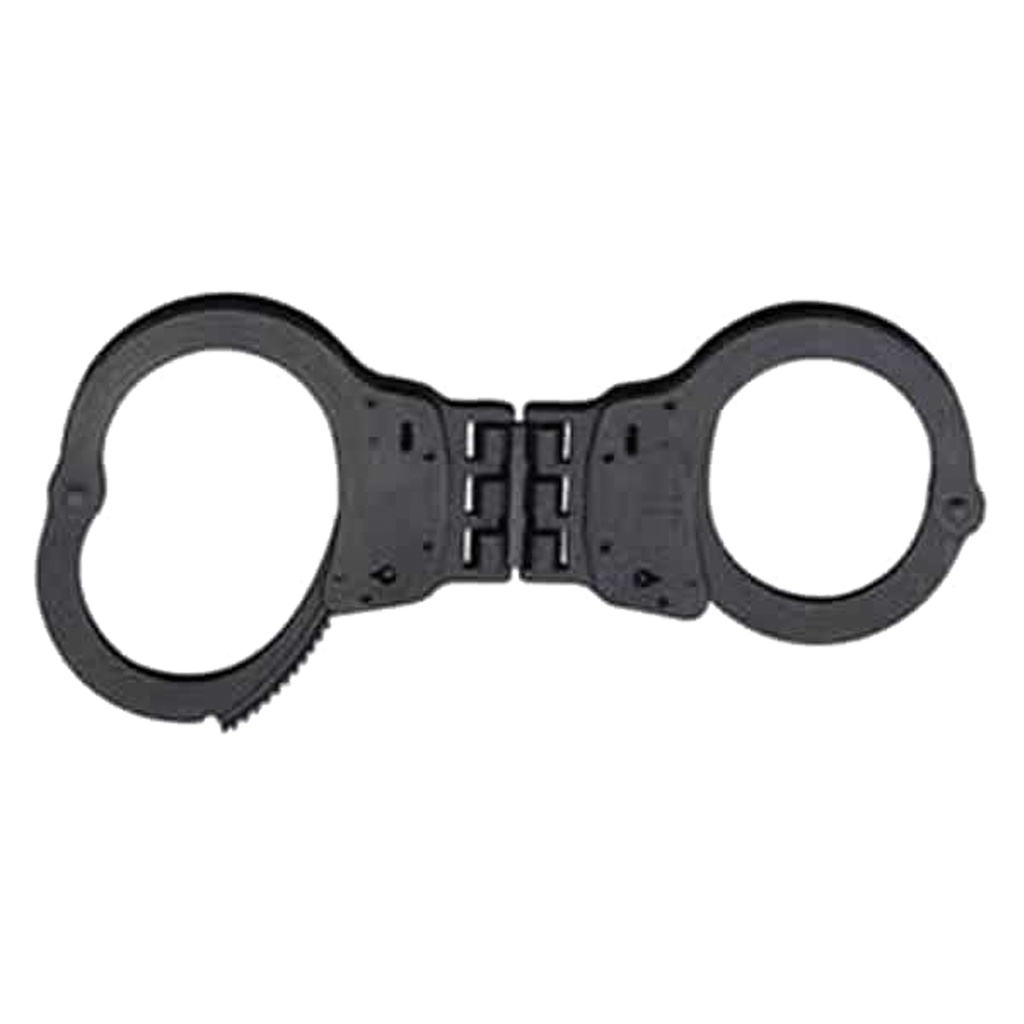
West of Abilene on a Friday night, when the call turns from nuisance to serious, flimsy gear is dead weight. These Smith & Wesson hinged handcuffs lock down movement fast, with smooth ratchets and double locks that don’t slip under pressure. All-black, rigid, and duty-true, they ride clean on the belt or in the truck, ready for deputies, security hands, and anyone who takes control work seriously in this state.
Command Hinge Control Built for Long Shifts and Long Roads
On a two-lane outside San Angelo, when backup is twenty minutes out and the wind’s kicking caliche across the headlights, you don’t need pretty gear. You need restraint that bites once, holds, and doesn’t give an inch. These Smith & Wesson hinged handcuffs are built for that moment — rigid, all black, and meant for people who put hands on real problems, not paper ones.
The hinge closes the gap that chain cuffs leave open. Less swing, less twist, more control when a subject decides to test your footing on gravel or cracked asphalt. The smooth ratchets run in clean, then lock hard, so you get that solid, unmistakable click and the confidence that comes with it.
Why These Hinged Handcuffs Belong on a Texas Duty Belt
Texas work stretches from courthouse steps in Midland to oilfield gates outside Odessa and club doors in Deep Ellum. One thing doesn’t change: when it’s time to restrain someone, you want cuffs that act the same whether you’re in a pressed uniform or a sweat-soaked plate carrier.
These Smith & Wesson hinged handcuffs are fabricated from duty-grade carbon or stainless steel with a uniform matte black finish. That finish stays low-profile against a black duty belt or outer carrier, throwing no glare under patrol car LEDs or parking lot floodlights. Heat-treated internal lockworks stand up to dust, sweat, and the kind of rough treatment gear gets in a trunk beside a shotgun and a med bag.
Every set meets or exceeds National Institute of Justice standards for strength, corrosion resistance, and tamper resistance. In plain terms, they don’t fold under a hard pull, they don’t rust out sitting through a humid Gulf Coast summer, and they don’t give up to casual picking when a restless detainee gets bored in the back seat.
OTF Knife Texas Buyers and the Gear That Rides Beside It
If you carry an OTF knife in Texas, chances are it doesn’t ride alone. Real-world belts in this state hold a sidearm, an OTF blade, light, tourniquet, and a set of handcuffs like these. The same mindset that pushes a Texan toward a reliable OTF knife — one-handed, decisive, no-nonsense — is the mindset that reaches for rigid hinged cuffs instead of novelty restraints.
On a nighttime traffic stop off I-35, your Texas OTF knife might be the tool you use to slice a seatbelt or cut tape off a ranch hand’s fingers. These handcuffs are what you reach for when the situation crosses the line from assist to arrest. The rigid hinge keeps a subject from rolling wrists or twisting away while you maintain control with one hand and keep the other near your weapon or radio.
For buyers searching where to buy OTF knives in Texas, the answer usually isn’t just a single tool. It’s a full carry setup that treats a blade, a light, and restraints as one system. These black hinged handcuffs earn their place in that system by doing one job well: limiting movement when it matters, without adding bulk or flash.
Texas Restraint Reality: Patrol Cars, Ranch Trucks, and Event Security
On a sheriff’s unit in the Panhandle, these handcuffs ride on the belt, black on black, forgotten until they’re needed. In a ranch truck outside Kerrville, they live in the console beside a flashlight and a reliable folder or OTF, ready for the rare night when a trespasser or drunk guest has to be held until the law arrives.
For Houston or Austin security teams running late-night doors and festival gates, the hinged design is the difference between messy, flailing escorts and clean, controlled walks to the back. The rigid center keeps wrists close and leverage in your favor, especially when pushing through crowds or up narrow stairwells.
Because both cuffs share a solid hinge, there’s less slack for a subject to work with. That matters when you’re dealing with someone who’s watched one too many restraint videos and thinks they know how to slip chain cuffs. The double lock slot on each cuff lets you secure them from either side, which is a small detail that saves time when bodies and tempers are moving fast.
Legal Confidence: Where These Fit in Texas Law and Carry Culture
How Hinged Handcuffs Sit Within Texas Law
Texas law pays close attention to weapons and how they’re carried. That’s why questions like "are OTF knives legal in Texas" come up so often. Switchblades and OTFs are legal to own and carry here for most adults, with location-based limits. Handcuffs are different. They’re not treated as prohibited weapons for regular citizens, but misuse turns them from gear into a liability fast.
On the street, these Smith & Wesson hinged handcuffs are duty gear first. Sworn officers, licensed security professionals, and others working under clear authority are the ones most likely to run them every shift. A private citizen can own them, keep them in a truck, even train with them, but once you start restraining people without the law to back you, you’ve stepped into criminal territory — assault, unlawful restraint, and worse.
That’s why, in Texas carry culture, cuffs like these ride mainly on real duty belts and in rigs where the carrier understands report writing, use-of-force policy, and courtroom scrutiny. The double lock feature provides an important legal and medical safeguard: once you’ve snugged them to the proper fit, setting the double lock keeps the ratchet from tightening further and causing nerve damage. Any Texas officer or seasoned security hand will tell you: proper handcuffing and double-locking can be the difference between a clean arrest and a complaint.
OTF Knife Texas Law vs. Restraint Responsibility
When people ask, "are OTF knives legal in Texas," the answer is fairly straightforward — yes, for the average adult in most places, with some restricted locations. Restraints don’t get the same headlines, but the stakes are higher in practice. An OTF knife in Texas is usually a tool until misused; handcuffs become a control device the second they close on someone’s wrists.
This is why gear like these black hinged handcuffs typically belongs to professionals: sheriff’s deputies covering three counties, constables serving warrants in small towns, campus police working football games in College Station, or licensed security teams guarding refineries and distribution centers. They carry them with the same seriousness they give their firearm and their OTF blade — all three tools governed by policy, training, and Texas law.
Questions Texas Buyers Ask About OTF Knife Texas Carry and Duty Gear
Are OTF knives legal to carry in Texas?
Yes. Under current Texas law, most adults can legally own and carry an OTF knife or switchblade. They’re no longer classified as prohibited weapons, but there are still location-based restrictions — schools, certain government buildings, and some posted venues. Length can also matter in specific settings. Treat an OTF knife in Texas the same way you treat a firearm: you’re responsible for knowing local rules, posted signs, and any policies tied to your job or license.
Can a private citizen in Texas carry these hinged handcuffs every day?
You can own and possess these handcuffs in Texas, and there’s no blanket ban on having them in your home or vehicle. The line you don’t want to cross is misuse. If you restrain someone without clear legal authority or justification, you’re opening the door to charges like unlawful restraint or assault. For most Texans not working in law enforcement or licensed security, these belong in the training bag or locked drawer, not as casual everyday carry on a belt.
How do these fit alongside a Texas OTF knife in a full-duty setup?
On a Texas duty belt, a reliable OTF knife covers cutting — seatbelts, clothing, tape, cord — while these hinged handcuffs cover control. The knife sits forward of the hip, reachable with your strong hand; the cuffs ride in the small of the back or just off-center, positioned for quick access with whichever hand is free. Together, they form part of a system built for long shifts, long drives, and sudden problems: light, sidearm, OTF blade, rigid cuffs, all backed by training and policy.
On the First Night You Really Need Them
Picture a humid September night outside a high school stadium along Highway 90. The game’s over, tempers are high in the parking lot, and two grown men who should know better decide to prove they don’t. Someone steps in, lines separate, and you move fast before the crowd closes back over them.
Your OTF knife stays clipped and ready, where it belongs until something needs cutting. Your light paints the scene. Your hand finds these black Smith & Wesson hinged handcuffs without looking. Smooth ratchets close on the first wrist, then the second, hinge pulling arms close enough that the fight goes out of them. You thumb the double lock, feel it set, and walk him toward the unit through a sea of headlights and exhaust. No drama. No extra motion. Just the right tools, doing their job, in the place you call home.