Deer Stand Heritage Field Knife - Natural Stag
12 sold in last 24 hours
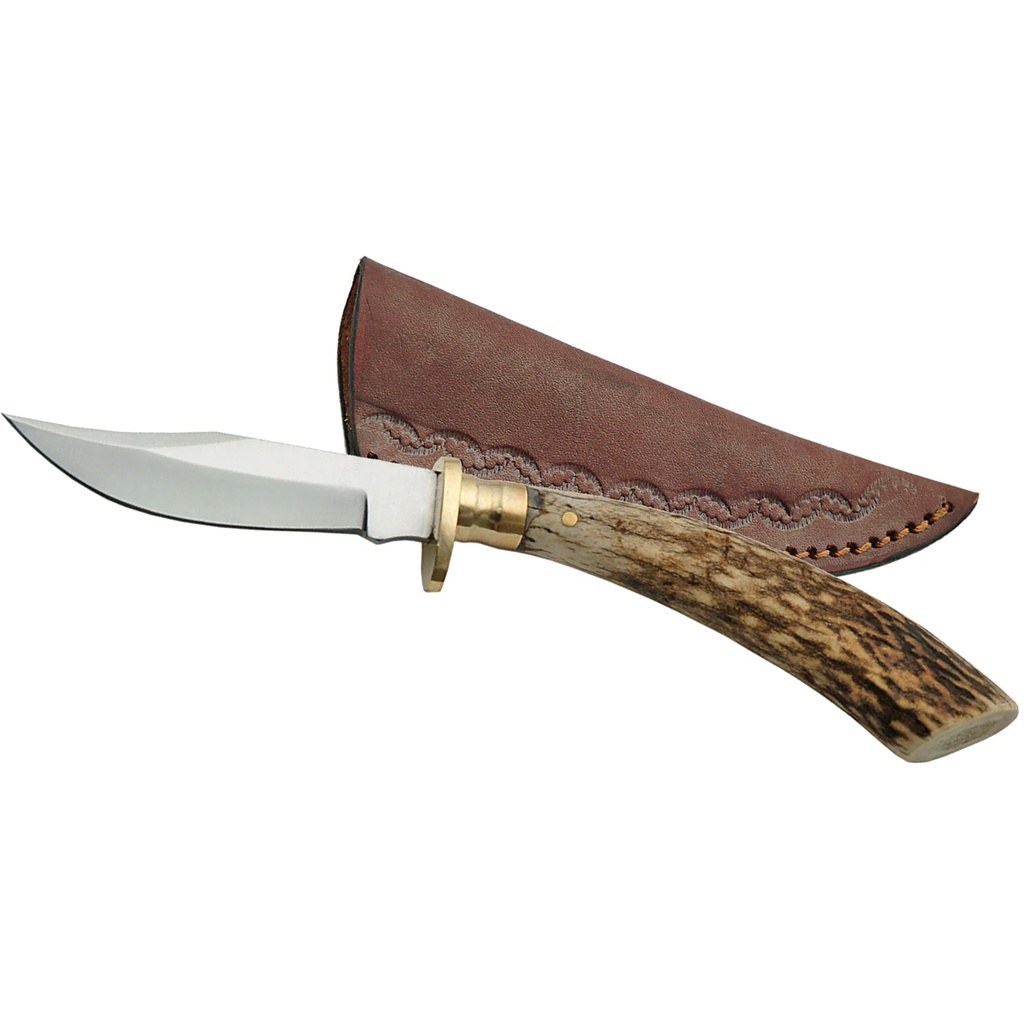
First light in a mesquite draw, you don’t think much about the knife on your belt—until you need it. This fixed-blade hunting knife carries light, balances in the hand, and walks through a 7.5-inch field dressing cut without drama. Natural stag wraps the full tang, brass guard keeps your grip honest, and the leather sheath rides easy under a jacket. Quiet, traditional, and ready for work when the story outlasts the tool.
Heritage Steel for Real Country Mornings
There’s a certain quiet before legal shooting light in a cedar thicket. Jacket zipped, breath showing, you feel for two things without looking: the rifle sling and the fixed blade riding your belt. This one was built for that reach. A long, satin clip point out front, natural stag at your palm, and nothing fussy in between.
This isn’t a glass-case showpiece. It’s a field hunter meant for real ground—hogbacks above the Llano, creek bottoms along the Brazos, mesquite tangles out past the last gate. You forget it’s there until it’s time to open a rib cage or break down a quarter by lantern light.
Why This Fixed Blade Belongs on a Texas Belt
Out here, you don’t carry extra. A hunting knife has to earn its place. The 7.5-inch clip point on this Deer Stand Heritage Field Knife gives you enough reach to open up a big-bodied Hill Country buck or a Panhandle hog without crowding your work. The satin blade rides full tang through the handle, so when you twist through gristle or bear down at the pelvic bone, the steel and stag move as one piece.
The natural stag isn’t just for looks. That texture locks into your hand when there’s fat, blood, or creek mud involved. The brass guard stands between your fingers and the edge when you’re pulling hard toward yourself on a long belly cut. In a truck-bed tailgate scene or on a folding table at camp, this knife does its work without flair and without complaint.
On the belt, the fitted leather sheath sits close and quiet. Whether you’re slipping through live oak under a shotgun or climbing into a box blind, it doesn’t snag or flop. It’s the kind of fixed blade you put on before daylight and forget about until the work starts.
Built for Texas Field Work, Not the Drawer
Texas hunting seasons are long, and the country changes fast between them. One weekend you’re easing through prickly pear flats south of San Angelo, the next you’re in a damp river bottom skinning pigs by headlamp. This fixed blade hunting knife keeps a simple promise in all of it: cut clean, stay put in the hand, and hold up when camp chores keep rolling after the dressing is done.
The clip point profile is made for control. That fine tip finds joint lines in a shoulder, slides under hide along the spine, and trims silver skin off backstrap without hacking. The plain edge, with no serrations to clog, pushes straight through hide, meat, and connective tissue. When you’re quartering a deer on a tarp in the back of a side-by-side, you feel the steel tracking true instead of wandering.
Back at camp, that same blade pulls double duty. It splits kindling curls from mesquite, pares rope, slices bacon, and handles half the odd jobs that show up between dark and coffee. The full tang running through the stag handle gives you confidence to torque, pry lightly, and work with gloves on without worrying about the knife folding or failing. It’s a fixed blade in the old sense of the word: a tool you can lean into.
Texas Knife Law Confidence: Fixed Blade, No Guesswork
In this state, understanding knife law matters as much as edge geometry. A fixed blade hunting knife like this sits on the right side of current Texas carry law when you use it where it was intended—hunting leases, ranches, deer camps, river access, and private land where you’ve got permission. It isn’t a spring-loaded push-button piece, doesn’t deploy from the front, and doesn’t bring the questions that automatic or OTF designs still raise in certain settings.
Texas law shifted to allow a lot more blade than it used to, but context still counts. A traditional hunting fixed blade carried in a belt sheath going into or out of the field looks like what it is: a tool. It’s the same pattern Texas wardens and ranch hands have seen for decades—stag, brass guard, leather sheath, no tricks. When a game warden checks tags and rifles at the truck, this is the kind of knife that usually draws a nod, not a second look.
If you spend your weekends rolling through gates instead of city parking garages, this fixed blade sits comfortably inside the spirit of how Texas knife law expects hunters to carry—clearly a field tool, not a concealed surprise.
Questions Texas Buyers Ask About Hunting Knives
Are OTF knives legal to carry in Texas?
Texas removed the old switchblade ban years back, which opened the door for OTF and other automatic knives. These days, the law focuses more on location and intent than on whether a blade is spring-driven. In most everyday situations—heading to work, running around town—an OTF can be lawful to carry. But if you’re walking into restricted places like certain government buildings, schools, or events with posted policies, any knife can become a problem fast. Hunters and ranchers tend to favor fixed blades like this one for field use, keeping the more mechanical designs for specific everyday carry roles where they make sense.
Is this fixed blade sized right for Texas whitetail and hogs?
For most Texas game, this knife lands in the sweet spot. The 7.5-inch blade gives you enough reach to make long, smooth body cavity cuts on big Hill Country or South Texas deer and still feels controllable when you’re working inside the chest. On hogs, that length helps you cut through tougher hide and fat without sawing. It’s long enough to handle a full field dress, quartering, and basic camp breakdown without wishing for more steel, but not so big it turns into a machete on your belt.
How does this compare to carrying a folder for hunting?
Plenty of Texas hunters run folders, but a fixed blade like this has some dead-simple advantages. There are no moving parts to clog with fat, hair, or caliche dust. You can rinse it in a creek, wipe it on a rag, and keep going. The full tang under that stag handle lets you lean into the cut without worrying about a lock giving out on you. And on cold mornings in gloves, there’s a comfort in knowing that when you draw the knife from the leather sheath, it’s ready—no opening, no buttons, no mechanics between you and the work.
Natural Stag, Brass, Leather: A Texas Camp Classic
There’s a reason knives like this show up in old photos from West Texas camps and keep turning up in new ones. Natural stag doesn’t mind heat, cold, or a little blood. It looks better scarred. The brass guard will pick up its own patina over seasons, matching the darkening grain of the leather sheath that rides your belt through dust, brush, and the occasional barbed-wire crossing.
This isn’t the knife you leave on the dash. It hangs by the worn loop of a belt scabbard, rides against your hip mile after mile, then lands on the same rough camp table where the coffee pot sweats and the maps stay folded. The edge takes its share of meat and wood, then comes back to sharp on a stone without fuss.
Picture the first cold front of the year pushing through a line of post oaks. You ease a deer down, notch the tag, and reach for the handle you know by feel alone—stag, warm from your palm, brass under your thumb. The blade opens the day’s work and closes it the same way it will next season, and the one after that. In a state where hunts turn into stories told for decades, this is the kind of fixed blade that stays in the tale, even when no one bothers to mention the brand.
| Blade Length (inches) | 7.5 |
| Overall Length (inches) | 7.5 |
| Blade Color | Silver |
| Blade Finish | Satin |
| Blade Style | Clip Point |
| Blade Edge | Plain |
| Blade Material | Steel |
| Handle Finish | Natural |
| Handle Material | Stag |
| Theme | None |
| Tang Type | Full Tang |
| Pommel/Butt Cap | Stag |
| Carry Method | Belt Carry |
| Sheath/Holster | Sheath |