Doctrine Line Infantry Sniper Training Manual - Teal Softcover
3 sold in last 24 hours
Out past the last windmill, when the sun’s dropping behind mesquite and targets blur with heat shimmer, theory doesn’t cut it. This reprint of the Army’s 1989 sniper training and employment manual lays out real doctrine: how snipers are trained, equipped, and used when it matters. For Texas shooters, instructors, and lawmen who want the source material, not someone’s opinion, it’s a field-proven blueprint you can throw in the range bag and mark up.
Sniper Doctrine That Makes Sense in This Country
Out on a Panhandle lease in January, the wind doesn’t care how many shooting videos you’ve watched. It tears at mirage, drifts rounds, and punishes bad fundamentals. That’s where a real sniper training manual starts to matter. This reprint of the Army’s Sniper Training and Employment circular from 1989 was written for people who have to hit under those conditions, not for people browsing gun pictures on their phone.
It’s not a glossy coffee-table piece. It’s a working book that lays out how infantry snipers are selected, trained, equipped, and put to work. Texas shooters, instructors, and law enforcement units use this kind of doctrine as a backbone, then tailor it to their own ranges, their own patrol areas, their own wind.
How This Sniper Manual Fits Modern Texas Gun Culture
In a state where it’s nothing to drive two hours just to get somewhere you can stretch a rifle, long-range work is part of the landscape. From prone work in caliche dust in the oil patch, to setting up hides in the cedar breaks of the Hill Country, the principles in this manual still track with how serious Texans learn to shoot.
The circular walks through marksmanship from a sniper’s point of view—natural point of aim, respiratory pause, trigger squeeze—then forces you to think about wind, light, and terrain. On a West Texas range, that means understanding what 15 mph crosswind does to a .308 at 700. In East Texas timber, it means threading shots through brush and reading small pockets of light.
Because this is a straight Army publication, it treats the rifle as a tool, not a lifestyle. It covers scoped bolt guns, support gear, data books, and communication with a spotter, keeping the tone dry and precise. That pairs well with the way many Texans actually train: quiet, methodical, off the beaten path, with a steel rack and a notebook instead of an audience.
Inside the Infantry Sniper Training and Employment Manual
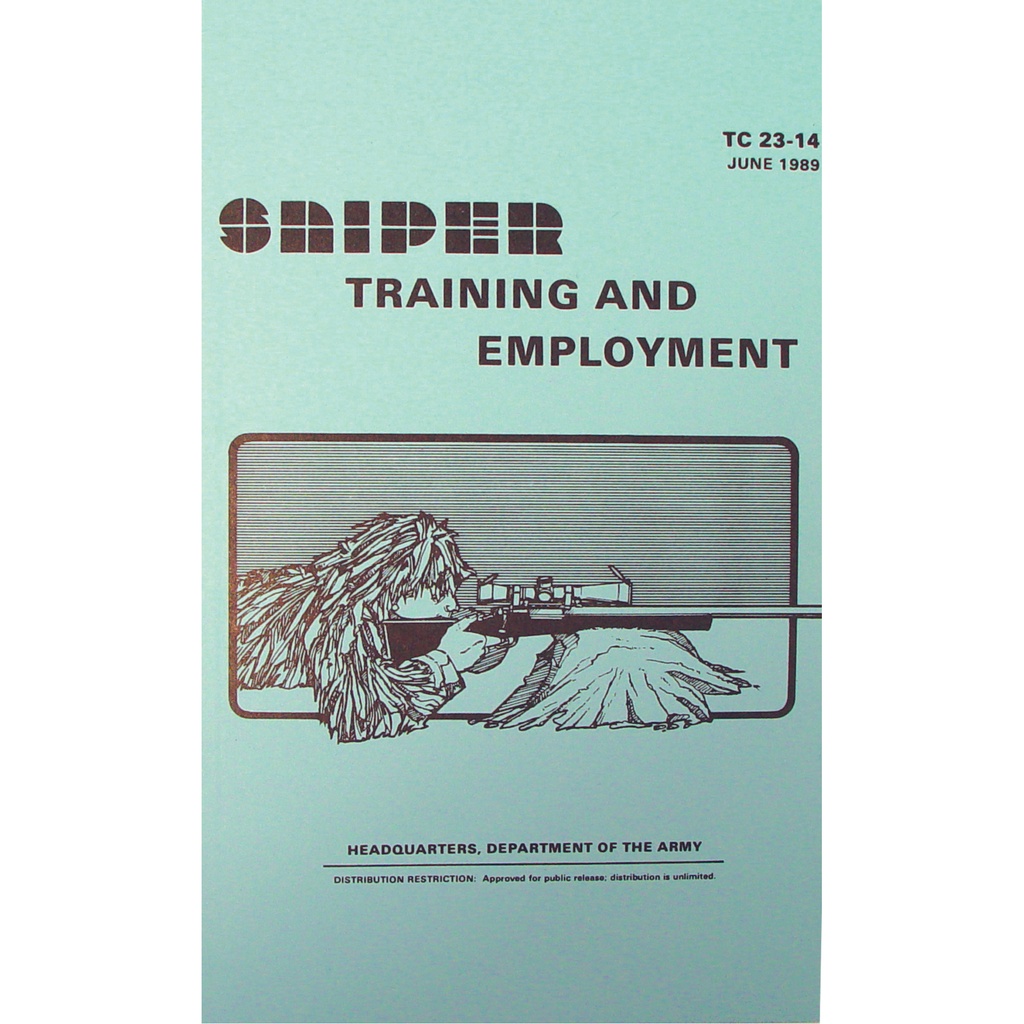
This manual is a reprint of TC 23-14, Sniper Training and Employment, published in June 1989 by the Department of the Army. The language is formal, but the content is straight practical: selection and mental traits of snipers, shooting positions, range estimation, use of camouflage, movement, and how to build and occupy firing positions.
The prone ghillie-suited shooter on the teal cover isn’t there for style. Inside, there’s detailed guidance on what camouflage needs to do in open fields, creek bottoms, fencelines, and urban edges—environments Texans recognize without anyone naming them. It explains how to use shadow instead of just more burlap, how to break up a rifle’s outline against flat, sunburned ground, and how to stay still when everything else is moving.
For Texas trainers—whether you’re running a sheriff’s office marksman course or just trying to move your shooting club beyond benchrest—the manual gives you a structure: progression of skills, standards to hit, and ways to evaluate shooters that don’t depend on ego. For serious hobbyists, it’s a way to understand why certain drills exist, instead of just copying them from a video.
Legal Context: Sniper Knowledge and Texas Law
Texas gun laws focus on how you carry and use firearms, not what books you read about them. Owning and studying a sniper training manual like this is fully legal; it’s information, not regulated equipment. Where law comes in is how and where you apply what you learn with a rifle in your hands.
Sniper Skills, Hunting, and Texas Regulations
Many Texans use precision rifle skills primarily on steel and paper, but some techniques cross over into predator control and long shots on legal game. This is where state hunting regulations matter: spotlighting rules, fair chase standards, and safety zones around roads and houses. The doctrine in the manual emphasizes observation, target identification, and accountability for every round—principles that line up with staying on the right side of Texas game laws and basic ranch etiquette.
The book also talks about operating in built-up areas. In Texas, that kind of knowledge mostly finds its home with SWAT marksmen, rural deputies covering long sightlines into town, and instructors preparing those officers. Civilians can still learn from it—especially about backstop awareness and angles—but actual deployment in town is the domain of trained, authorized teams working under strict policy and state law.
Putting This Manual to Work on Texas Ground
Picture a range cut into the edge of a Hill Country ranch. Limestone dust, cedar scent on the wind, steel silhouettes at staggered distances out to 800. This manual rides in the truck door pocket, dog-eared at the sections on observation exercises and multiple target engagement. Instead of just burning ammo, your day has a plan pulled from doctrine: slow groups first, then timed drills, then unknown-distance work using the terrain.
Or imagine a small agency west of Abilene. The department doesn’t have the budget for a long contract class, but they do have one capable shooter and access to pasture land. This book, with its training outlines and employment considerations, helps the firearms instructor build a phased program: prone fundamentals, positional shooting off ranch gates and fence posts, communication protocols, and simple overwatch concepts adapted to the local grain elevator and school complex.
Texas Conditions This Manual Prepares You For
The doctrine assumed heat, cold, rain, dust, and fatigue—all things Texas has in abundance. Long glassing sessions under a June sun on the South Plains. Cold, damp mornings in the Pineywoods where mist plays tricks with visibility. Dust devils rolling across a Panhandle berm, eating mirage and teasing your spotter. The manual’s emphasis on discipline—natural point of aim checks, consistent sling use, proper support—pays off in exactly these places.
Questions Texas Buyers Ask About Sniper Training Manuals
Are OTF knives legal to carry in Texas?
Switchblades and OTF knives were restricted in Texas for years, but that changed. Under current Texas law, automatic knives, including OTF designs, are legal to own and carry for most adults, with location-based restrictions similar to other weapons. Length limits and prohibited places can still apply, especially around schools, certain government buildings, and some events, so it’s worth checking the most recent state statutes and any local ordinances before you clip one in a pocket. Many Texans now carry an OTF knife alongside a rifle tool kit or range bag, relying on it for quick cutting tasks around the ranch or lease.
Is this sniper manual still useful with modern Texas rifles and optics?
Yes. While the manual predates today’s high-BC bullets and advanced scopes, the core of sniper work hasn’t changed: stable positions, reading wind, understanding light, and managing stress. A Texan running a modern chassis rifle with a first focal plane optic can still use these drills, then overlay updated ballistic data and reticle features. The book teaches how to think through a shot, which matters more than having the latest gear.
Should a Texas shooter buy this if they’re not military or law enforcement?
If you only shoot from a bench a few times a year, probably not. If you care about first-round hits at distance, run practical field matches, teach others, or just want to understand where serious riflecraft comes from, this is worth having. It gives civilian and LEO shooters in Texas a common language with military doctrine and a structured way to improve on real dirt and real wind, instead of chasing the trend of the week.
Where This Book Belongs in Your Texas Life
Picture it underlined and tabbed, riding in the glovebox of a dusty half-ton rolling south out of San Angelo at dawn. Rifles cased in the back, steel targets clanging faint on the edge of hearing as someone else finishes a string. You flip to a familiar page—wind calls, multiple targets, time constraints—and build your day from there.
Out here, whether you’re training a deputy, helping a kid step off the bench for the first time, or just trying to make a clean hit past where the mirage gets wild, this isn’t theory. It’s a field manual that earns its keep every time the wind pushes, the light shifts, and you still need that first round to land where it should.