Dust Line Precision Bull Whip - Black Leather
8 sold in last 24 hours
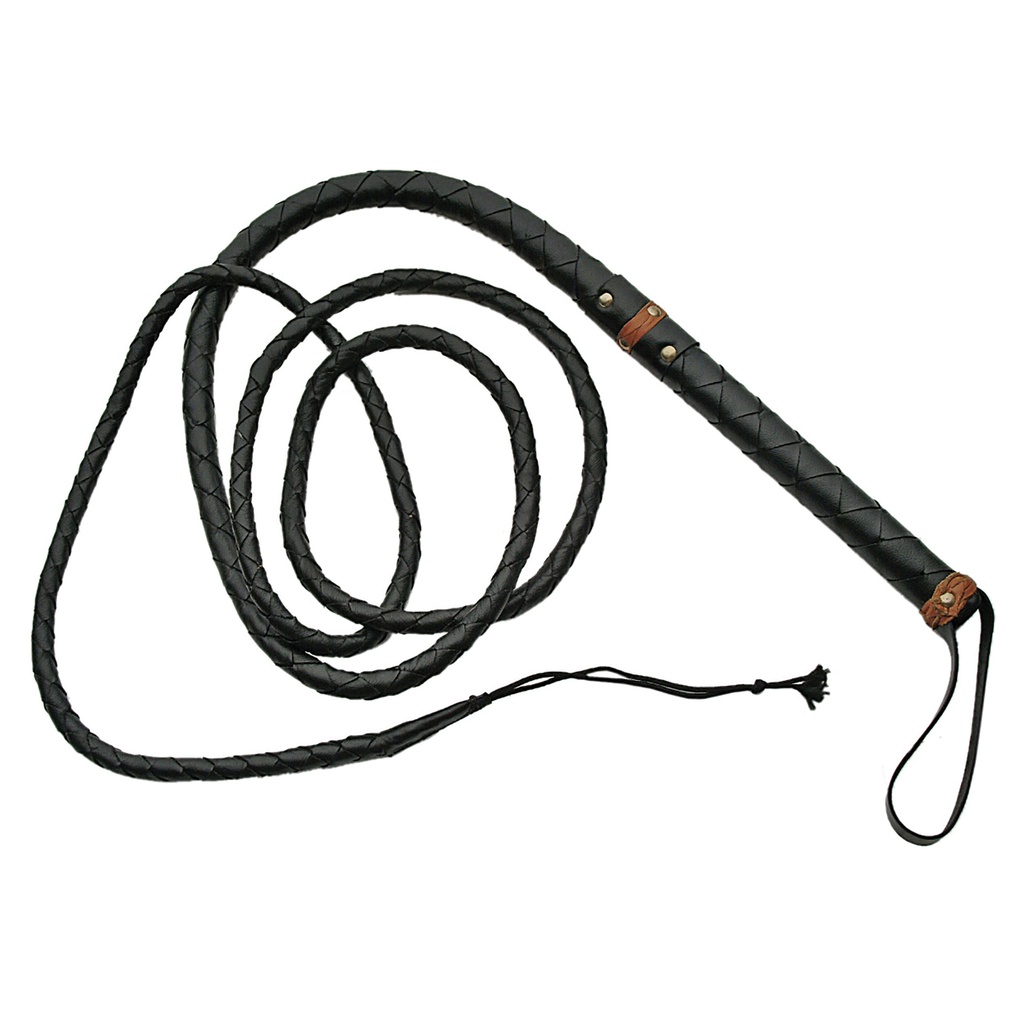
Late light, empty arena, dust hanging in the air. This nine-foot hand-braided bull whip tracks straight from the first snap, true core driving weight all the way to the cracker. The black leather coils smooth, uncoils fast, and sits sure in the hand with a wrist loop that keeps it close, whether you’re working stock, drilling patterns, or stepping under stage lights.
Where a Nine-Foot Bull Whip Actually Belongs
Evening’s coming on. Horses are cooled out, trailers half-loaded, and the last of the light is laying flat across a small-town arena. That’s when a nine-foot bull whip like this finally makes sense. The dirt is quiet, the air is still, and you can hear every crack roll out to the fence. This isn’t costume leather. It’s a working-length, hand-braided bull whip built for people who care where the tip lands.
The black leather sits dense in the hand, not stiff for show, but alive enough that a light wrist turn sends the taper moving. That true core carries the weight from handle to fall, giving you a clean line whether you’re drilling accuracy on a fence post, working animals that still respect sound, or running a stage routine that has to hit the mark, every time.
Precision You Can Feel From Handle to Cracker
Most folks notice the length first: nine feet from handle to tip. But what matters more is how that length behaves. The braided handle gives you a fixed reference point, with brown leather bands and small metal rivets anchoring the grip without adding bulk. Slip your hand through the wrist loop, and the whip settles where it should, ready to coil out clean.
As you lay it out on packed dirt or concrete, the diamond-braided body tells you what you need to know. No hard kinks, no dead spots. Just a steady taper that narrows toward the fall, then thins again at the cracker. When you bring it over and through, the sound doesn’t come from fighting the leather. It comes from timing, control, and a whip that tracks straight instead of wobbling its way through the air.
Some bull whips feel like they’re working against you — too light in the core, too bulky in the braid. This one doesn’t. The balance built into that true core lets you focus on line and accuracy, not on wrestling the length into place. On a quiet practice morning in an open pasture or under arena lights in front of a crowd, that difference shows up in how calm your hand can stay while the sound does the talking.
Why a Working Bull Whip Matters More Than Looks
Black leather and clean hardware look sharp hanging on a tack room peg, but this bull whip is meant to be dusty, sweat-marked, and broken in. The finish is matte to semi-gloss, the kind of leather that will pick up every crease of your handling without going limp. Coil it into a truck door pocket after practice, hang it off a nail in a barn aisle, or loop it around a saddle horn while you move between pens — it’s built for that kind of life.
Under stage lights or in front of a clinic crowd, that same no-nonsense build pays off. You don’t need painted patterns or heavy ornaments trying to sell a story. The story is in the sound, the straight track, and the way the body follows the handle without lag. Whether you run single cracks, doubles, or more intricate wraps and targets, the whip will tell on you if your timing is off. It will also reward clean form with a crisp break that carries down an alleyway or across a covered arena without you muscling it.
How This Bull Whip Fits a Texas Training Day
A long day working animals anywhere in the state ends the same way: chores done, tools put up, and a little time left to work on the details. That’s when this nine-foot bull whip shows its worth. In a back pasture outside town, you lay out a few fence posts or hanging cans, step off your distance, and start putting the cracker where you mean to. The wrist loop keeps it from getting away from you on a missed catch, and the even taper helps you stay consistent from one crack to the next.
On rodeo weekends, it rides in the trailer or truck bed, coiled and ready. When the slack hours hit between performances, it comes out in the warm-up pen or behind the chutes, where folks gather and trade turns trying new patterns. The black braid takes that kind of handling without complaining — dust rises, sweat darkens the handle a shade, and the whip settles more into your hand with each run.
For trainers and performers who work both animals and crowds, this bull whip crosses that line cleanly. It’s straight enough in flight for precision target work on stage, stout enough in build for sound-based pressure around stock that still respond more to crack and presence than to rope and spur. In both cases, control matters more than drama, and that’s built into the leather from the first snap.
Questions Texas Buyers Ask About Leather Bull Whips
Are bull whips legal to carry and own in Texas?
Owning and using a leather bull whip like this is legal across the state when it’s used as a tool, training aid, or performance gear. It isn’t treated the way restricted weapons are. The line gets crossed if you start using any object — whip included — as a weapon or in a way that can reasonably be seen as threatening outside of work or performance settings.
For most buyers, that means you can keep this bull whip in your truck, trailer, barn, or home without trouble, and haul it to arenas, practice grounds, or stage venues. Common sense still applies: use it where it makes sense, store it where it’s not going to surprise anyone, and remember that respect for neighbors and property travels farther than any crack ever will.
Is a nine-foot bull whip too much length for practice?
Nine feet is the point where a bull whip starts to feel serious, but that length is also where control and sound really start to pay off. For practice in open space — arenas, pastures, round pens, or back lots — it gives you enough line to build full cracks without overworking your arm. The true core and balanced taper on this whip mean you aren’t fighting the extra length; the body does most of the traveling once you set it in motion.
If you’re working in tight barns or crowded alleys, a shorter whip might make sense. But for most outdoor practice and performance work across the state, nine feet hits the sweet spot between reach, sound, and control, especially once the leather loosens into your hand.
How do I know this bull whip will hold up to real use?
Durability on a bull whip lives in three places: the core, the braid, and the handle. This one carries a true core that keeps its shape under coil-and-uncoil cycles, a tight diamond braid in black leather that resists gapping, and a reinforced handle anchored with leather bands and metal hardware. The wrist loop is built into that handle, not tacked on as an afterthought.
In day-to-day terms, that means it can handle being coiled into a truck, unrolled on packed dirt, snapped until the air goes sharp, then hung back up without turning spongy or twisted. You’ll see it age in the finish and feel it soften in the hand, but the structure stays honest. That’s what separates a working bull whip from something meant to sit on a wall.
From First Crack to Everyday Tool
Picture an empty arena just after the last rig has pulled out, or a pasture behind a low barn with the heat finally backing off for the day. You uncoil the black braid, slide your hand through the loop, and feel the weight gather along the length. The first crack is tentative, the second cleaner, the third rolling out strong and straight toward the far fence.
Over time, this nine-foot bull whip stops feeling like new gear and starts feeling like part of the day — riding in the truck bed next to coils of rope, hanging by the door in the tack room, or waiting in the trailer alongside saddles and gear bags. It doesn’t need polish or polish words. It just needs open air, room to work, and someone who cares enough about control to keep snapping until the sound lands exactly where it’s supposed to.