Dust Trail Classic Gurkha Kukri Knife - Brass & Leather
15 sold in last 24 hours
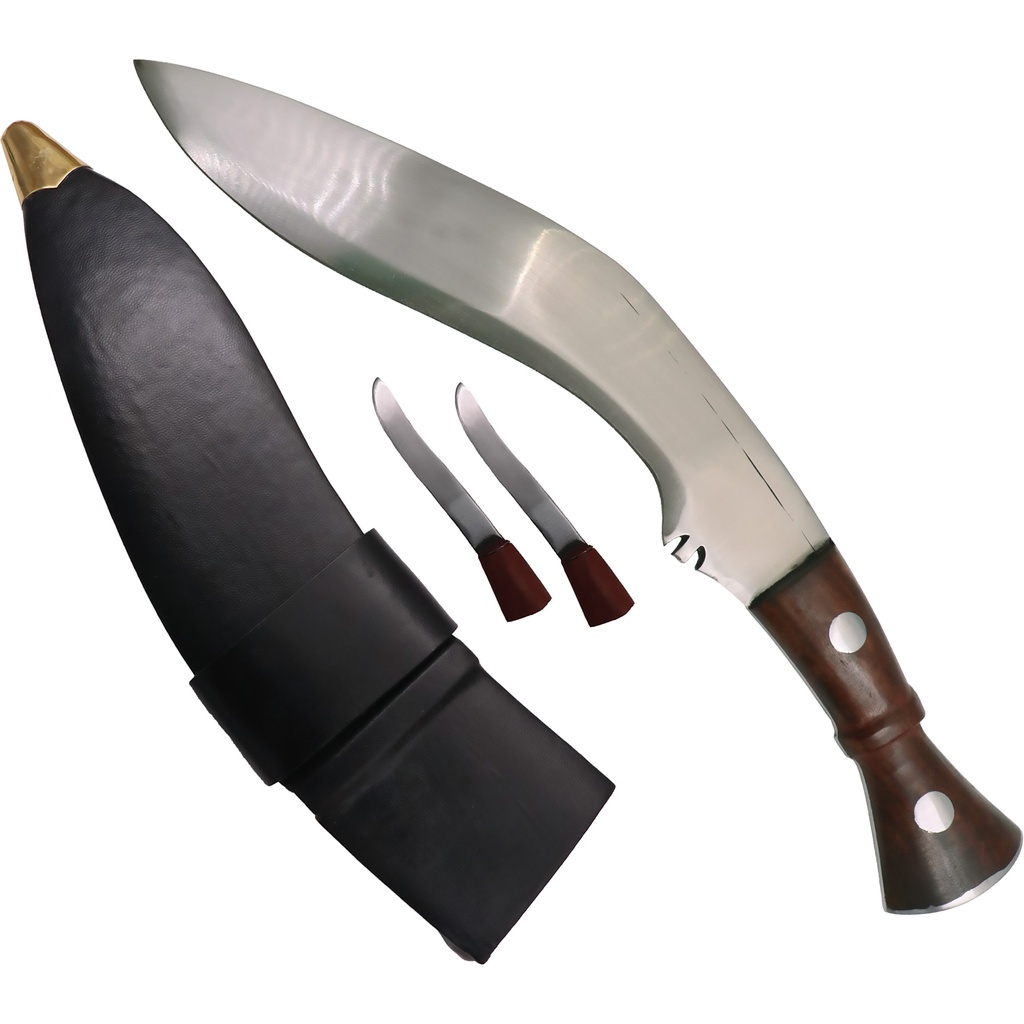
Out past the last fence line, this classic Gurkha kukri feels right at home. A 12-inch carbon steel blade hits hard up front for clearing brush, breaking down camp wood, or quartering game. Brass-bolstered grip locks into your hand, leather sheath rides easy on the belt, and the karda and chakmak handle quick cuts and touch-ups. It’s the kind of fixed blade a Texas truck remembers riding with.
When a Fixed Blade Earns Its Place on a Texas Belt
Out where the caliche road turns to two ruts and broomweed, a folder stays in the pocket and a real fixed blade rides the belt. That’s where this classic Gurkha kukri settles in. A 12-inch curve of polished carbon steel, heavy in the belly, built to bite into mesquite, cedar, bone, and the kind of chores you only find outside city limits.
The forward-weighted blade does what straight spines fight against. It falls through sapling-thick brush along a Hill Country fence line. It chops kindling at a Panhandle windbreak without wearing out your wrist. That deep curve, the flared pommel, the brass and leather—none of it for show. All of it for work.
How This Kukri Replaces a Hatchet on Texas Ground
This isn’t a dainty camp knife. Overall, you’re holding about seventeen inches of steel, brass, and seasoned wood built into a working kukri profile. The 12-inch carbon steel blade carries its mass forward, so each swing lands heavier than it feels. On a South Texas lease, that means trimming shooting lanes clean without dragging a full-size axe. In pine country, it means limbing branches for a burn pile without beating up your hands.
The polished plain edge comes ready for push cuts and deep chops. The curve lets you slice cord, tarp, and feed bags up close to the handle, then step out toward the belly when it’s time to open a feral hog or work through a shoulder joint. You’re not babying this thing; carbon steel is meant to see sweat, rain, and dust. Wipe it down, touch it up, and it’ll keep answering.
Texas Fixed Blade Culture, Not Tourist Steel
There are knives that sit in glass and knives that ride the belt every weekend. This kukri is built for the second life, even if it looks good enough for the first. The handle fills the hand like a tool, not a trinket. Brass bolsters lock you in on heavy swings, and the flared pommel keeps the knife from walking out when your grip’s slick from sweat, rain, or field dressing.
The leather sheath isn’t an afterthought. It carries on a regular Texas belt without dragging your waistband down. Brass at the tip keeps it from breaking down when it bangs against the running board or the side of a four-wheeler. Slide it on at the truck before you walk a creek bed or climb into a blind, and it disappears until you need it.
Why a Kukri Belongs Beside Texas Hunters and Ranch Hands
Most Texas buyers already own two or three straight-blade fixed knives. Where this kukri earns its keep is in the middle ground between knife and hatchet. On a lease, it handles quartering and breaking joints without packing a bone saw. On the ranch, it chops through stubborn roots when you’re setting a T-post or clearing a water gap.
The twin companions—karda and chakmak—aren’t there for decoration. The small karda blade handles the lighter work: cutting cord, shaving tinder, trimming a tag, or cleaning a fish along a reservoir bank. The chakmak is there to touch up the main edge between real sharpenings, or to scrape a ferro rod when you’re lighting a fire in a damp creek bottom. All three ride together in the leather, like they were meant to see miles, not sit on a shelf.
Texas Knife Law Reality for a Full-Size Kukri
Texas used to be particular about blade lengths. That changed. As of 2017, state law allows the open carry of large blades, including long fixed knives like this kukri, almost everywhere. The main line to remember is location: courthouses, schools, some government buildings, and a few posted spots still restrict large blades. But out on private land, leases, and most everyday settings, this fixed blade is legal to own and openly carry under current Texas law.
That doesn’t mean you forget discretion. A seventeen-inch kukri on the belt in a small-town diner will get noticed. Most Texans who run a blade this size let it ride under a jacket, in the truck, or on the belt once they hit pasture, riverbank, or lease gate. The law gives you room; common sense decides how you use it.
Questions Texas Buyers Ask About Fixed Blade Knives
Are OTF knives legal to carry in Texas?
They are. Texas removed the old switchblade and OTF restrictions years back. Out-the-front automatics, side-opening automatics, and traditional folders are all legal to own and carry under state law, just like this fixed blade kukri. The same location limits apply—schools, certain government buildings, and a few other protected places still restrict blades—so the smart move is to know where you’re walking before you step out of the truck with any serious steel.
Is this big a fixed blade practical for Texas hunting and camp work?
On the ground, yes—if you actually use it. In thick cedar or mesquite, the kukri’s weight forward curve beats a small straight knife for clearing limbs and cutting shooting lanes. At camp, it takes over hatchet duties: splitting kindling, trimming poles, breaking down larger pieces of wood. For deer or hog, most Texans will keep a smaller knife handy for fine work, then lean on the kukri for heavy cuts and quartering. It’s not a pocket knife; it’s the camp tool that stays out once you step off the tailgate.
How does this kukri carry for everyday Texas use?
If your days are office and pavement, it lives at home or in the truck. But if you spend weekends on a lease, work on acreage, or run fencelines, the leather belt sheath makes sense. It rides alongside a handgun holster without fighting for space and stays tight to the hip climbing into a blind, crossing a low-water crossing, or stepping through thick brush. Most buyers treat it as a working field blade—on the belt when it’s time to work, back in the rig when the day’s done.
Putting This Kukri to Work on Familiar Texas Ground
The first real day with a knife like this usually starts quiet. Early light over coastal bermuda, or mesquite shadows stretching across a sendero. You slide the leather sheath onto your belt, feel the weight settle in, and forget about it until the brush gets thick or the job gets bigger than a pocket folder deserves.
By mid-morning, you’ve cleared a path to a feeder, trimmed low branches from a ladder stand, or broken down deadfall in a dry creek bed. Steel carries the marks of use, brass dulls a little, leather picks up dust. That’s how you know it belongs. This isn’t a showpiece—it’s the fixed blade that rides with Texans who still have honest work for a heavy knife, from the Panhandle wind to the Gulf marsh grass.
| Blade Length (inches) | 12 |
| Overall Length (inches) | 17 |
| Blade Color | Silver |
| Blade Finish | Polished |
| Blade Style | Kukri |
| Blade Edge | Plain |
| Blade Material | Carbon Steel |
| Handle Finish | Polished |
| Handle Material | Brass |
| Theme | Gurkha |
| Handle Length (inches) | 5 |
| Pommel/Butt Cap | Brass pommel |
| Carry Method | Belt sheath |
| Sheath/Holster | Leather |