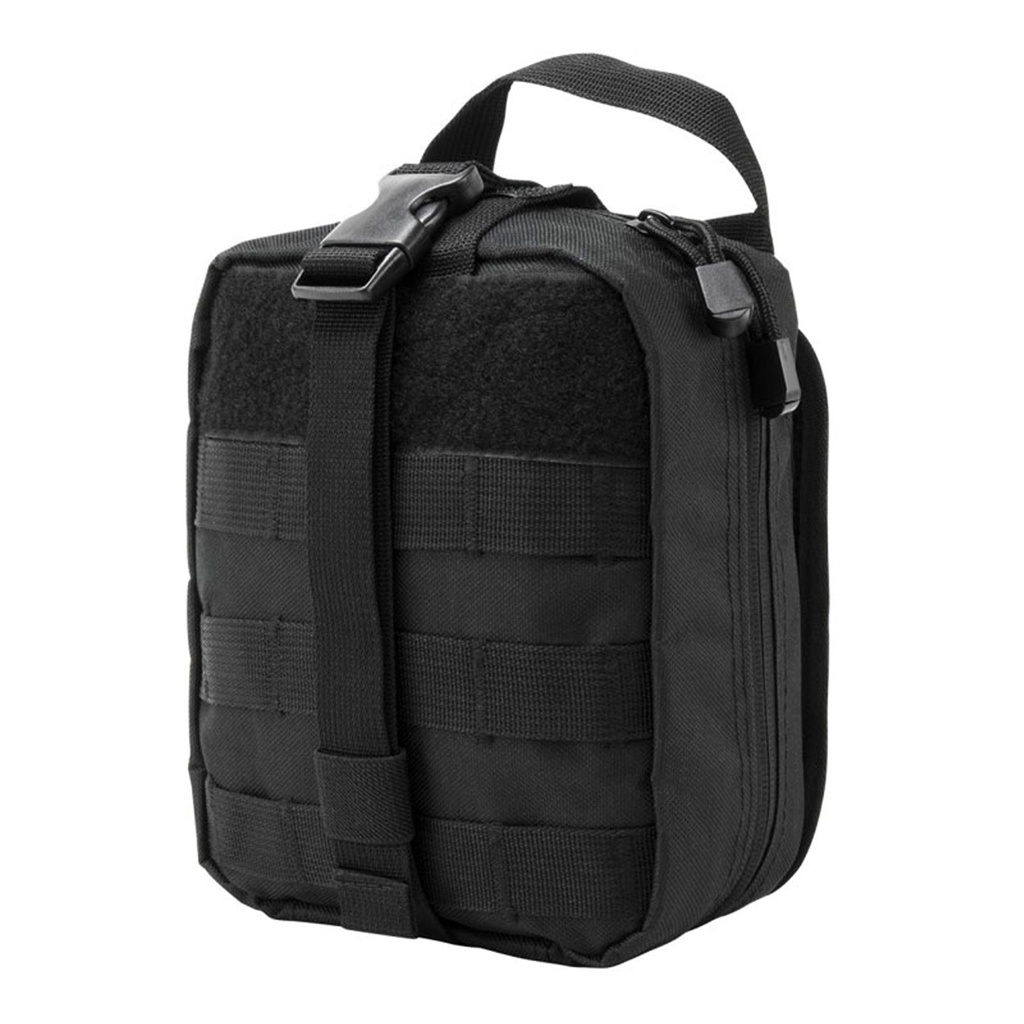
Dustline Quick-Detach EMT Organizer - Black
6 sold in last 24 hours
West of Abilene, this pouch lives on a truck seatback, packed with gauze, tape, and gloves. The tri-fold design opens flat, mesh and elastic keeping every piece where you expect it. MOLLE backing and a hook-and-loop base let you rip it free fast. Black, compact, and built for real use, it rides quiet until it’s needed.
When A Texas Backroad Becomes Your Treatment Room
Out past the last gas station between Brady and San Saba, help can be forty minutes out. That’s when a compact EMT pouch earns its keep. This black tri-fold organizer rides on a seatback, a range bag, or the side of a ranch pack, holding gauze, tape, shears, and gloves where your hands expect them, not where they wandered after a bump in the caliche road.
The Dustline Quick-Detach EMT Organizer is built for that kind of country. Eight inches tall, six and a half wide, and three and a half deep, it’s small enough to stay out of the way, big enough to carry what matters until EMS shows up. No rattle, no wasted space, no drama.
Why This Feels Like The Right Texas EMT Pouch
Texas doesn’t treat gear gently. If it rides on a plate carrier during a summer class outside San Marcos or hangs off a pack at a Hill Country lease, it gets dragged through cedar, dusted in limestone, and baked in August heat. This EMT pouch is wrapped in tough, woven black fabric that shrugs off range dust and brush snags, while the structured shape keeps your supplies from collapsing into a lump at the bottom.
The tri-fold layout opens like a book you know by heart. One panel is a clear mesh zip pocket for small items you don’t want loose. The other panels carry staggered slip pockets and elastic straps that lock in tourniquets, bandages, tape rolls, and a small light. When your hands are slick or shaking, you don’t want to hunt—you want each item right where your muscle memory says it lives.
How Texas Carriers Actually Run This MOLLE EMT Pouch
On the road between Midland job sites, this pouch often rides on a headrest, clipped into a MOLLE panel. At the lease outside Llano, it hangs from a pack strap, ready for a busted knuckle or a scope bite that went bad. Down on the coast, it holds sting relief and bandages on a jetty walk, lashed to a small pack so it doesn’t end up buried under tackle.
The MOLLE base plate is the quiet hero here. It mounts to your pack, vest, or panel with two PAL straps. The EMT pouch itself anchors to that base with hook-and-loop, backed up by a one-inch webbing strap and a quick-connect buckle down the face. When it’s time to work, you pop the buckle, rip the pouch free, and take the whole kit to the ground, the tailgate, or the barn floor. No fighting with straps while someone bleeds.
OTF Knife Texas Buyers, Meet The Pouch That Rides Beside Your Blade
If you already carry an OTF knife, Texas realities pushed you there: one-handed use, quick deployment, real work. This EMT pouch sits in the same world. In a truck where an OTF knife lives in the console for cutting seatbelts or feed bags, this pouch hangs off a MOLLE panel right behind it, stocked with the supplies that come after the cut.
On a plate carrier at a rural range outside Waco, the Texas OTF knife clips near your support hand while this EMT pouch runs centerline. Blade opens a package, trims tape, or frees a stuck strap; the pouch delivers gauze, chest seals, or tape without a scramble. Different tools, same mindset: fast, predictable, no wasted motion.
Texas OTF Knife Carriers Think About Law. Do The Same With Med Gear.
Ask anyone who’s ever searched “are OTF knives legal in Texas” before buying: this state rewards people who know the rules and prepare accordingly. The same goes for first-aid. While the law doesn’t care how you carry bandages, it does care how you carry blades. Texans learned in 2017 that switchblades and OTF knives became legal to own and carry under state law, with location-based restrictions still applying in places like schools, certain government buildings, and secure areas.
This EMT pouch doesn’t push those boundaries. It gives you a place to keep trauma shears, safety cutters, nitrile gloves, and medical tape separate from your Texas OTF knife and other edged tools. In a glove box stop on Highway 21, a trooper seeing a clear med kit alongside your gear reads that one way: prepared, not reckless.
Running A Compact Med Kit For Real Texas Distances
From Panhandle wheat fields to South Texas brush, long response times are normal. This pouch is sized for the reality that you may be the first and only responder for ten, twenty, thirty minutes. It carries enough to manage bleeding, wrap sprains, and stabilize cuts without pretending to be an ambulance in a bag. It’s the bridge between bad luck and professional help.
Seatback, Belt, Or Pack: How Texans Mount It
In town, this EMT pouch often rides on a commuter backpack, low profile and all black, looking like any other tidy organizer. Out past the loop, it’s more likely strapped to a UTV rail or a tool bag in the bed of a truck. The top carry handle lets you grab it barehanded or with gloves, and the external MOLLE webbing gives you room to stack a tourniquet or a small utility pouch on the outside where it can be snatched in seconds.
Questions Texas Buyers Ask About OTF Knife Texas Gear
Are OTF knives legal to carry in Texas?
Yes. Under current Texas law, OTF knives and other automatic or switchblade-style knives are legal to own and carry for adults, as long as you respect the state’s location-based restrictions. Certain places—like schools, some government buildings, secure facilities, and posted locations—can still prohibit specific blade types or lengths. Most Texans who carry an OTF knife keep it as part of a broader everyday or emergency kit, often riding next to a pouch like this one stocked with medical supplies.
Will this EMT pouch work with my existing Texas OTF knife setup?
If your current setup is a MOLLE rifle case in the truck, a plate carrier for classes, or a range bag with webbing panels, this pouch drops right in. The MOLLE base plate anchors to whatever you’re already running, and the pouch rips off clean when you need it. Your OTF knife stays clipped where it belongs for cutting tasks; this pouch becomes the dedicated home for gloves, bandages, and tape so they don’t end up stuffed loose in side pockets.
Do I really need a separate EMT pouch if I already carry solid gear?
In Texas, most people who’ve lived through one bad wreck or one ugly farm injury will tell you: yes. Tools and treatment aren’t the same thing. Your OTF knife cuts belts, clothing, or rope when seconds matter. This EMT pouch handles everything that comes right after—covering wounds, stopping bleeding, taping, and stabilizing until help gets there. Keeping those jobs separated but close makes your kit faster and calmer to run when things go sideways.
Put It To Work On A Real Texas Day
Picture a late Sunday drive back from the lease outside Menard. The sun’s low, FM road empty. A mile ahead, dust hangs in the air and a pickup sits crooked in the ditch. You pull over, kill the engine, and reach for what you’ve laid out on purpose: the OTF knife in the console, and this black EMT pouch ripped free from the seatback panel in one pull.
On the gravel shoulder, the tri-fold opens clean across the tailgate. Gauze where it should be, gloves where you expect them. No digging, no guessing, no borrowed time wasted. That’s the whole point of this pouch in Texas: quiet, organized readiness that’s there when the state’s long distances and hard edges show up without warning.