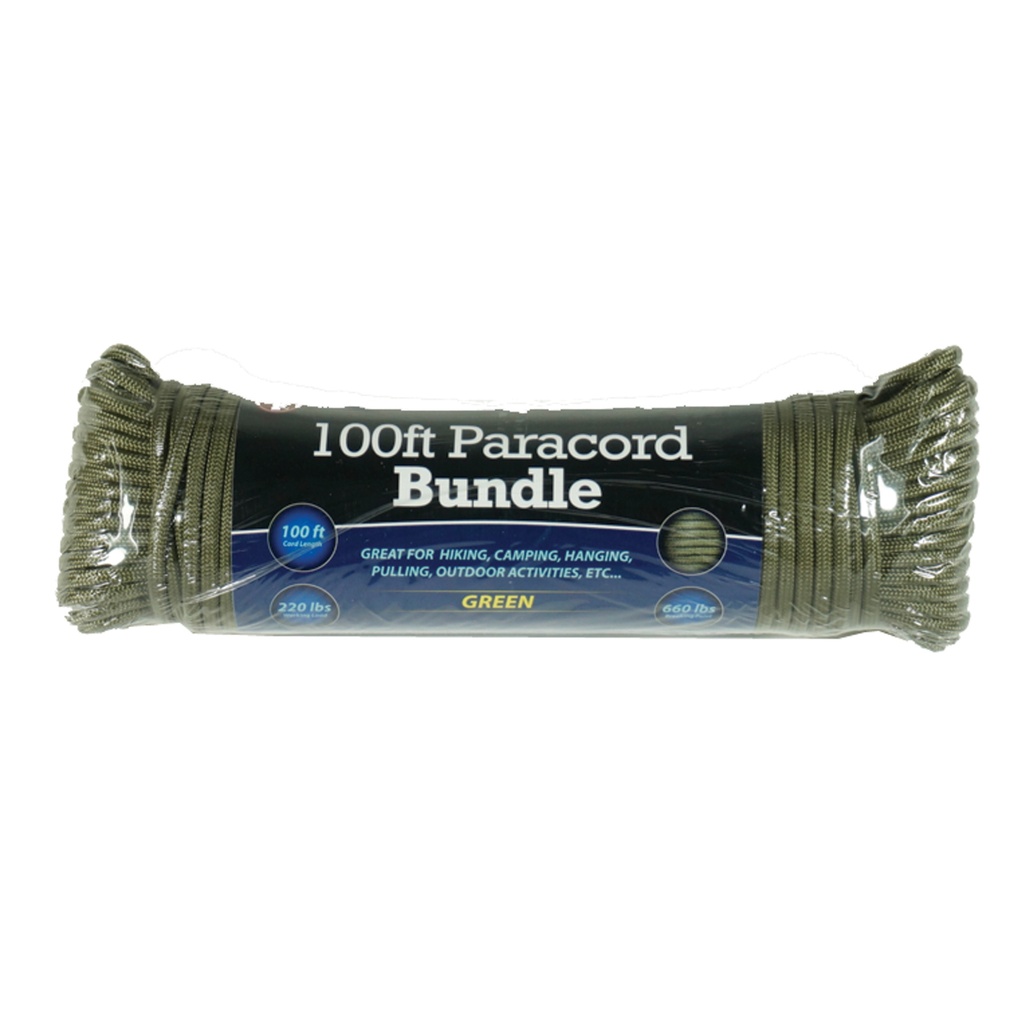
Evergreen Fieldline Seven-Strand Utility Paracord - Green
14 sold in last 24 hours
South of Abilene or north of Amarillo, this seven-strand paracord disappears into cedar and winter grass until you need it. One hundred feet of 5/32-inch nylon with a 220‑pound working load keeps tarps tight in a Panhandle wind, hangs game from a live oak, and lashes what your truck can’t hold. It knots clean, rides quiet in a pack, and solves the small problems that pile up between the gate and the back pasture.
Evergreen Cord for the Country Between the Gate and the Back Fence
Out past the last streetlight, little problems don’t wait on town. A sagging tarp in a Hill Country storm, a bedload that wants to shift on a caliche road, a feeder leg that won’t sit right in sandy East Texas soil. That’s where a hundred feet of evergreen paracord earns its keep, riding in the truck door pocket or coiled in a pack, quiet until it’s the only tool that matters.
This Evergreen Fieldline Seven-Strand Utility Paracord is built for that country. One continuous 100-foot run, seven-strand core, 5/32-inch diameter, and a field-ready 220-pound working load. It’s not showy. It’s the cord you reach for when the job is unforgiving and a knot can’t fail.
Why This Paracord Belongs in Every Texas Kit
Texas doesn’t give you one landscape. It gives you mesquite flats, coastal wind, pine thickets, and canyon edges, sometimes in the same long weekend. Gear that lives here has to keep up. This seven-strand utility paracord was made for the mixed bag.
The 5/32-inch nylon sheath slides smooth through gloved hands, but bites down when you cinch it against pipe, cedar posts, or ladder racks. The seven-strand core gives you real structure without turning the cord into stiff cable. That 220-pound working load isn’t a marketing line—it’s the difference between a secure load of fencing stays on a hill road outside Kerrville and chasing gear down a bar ditch in the rain.
Because the cord runs a full 100 feet, you can cut what you need—guy lines for a tent on Padre Island, a drag line for a buck in rocky Hill Country draws, or a dozen short ties to keep drip line and garden stakes in order behind a West Texas house where the wind never stops.
Evergreen Color That Disappears When You Want It To
That deep evergreen green isn’t an accident. In a South Texas sendero, hanging a feeder or tying back low limbs, bright cord just advertises what you’re doing. This color tucks into mesquite shade, blends against cedar trunks in the Hill Country, and fades into winter pasture outside Wichita Falls. Game doesn’t fixate on it. Neighbors driving past don’t notice it unless they’re looking.
But against a truck bed, inside a tan range bag, or wrapped around the grab handle inside your cab, that same green is easy enough to spot when you reach for it in low light. It’s field-neutral—subtle in the brush, visible among man-made gear. That balance matters on a dark lease road or at 4 a.m. in a farmyard when you’re moving in headlights and habit.
Built for Texas Workloads, Not Just Camping Trips
Plenty of cord is sold to hang lanterns for a single weekend. This isn’t that. The tight outer weave resists the dust and grit that come with Panhandle wind and West Texas caliche. Drag it through the back of a stock trailer or across plywood and two-by-fours in a remodel near Houston, and it keeps its round profile and pulling strength.
You feel it when you set a knot. Nylon gives just enough to cinch hard around slick pipe or a smooth roof rack. It holds when you lash a kayak to the top of an SUV pointed for the Frio, or secure temporary shade cloth over a run of working dogs near Lubbock. When you pull it tight, it doesn’t flatten into a ribbon; it stays cord—easier to untie when the job is done.
If you strip the sheath, the inner seven strands can be teased out for finer work: fixing gear in camp outside Big Bend, tying a makeshift pull on a stubborn zipper, or giving a little extra life to decoy rigging in a marsh near Anahuac.
Texas Carry Culture Meets Field-Ready Utility Cord
In a state where most folks already keep a knife and a light close, paracord is the quiet third tool that ties it all together—literally. It rides well anywhere: looped and hung from a headrest in a Dallas commuter truck that still spends weekends at Lake Fork, coiled in a tackle bag on the Guadalupe, or stowed in a saddlebag for trail days outside Bandera.
Because it’s just cord, there’s no legal headache to think through. No blade length, no prohibited mechanisms, no gray areas. You can keep it in a school pickup line truck, a ranch beater, or an urban apartment tool bag without giving it a second thought. For Texans who pay attention to knife laws and carry realities, paracord is the part of their kit that never needs an explanation.
Questions Texas Buyers Ask About Paracord for Everyday Use
Are OTF knives legal to carry in Texas?
If you’re pairing this paracord with an OTF knife, state law is straightforward today. Texas removed its ban on switchblades and similar automatic knives, including most OTF designs, from the Penal Code in 2013. Later, the law shifted to focus on “location-restricted knives,” which are defined solely by blade length—5.5 inches or longer—rather than by mechanism.
That means for adults in most parts of Texas, a standard OTF knife with a blade under 5.5 inches is generally legal to carry in public, the same as a typical folding knife. Longer blades are restricted in certain places like schools, polling locations, and some government buildings. Local ordinances and specific settings can still apply, so it’s smart to confirm details where you live or work, but for most Texans, a compact OTF is lawful everyday carry—and this cord gives it something useful to cut.
Will this paracord hold up to Texas heat and sun?
Texas heat eats cheap rope. This seven-strand nylon paracord is better suited to it than cotton or bargain hardware-store cord. The sheath stays tighter, the color holds longer, and the core doesn’t turn to powder after a single summer. No synthetic cord loves endless direct sun, but if you use it on truck racks, tarps, or feeders and adjust it now and then, you’ll get real seasons of service before you ever think about swapping it out.
Is this overkill for simple camping or a basic truck kit?
Not in this state. A night at a Hill Country campground can turn into a wind test. A simple fence fix can turn into an all-morning job. Having 100 feet of seven-strand cord with a 220-pound working load isn’t overkill—it’s the margin that keeps a minor problem from turning into a ruined hunt, a lost load, or a long walk. Most Texans who buy one bundle end up keeping another in the truck, because once it’s in your system, it’s hard to go back to random string and ratty rope.
From Lease Road to Back Driveway, It Just Works
Picture a cold north wind rolling over open pasture outside Vernon. You’ve got a tarp to tighten, a gate chain that came up short, and a bed full of feed bags that need taming before the next cattle guard. This evergreen paracord is there, coiled in the corner of the box, waiting. Knife out, a few quick cuts, knots you trust. Wind howls, nothing moves.
Same cord, different day: a humid Houston evening, tying down bulky gear before a long drive west, or a clear West Texas night, guying out a tent so it doesn’t fold under a surprise gust. Whatever piece of Texas you call home, this is the quiet, green line that keeps the day from coming apart. Once it’s part of your kit, you stop wondering if you packed cord. You just reach for it, knowing it’s there.