FieldGrid Rapid-Access First Responder Bag - Green/Tan
10 sold in last 24 hours
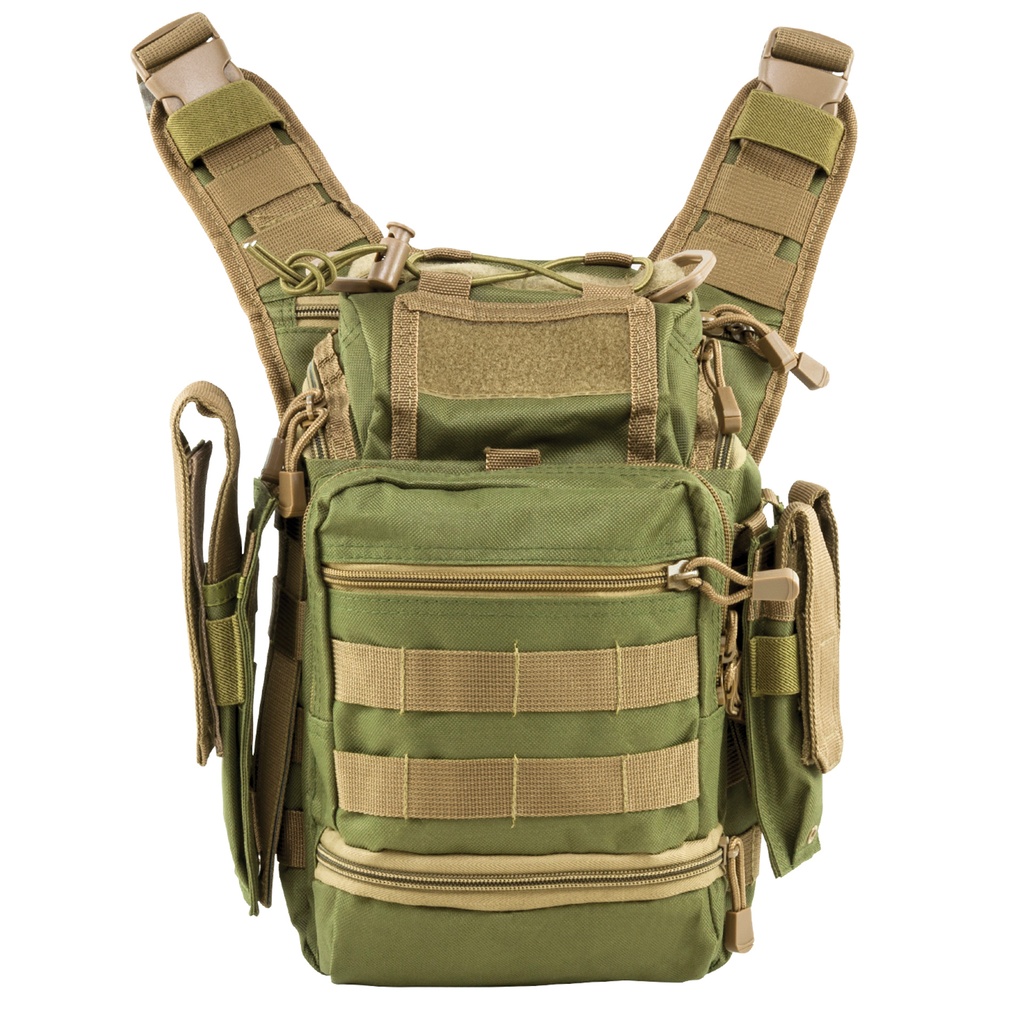
Outside a volunteer fire station in the Hill Country, this first responder bag sits by the truck door, staged and silent. Seven compartments keep gauze, gloves, shears, mags, and tools mapped to muscle memory. PALS webbing on every side takes tourniquets, radios, and extras. A rear concealed pocket holds what you don’t talk about. The padded shoulder strap rides easy until it’s time to grab the top handle and move. Built for the calls you hope don’t come—and the ones that do.
Field-Ready Order When the Scene Goes Sideways
On the shoulder of a two-lane outside Llano, trucks ease past a crumpled sedan and the smell of hot coolant. You swing out, boots on gravel, and your hand finds the same thing it always does: the FieldGrid Rapid-Access First Responder Bag riding behind the driver’s seat. The bag doesn’t shout; it just opens the same way every time. Seven compartments, each one claimed, each one waiting. No digging, no guessing, no wasted seconds.
Muted green with tan trim doesn’t draw eyes in a crowded parking lot or on a dusty ranch road, but it’s easy to spot against a truck mat at night under a dome light. The compact, boxy frame stays tight to your side when you shoulder it and run a fence line, step over caliche, or climb a bar ditch. It’s a first responder bag built for Texas distances and Texas delays, where you may be the only help for thirty miles.
How a Texas First Responder Bag Has to Work
Out here, a first responder bag isn’t decoration for the back of a suburban. It has to ride quiet until the moment it doesn’t. This pack is laid out for that moment. The front zip compartment is where most Texans keep the fast-grab gear: gloves, trauma shears, chest seals, tape. The zipper runs clean and wide so you can get inside with wet hands or under red and blue lights.
Behind it, another chamber runs deeper, good for pressure dressings, rolled gauze, airway kits, or a compact med roll. Each space feels separate and stays that way, even when you toss the bag down on broken asphalt or red dirt. Side pouches with flap and strap closures keep tourniquets, radios, or lights locked in place. When you lean out of a cab or climb a stock trailer, nothing dumps, nothing swings wide.
The padded shoulder strap is built for long carries—from a mesquite-shaded gate to a low-water crossing, or across a school campus during a drill. When you don’t need it, it tucks away so the bag can shift to grab-and-go, carried by the top handle through doors and tight hallways without catching on frames or gear.
Modular Control for Texas Trucks, UTVs, and Patrol Rigs
Texans build their trucks and rigs their own way. This first responder bag respects that. PALS webbing wraps the front, sides, and even the bottom, giving you full MOLLE-compatible real estate. On a volunteer EMS truck in the Panhandle, that means extra pouches for burn kits and splints. On a South Texas ranch UTV, it might mean a tourniquet staged on the outside and a radio pouch fixed right where your hand falls from the steering wheel.
Because the webbing runs all the way around, you can strap it down horizontal or vertical in a patrol unit or oilfield truck—threading through cargo bars, seat brackets, or mounted panels. The bag becomes part of the truck, not a loose lump that launches forward the first time you slam on the brakes to dodge a deer.
Dual mag pouches built into the layout accept M4 magazines and pistol mags without drama. For law enforcement in Houston or border counties, that means reloads staged the same way every shift. For a prepared civilian running county roads in West Texas, it means your rifle and sidearm aren’t just along for the ride; they’re supported by a bag that treats ammunition like another essential.
Discrete Carry and Concealed Capability in a Texas Context
This isn’t a billboard bag. The green and tan colorway blends against brush, uniforms, and the inside of a dusty cab. That matters in towns where people still watch who’s carrying what into the feed store or high school parking lot. The rear concealed carry pocket gives you a place for a compact handgun or other critical item that stays off the front row. No printing, no dangling straps, no loud tactical patches unless you choose to add them.
In smaller Texas counties where the same volunteer may respond to a wreck, a grass fire, and a domestic call in one night, this bag flexes. Medical up front, tools and mags in the middle, concealed in the back. You decide the roles and lock them in. When your name goes out over the radio, muscle memory does the rest.
Texas First Responder Bag Culture and Carry Expectations
Talk to veteran medics in San Antonio or volunteer firefighters in tiny towns off Highway 90 and you’ll hear the same thing: organization beats adrenaline. This first responder bag is built around that idea. The compartments aren’t just stacked; they’re mapped. Over time, you stop thinking about where things are. You just reach, even in the dark of a Hill Country creek bed or on the shoulder of I-35 with semis roaring past.
Reinforced stitching at stress points means the shoulder strap doesn’t let go when you sprint across a pasture or haul the bag up loose rock. The boxy silhouette keeps the load close to your body so it doesn’t twist your back on long scenes. Zippers and buckles are sized for gloved hands, because not every call waits for comfortable weather.
Rural, Urban, and In-Between: Texas Use Cases
In Dallas or Austin, this first responder bag may ride in the trunk of a daily driver, ready for highway pileups and crowd events. Out near Marfa, it might live in a ranch truck with a trauma kit, snakebite supplies, and a sat phone. Along the Coast, it could sit by the door during hurricane season, loaded for debris injuries and long waits for outside help.
The design doesn’t care where you are. It just gives you the same sequence, pocket to pocket, zipper to zipper, every time you lay it down on concrete, caliche, or hardwood floors.
Questions Texas Buyers Ask About First Responder Bags
Are OTF knives legal to carry in Texas?
Yes. Under current Texas law, OTF knives and other automatic knives are legal to own and carry, with length and location restrictions applying only to what the law calls "location-restricted" knives. Switchblades are no longer banned statewide. Most Texans pair a legal OTF knife with a dedicated first responder bag like this one, keeping the blade either on-body or clipped inside a consistent pocket so it’s always where the hand expects it.
Will this first responder bag handle Texas heat, dust, and long rides?
The fabric, stitching, and hardware are built with field use in mind. The tight weave sheds a fair amount of dust and brush, and the compact frame sits steady on a passenger seat, floorboard, or UTV bed. PALS webbing stays usable even after long exposure to sun and grit. It’s meant for the kind of heat that bakes dashboards in August and the kind of dust that sneaks into every crack on a caliche road.
Is this overkill if I’m not a medic or law enforcement?
No. A lot of Texans who aren’t sworn or certified still run serious kits. Ranchers, range officers, church security teams, and parents who spend weekends at ballfields and rodeo arenas all use first responder bags like this. The value is in knowing that when something goes wrong, your gear isn’t scattered. It’s staged. You can still start simple—bandages, gloves, tourniquet, light—and grow into the layout over time.
First Use, First Test, Texas Ground
Picture the bag in your own truck. Maybe it rides behind the seat of a single-cab pickup on a farm-to-market road outside Giddings. Maybe it’s strapped into the cargo area of a patrol SUV rolling through San Angelo at shift change. The call comes in—a rollover, a worksite injury, a kid thrown from a horse at the edge of a subdivision.
You grab the handle. The green and tan shape clears the doorframe without a snag. Gravel crunches, or wet grass bends, or hot asphalt radiates through your boots. You drop the bag, face up, zippers already memorized. Your hand goes to gloves, then gauze, then whatever comes next. The scene is never clean. The bag always is. In a state this big, you can’t control response times, traffic, or weather. You can control your level of organization. This first responder bag makes that level clear before you even open it.