Hammerback Fieldsmith Camp Hatchet Tool - Black & Wood
8 sold in last 24 hours
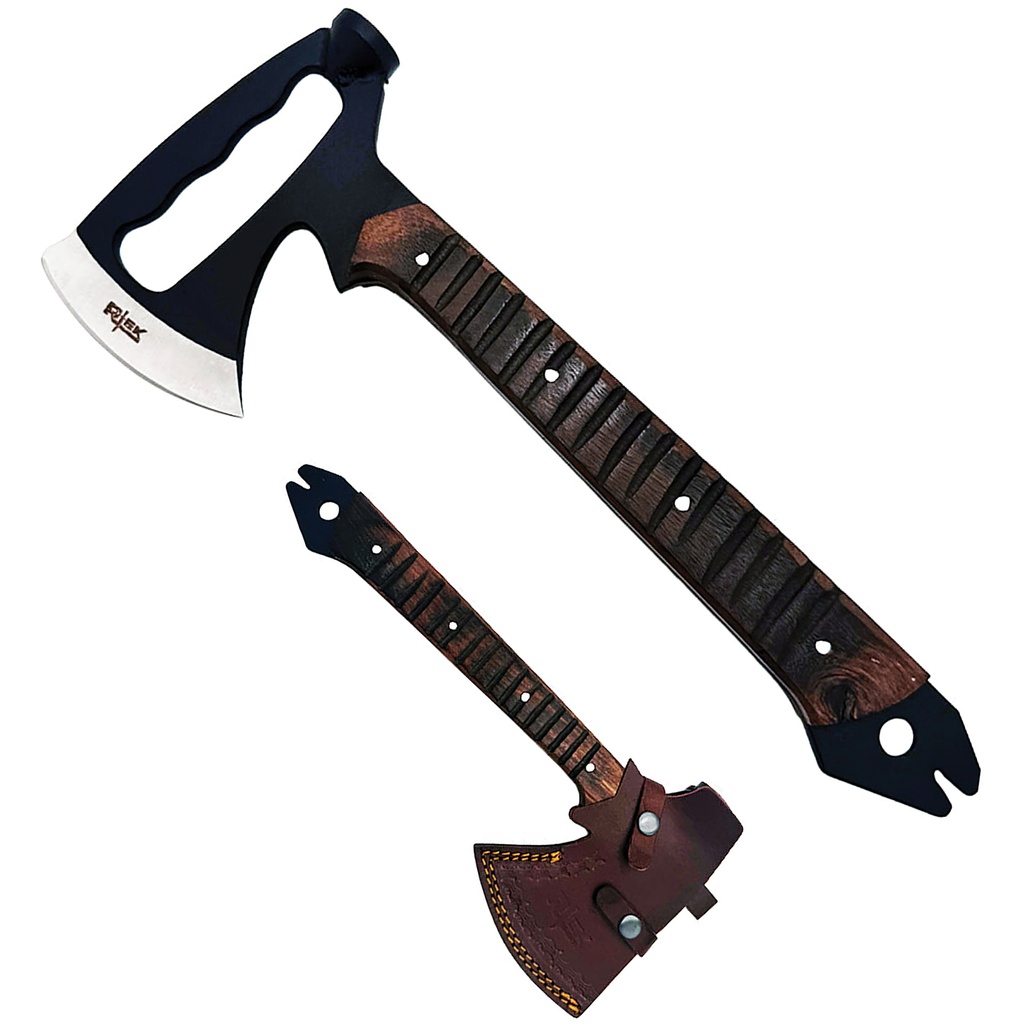
First light on a Hill Country lease and the tent stakes won’t budge. This hammer-back field hatchet bites mesquite roots, drives rebar, and yanks nails without fuss. Full-tang steel under grooved wood keeps it planted in your hand, while the leather sheath rides ready on the belt or in the truck door. This is the tool that builds camp, fixes what breaks, and goes home dirty every time.
Hammerback Fieldsmith Camp Hatchet Tool - Built for Real Texas Ground
Dew still on the Johnson grass, someone backed the trailer half an inch off square and now the ramp won’t sit right. Stakes are crooked, one 2x4 needs trimming, and the only thing between you and coffee is a pile of small problems. This is where a compact field hatchet with a hammer-back stops being gear and starts being the one tool you reach for first.
The black, powder-coated head bites clean into pine or mesquite, the exposed silver edge tracking straight through kindling or rough cuts. Full-tang steel runs the length of the handle, wood scales pinned on for control you can feel even when your hands are slick with sweat or rain. This isn’t a wall piece; it’s a camp hatchet tool that lives in the truck, rides to the deer lease, and pays rent every weekend.
Why This Camp Hatchet Belongs in a Texas Truck, Not a Toolbox
Texas land doesn’t forgive flimsy tools. One morning you’re knocking together a quick shade off the side of the stock trailer in the Panhandle wind. That afternoon you’re clearing low cedar limbs in the Hill Country so the kids don’t catch a face full of brush. A good camp hatchet has to swing light enough for quick work, hit hard enough to matter, and stand up to being tossed behind the seat.
The curved cutting edge on this tactical-style head makes short work of camp chores: trimming branches for a blind outside Uvalde, splitting kindling from a busted pallet behind a coastal RV spot, or cutting rope when the cow panel needs shifting. The hammer-back on the opposite side walks tent stakes into rocky Hill Country ground and drives nails into rough posts without chewing itself up. At the base, that forked nail puller pries up buried nails from old boards, pulls stubborn stakes, and gives you leverage when something small is stuck in the wrong place.
Grooved wood scales over the steel tang add grip without chewing your palm. Dust, mud, or river spray from a Guadalupe float—your hand still finds a sure purchase. The leather sheath snaps over the head and drops into a belt, pack side pocket, or door panel. Wherever you keep it, you know exactly where your hatchet tool sits when the wind picks up or the sky darkens and camp suddenly needs adjusting.
Texas Carry Culture and a Camp Hatchet: Where It Fits
Texans talk a lot about what rides in a pocket, but the quiet truth is this: the most useful tool often isn’t in your jeans, it’s in the truck. A camp hatchet tool like this doesn’t live on your hip walking through H-E-B; it rides in places that make sense in real Texas life.
Behind the seat in a single-cab headed out a caliche road. In the side box of a work truck that runs from Corpus job sites up to San Antonio. Strapped inside an overlanding rig crossing Big Bend dirt, where every pound has to earn its weight. The full-tang build and hammer-back give you something you can trust for small emergencies—breaking up limbs after a storm in East Texas, popping loose a warped fence board, or tapping in a temporary repair when a hinge doesn’t line up.
This is a camp and field tool that fits the Texas habit of quiet preparedness: not for show, not for bragging rights, just there when you need to solve a problem before it grows teeth.
Built for Camp, Lease, and Back-Forty Work
Walk through any deer camp outside Abilene and you’ll see the same pattern: a few knives on the table, and one or two beat-up tools that everyone shares. This hatchet wants to be that tool. The head carries a black powder coat that shrugs off damp canvas, morning fog, and the occasional forgotten night in the back of a side-by-side. The exposed silver edge sharpens clean and holds up through real use—splitting kindling by a Llano River campsite or trimming scrub oak along a fence.
The weight is balanced so you can choke up on the handle and use the cutout in the head for closer control, shaving bark or trimming small limbs for a blind brush-in. Slide your hand back and you get enough bite to split short logs down to fire size without swinging like you’re splitting oak rounds. The hammer-back gives this camp hatchet a second life once the cutting is done: tapping in hinges on a gate patch, setting T-post caps, or knocking loose a rusted latch.
That leather sheath isn’t window dressing. In the back of a ranch truck, anything loose ends up buried under feed sacks and tools. Snapped into that sheath, the edge stays covered, the head stays in place, and you can grab it by handle or sheath without wondering what the blade’s touching.
Understanding Texas Law: Where a Camp Hatchet Fits In
How Texas Treats Tools Like This in the Real World
Texas law makes a clear distinction between weapons and tools. A camp hatchet or small axe like this one is treated as a tool, not a prohibited weapon. Where a lot of Texans ask questions is around knives, switchblades, and length limits, but this hatchet falls into the same basic camp as a hammer or crowbar when you’re talking legal categories.
That doesn’t mean common sense goes out the window. Walking into a courthouse or secured area in Dallas with any obvious striking tool in hand is going to draw attention, no matter how the statute reads. Kept in a truck, tool bag, or at camp, a field hatchet like this lives squarely in the realm of normal equipment. For specific questions on odd use cases—oilfield sites with their own rules, school properties, or certain workplaces—it’s smart to check both state law and local policy.
Texas Use Cases That Make This Hatchet Earn Its Keep
Picture a storm rolling through East Texas overnight, dropping limbs across your gravel driveway. Instead of firing up a saw for a handful of smaller branches, this camp hatchet tool cleans them up fast and quiet. Or take a West Texas lease where the wind won’t leave your ground blind alone—four well-placed stakes, a few quick swings, and the hammer-back seating them deep, and you’re glassing instead of chasing loose fabric.
At a Hill Country river spot, it’s the difference between a cold, damp morning and a clean burn: cut down a few dead limbs, split them to dry heartwood, and you’ve got a fire going even after a misty night. In a city setting, this same tool lives in the garage or truck, ready to pull nails from old fence boards, tap in fresh pickets, or break up scrap before a dump run.
Questions Texas Buyers Ask About Camp Hatchet Tools
Are OTF knives legal to carry in Texas?
The law that used to ban switchblades and automatic knives in Texas changed years ago. Today, OTF knives—along with other automatic and switchblade-style knives—are legal at the state level. The bigger concern is blade length and location. Texas has a concept called a “location-restricted knife,” which generally means a blade over 5.5 inches can’t be carried into certain places like schools, polling sites, or bars that primarily serve alcohol. For most adults carrying an OTF knife day to day, staying under 5.5 inches and avoiding restricted locations keeps you within the law. Local rules and private property policies can be stricter, so it’s worth checking if you’re unsure.
Will this camp hatchet handle mesquite and other hard Texas woods?
Mesquite, live oak, and pecan test any edge, but the full-tang steel and curved cutting edge here are built for that kind of work in camp-sized cuts. It’s not a full felling axe, but for trimming limbs, cutting short pieces for a smoker, or knocking down scrub around a blind, it holds up if you keep the edge touched up. The black powder coat keeps the head from rusting fast when you’re around stock tanks or coastal humidity.
Is this hatchet worth carrying if I already keep a big knife in the truck?
A big fixed blade can slice, skin, and do light chopping, but the moment you start driving stakes, pulling nails, or hitting something solid, a hammer-back hatchet earns its ride. This tool takes the abuse you don’t want to put on your knife: prying, pounding, splitting, and cleaning up small wood and hardware jobs. Most Texans who add a dedicated camp hatchet to their setup find the knife does cleaner cutting and the hatchet takes the hits, which keeps both tools working longer.
First Use: A Texas Morning Where This Tool Makes Sense
Picture a cold morning outside a canvas wall tent up near Llano. The fire’s down to coals, the wind has picked up, and the front guide rope has sagged just enough to flap. You reach into the truck door, pull this camp hatchet from its leather sheath, trim a fresh stake from a low limb, split kindling from last night’s deadfall, and drive everything home with the hammer-back before the coffee cools. No drama. No fanfare. Just a simple, black-and-wood field tool doing what it was built to do on Texas ground.