High-Vis Ranchline Survival Bracelet - Yellow Red Paracord
6 sold in last 24 hours
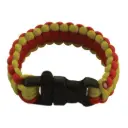
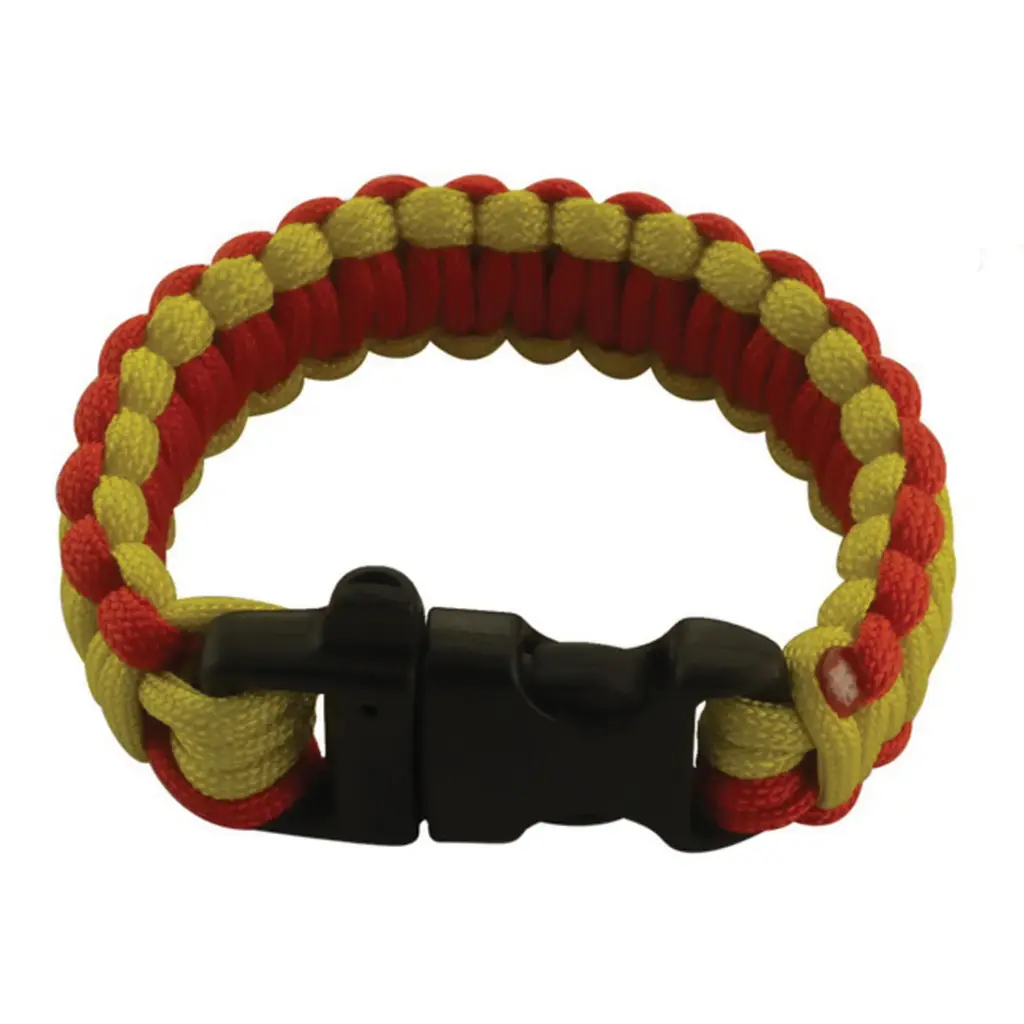
West of town, when the only light is your headlights and a thin slice of moon, that yellow-red braid on your wrist still stands out. This Type III 550 paracord bracelet carries real cordage for real trouble—tying down a busted tarp, lashing a splint, flagging a fence break. The side-release buckle snaps on easy before work and stays put through the heat. It’s one more quiet layer of insurance Texans keep close, just in case the day turns sideways.
High-Vis Cord You Can Count On When the Day Goes Sideways
Out past the last gas station, with caliche dust hanging in the beams and a mesquite limb dragging your trailer wiring, this isn’t decoration. That yellow-red paracord on your wrist is the only bright thing in the dark except your hazards. You unclip the buckle, pull line, and suddenly you’ve got the cord you need to tie up, mark out, or get moving again.
This High-Vis Ranchline Survival Bracelet is built from true 550 Type III paracord, woven tight in a cobra braid around your wrist. It wears like a simple band, but in a pinch you’re carrying several feet of dependable cord that can haul weight, lash gear, or mark danger where folks actually live and work along Texas backroads.
Why This Survival Bracelet Belongs in a Texas Truck
Across the state, from wind-swept Panhandle lease roads to low-water crossings in the Hill Country, problems usually show up where there’s no hardware store in sight. A compact survival bracelet solves small messes before they turn into long walks.
Because it’s woven from 550 Type III paracord, once deployed the inner strands can be used to tie off a fractured tent pole at a Hill Country deer camp, secure a tarp over busted gear in a West Texas wind, or rig a quick drag handle on a cooler at the coast. The yellow-red pattern isn’t about style—it’s about visibility when you drop it on gravel or grass along a ranch fence line or in a dim barn aisle.
The flat cobra-style braid keeps the bracelet low-profile under work gloves and long sleeves, while the rounded outer profile keeps it from snagging when you’re climbing in and out of a feed truck or crawling under a trailer. It stays out of the way until you need it, then turns into real, usable cordage in seconds.
Everyday Wear That Fits Texas Carry Culture
People here are used to carrying what they might need: a pocketknife, a small light, a multi-tool buried in the console. A paracord bracelet like this just joins that quiet rotation. It looks like any other woven band on the wrist, but on a jobsite outside Midland or a campsite along the Llano, it’s one more tool that doesn’t draw attention until it has to.
The black side-release buckle snaps on and off fast, even with cold hands at a January duck blind or sweaty fingers in August heat. Once closed, it holds firm. No metal, no rattle, nothing to scratch your truck door or rifle stock. Just synthetic cord with a light sheen that shrugs off rain, sweat, and river water.
If you’re walking a property line checking hog traps, fishing below a dam, or helping a neighbor clear storm-fallen limbs, this bracelet keeps your emergency cord on you instead of buried at the bottom of a pack. It doesn’t try to be more than it is: cord, ready, always in the same place.
Reading Texas Conditions: Visibility, Heat, and Hard Use
Texas doesn’t forgive gear that’s hard to see or slow to find. Grass along a fenceline hides dropped tools. Road shoulders eat small dark items. This bracelet’s yellow-red weave cuts through that. If it comes off in tall Johnson grass or red dirt, that color catches the eye the way a safety flag does on a ranch gate.
In heat that curls tape and fades cheap nylon, good paracord holds up. Type III 550 is made to carry load. Unwound, it can help drag a limb off a rural driveway after a thunderstorm east of Nacogdoches, hang a lantern from a live oak branch at a lakeside camp, or cinch loose gear in the bed before a long run on I-35.
Because the braid is tight and even, it doesn’t feel bulky. You can rest your wrist on a steering wheel for hours, work a shovel, or rope and ride without the band biting into your skin. It’s there when you need it, forgettable when you don’t.
Texas Emergency Preparedness in a Wristband
Real Uses Along Texas Roads and Ranches
Most days, this bracelet just rides along as part of your normal kit. The value shows up on the bad days: tire blowout on US 90, broken tailgate latch out on a caliche lease road, sudden storm tearing at a tarp-covered load on a stock trailer.
Unwound, the 550 paracord can mark a disabled truck on a dark farm-to-market shoulder by tying a bright line from tailgate to roadside brush. It can lash a busted cooler lid shut for the drive back from a South Texas lease or rig a quick guy-line for a tent at a stormy Gulf camp. The inner strands can serve as makeshift sewing thread for torn gear or to lash splints in a field first-aid situation while you wait on a ride.
Backup for Texas Outdoor Seasons
During deer season, a bracelet like this can help hang game bags away from coyotes in oak motts. During spring turkey hunts, it secures brush blinds. On summer river trips, it ties dry bags to kayak frames or flags a snag where everyone keeps hanging up. It’s the sort of quiet, multipurpose tool Texans appreciate: simple, tough, always close.
Questions Texas Buyers Ask About Paracord Survival Bracelets
Are OTF knives legal to carry in Texas?
Yes. Under current Texas law, automatic knives, including OTF (out-the-front) knives and other switchblades, are legal to own and carry for adults. The main legal line is drawn at “location-restricted” knives with blades over 5.5 inches in certain places like schools, polling locations, and some government buildings. A paracord survival bracelet like this is not restricted, and you can wear it openly or concealed anywhere in the state where you can normally wear jewelry.
How does this paracord bracelet fit into a Texas carry setup?
For a lot of Texans, this bracelet rides alongside a pocketknife and a light. You slip it on in the morning before you grab the keys, and it stays there through feed store runs, office hours, or fence work. It doesn’t replace tools; it backs them up. When the cord in your truck is out of reach or you’re away from the rig, the bracelet gives you enough line to solve small problems without heading back for more gear.
Do I really need a high-visibility paracord bracelet in Texas?
If your days stay inside city limits, maybe not. But if your week ever includes miles of ranch road, late-night highway driving, or time on the water, high-visibility cord earns its keep. When you’re tired, it’s dark, and the wind is up, spotting that yellow-red braid fast matters. Texans tend to favor gear that works when they’re not at their best—this fits that mindset.
Built for the Moments Texans Remember
Picture a truck nosed onto the shoulder of a two-lane road somewhere between small towns, hazard lights ticking in the dark. You’re out by the tailgate, wind rolling heat off the asphalt, trying to keep a tarp over busted gear until sunrise. On your wrist, that band of yellow and red stands out even in the gloom. Buckle clicks, braid unravels, and in a minute the load is tied down tight enough to get you home.
That’s where this High-Vis Ranchline Survival Bracelet belongs—on the wrist of someone who knows how far it is between help and home. It’s quiet insurance for people who live with long drives, big pastures, and weather that changes its mind fast. Slip it on in the morning and forget about it, right up until the moment you’re glad it’s there.