High-Visibility Doctrine Multiservice Survival Manual - Signal Yellow Cover
4 sold in last 24 hours
West of Junction, a blown radiator and a dead phone turn easy highway into empty map. This multiservice survival manual sits where it should—in the truck door, signal-yellow and easy to grab. Inside is straight, military-tested guidance on water, shelter, signaling, and staying found in big, empty country. It doesn’t entertain. It steadies you. Texans who work far from pavement don’t rely on battery bars and good luck. They carry doctrine.
When the Road Between Towns Turns Real
Somewhere between Fort Stockton and Marathon, the bars drop to none and the wind starts pushing dust across the hood. Out there, help runs on its own clock. What you have in the cab and in your head is what you work with. That’s where a high-visibility multiservice survival manual earns its ride, quiet in the truck door pocket until the day it isn’t a book anymore. It’s the difference between guessing and knowing.
This signal-yellow survival, evasion, and recovery manual grew out of real SERE training across the branches—Army, Marine Corps, Navy, Air Force. It isn’t theory. It’s the boiled-down, field-tested way to build a shelter when the cold comes down off the Caprock, find water when the creek bed’s already baked, and get found again when you’d rather not spend a second night under mesquite.
Why This Survival Manual Belongs in a Texas Kit
Texas country is big and unforgiving. One blown hose south of Ozona, one wrong turn in the pine breaks east of Livingston, one stalled jon boat on a fogged-over reservoir, and you’re reminded how thin the line is between comfortable and compromised. This multiservice survival manual is built for that thin line.
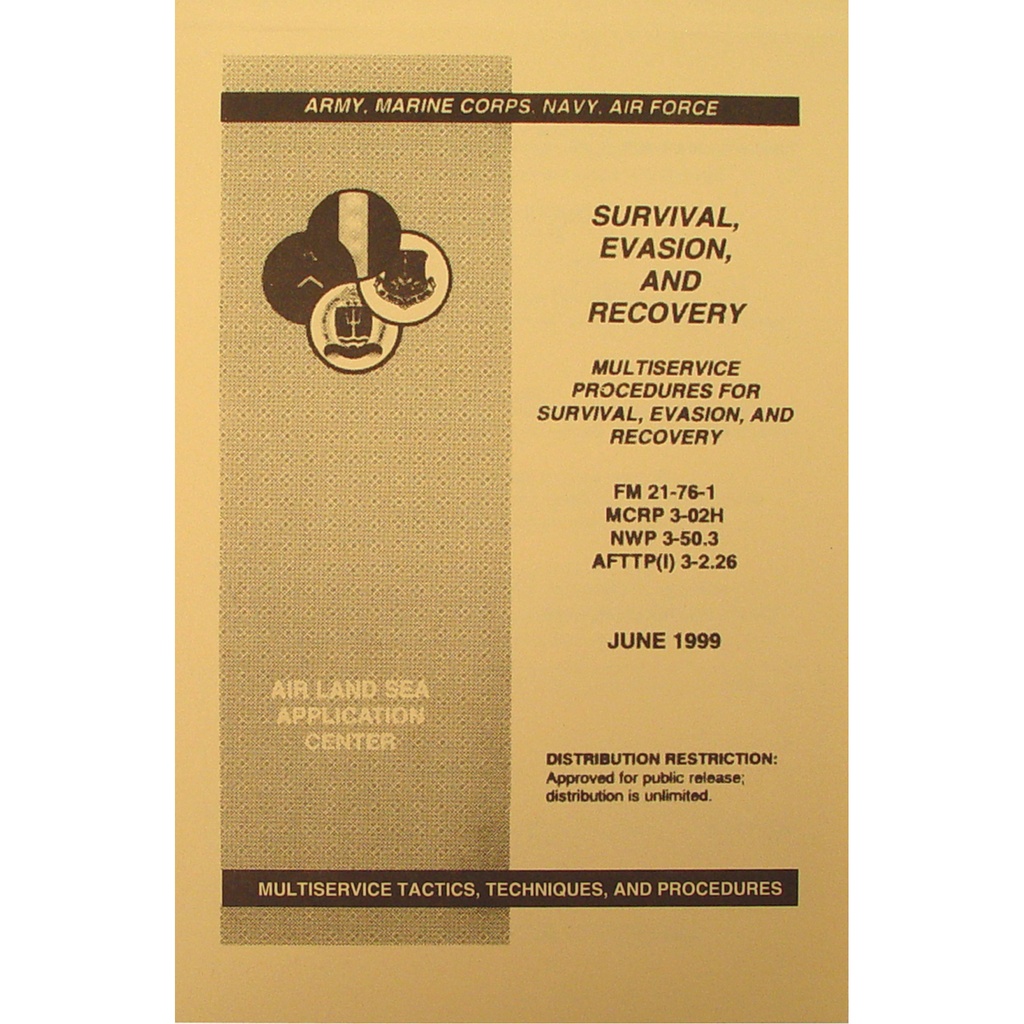
The signal-yellow cover isn’t cosmetic. In a cluttered cab, it stands out against black nylon, tan leather, and dust. In a ruck or range bag, you can find it by feel and by flash of color. The softcover flexes into tight spaces: center console, saddlebag, tool chest in a welding rig. It’s the kind of reference that doesn’t mind getting bent, sweated on, or thumbed through at a tailgate in August.
Inside, the guidance tracks straight with Texas realities—heat that doesn’t let up, sudden cold snaps on the Panhandle plains, flash floods rolling through dry draws in the Hill Country, long stretches of county road where a wrecker might be hours out. It covers evasion, shelter, navigation, signaling, medical basics, water, and food the way a seasoned instructor talks: clear, direct, and calm when everyone else is starting to fray.
Multiservice Survival Knowledge for Real Texas Terrain
The military emblems on the cover aren’t decoration. They signal doctrine drawn from people who’ve had to stay alive in bad places with limited gear and worse options. That translates cleanly to Texas work and travel—border country brush, oilfield lease roads, timber company land, big lakes where the bank is farther than it looks.
You get practical shelter-building guidance that works when the only shade you see is scrub, and the ground is either dust or caliche. You learn how to read terrain when the only landmarks are windmills, fence lines, and far-off towers. The navigation sections fit the kind of ground you find between San Angelo and Sonora, across the South Plains, and in the mixed oak and cedar that eats GPS batteries faster than you’d like to admit.
Signaling isn’t treated like a last-minute thought. In a state where aircraft fly pipeline and powerline, and where ranch roads can be a mile or more apart, learning how to be seen from the air or from a distant gravel track matters. This manual lays out signaling methods step by step, from improvised mirrors off the hood to fire and ground markings that stand out against West Texas dirt or coastal marsh.
Texas Survival Decisions When It’s You, the Weather, and the Land
Medical, water, and food aren’t buzzwords here. They’re chapters written from the assumption that it might be just you and a torn-up kit on the wrong side of dark. The medical sections speak plainly about treating injury with limited supplies—the kind of sprains, cuts, and breaks that can happen stepping off a shale ledge near Palo Duro or catching a bad fall in rocky Hill Country creekbeds.
Water gets real attention, because in Texas that’s the first clock you’re racing. You’ll find methods for locating, purifying, and rationing water in places where surface flow is rare, and the sun is pulling sweat out of you faster than you notice. Food comes later by design—this manual understands that in Texas heat, thirst beats hunger every time.
For ranchers checking fence lines, oilfield hands running night shifts, hunters pushing past the familiar roads, or coastal anglers watching a squall build faster than forecast, this survival guide is less about camping and more about coming home. It turns panic into a process: assess, stabilize, signal, move with intention.
Texas Knife and Survival Culture: Why a Manual Still Matters
Across the state, people who carry a blade every day—whether it’s an OTF knife clipped in a pocket, a lockback in a sheath, or a fixed blade on a hunting rig—understand something simple: steel helps in the moment, but knowledge shapes every move before and after you cut. This survival manual fits the same mindset.
Texans who ask about the best OTF knife in the case also ask good questions about what else belongs in a truck, go-bag, or storm kit. A reliable blade handles cord, tarp, hose, hide, brush. This multiservice manual handles the choices: when to stay put and build shelter, when to walk and how, how to treat heat exhaustion in a South Texas sendero, how to keep a cold Panhandle wind from robbing your warmth faster than you can replace it.
Just as you’d study Texas knife laws before deciding how to carry in Dallas, Houston, or Lubbock, you study a survival manual like this before you need it. You read it at the kitchen table, in the deer lease cabin between hunts, in the bunk of a man camp, or in the quiet before a Gulf storm brushes the coast. When trouble comes, you don’t rely on memory. You rely on habits built from pages you’ve already walked through.
Legal Peace of Mind and Practical Use for Texas Buyers
Understanding Preparedness and Texas Law
This manual is printed doctrine, approved for public release and legal to own, carry, and resell across the state. In a place where people still ask if switchblades and OTF knives are legal to carry in Texas, it’s worth noting: Texas law has opened up on blades, and having serious survival knowledge on paper has never been an issue. You can keep this in a school kit, ranch truck, patrol vehicle, guide bag, or office emergency drawer without drawing legal questions.
Trainers, outfitters, gun shops, and knife dealers who serve Texas customers use books like this alongside hardware. It becomes part of a fuller conversation: not just how sharp a knife is, but how smart a plan can be when the phone dies and the clouds stack wrong over the horizon.
Texas-Specific Use Cases in the Field
Picture a late-season hog hunt on a low-moon night outside Uvalde. The buggy throws a belt ten miles from the house. Radios crackle and fade. The temperature drops harder than forecast. A knife cuts cord and brush, but this manual walks you through shelter, heat conservation, and signaling without wasting motion.
Or a hurricane’s pushed inland, and the power’s been out around Beaumont for a day and a half. Roads are half-flooded, gas is scarce, and you’re not sure how long you’ll be on your own. The same yellow book that rode in the truck now sits on the kitchen table, open to water, sanitation, and first aid—calm, structured instructions when everyone else is scrolling a dead screen.
Questions Texas Buyers Ask About Survival Manuals
Are OTF knives legal to carry in Texas?
Many Texans who buy serious survival gear also carry automatic or OTF knives. Under current Texas law, automatic knives and switchblades are legal to own and carry for most adults, as long as the blade length and location comply with the state’s knife regulations and any local restrictions that may apply. It’s smart to confirm the latest Texas knife laws and any city-specific rules before you decide how and where you’ll carry your blade, especially around schools, government buildings, and events.
Is this survival manual practical for real Texas terrain?
Yes. The content was built for real-world survival and evasion, not backyard camping. The guidance on shelter, water, navigation, and signaling lines up with what Texans face: long distances between help, hard sun, fast-changing fronts, thick brush, and wide-open spaces that feel endless when you’re on foot. You adapt the principles to your specific ground—South Plains, Pineywoods, brush country, lakes, or coast—and the manual gives you the framework to do it.
How does this manual fit into a Texas-ready kit?
Most Texas buyers drop it where they can reach it fast: truck door pocket, center console, range bag, blind bag, saddlebag, or a dedicated storm tote. It pairs naturally with a dependable knife, a compact medical kit, water storage, and basic signaling tools like a whistle and mirror. The idea isn’t to build a movie-ready bug-out bag. It’s to put clear-headed instruction within arm’s reach when a simple problem starts turning serious.
First Use: A Quiet Moment Before the Weather Turns
End of a long day on a lease outside San Saba, last light hanging low behind the oaks. The rifle’s cased, the OTF knife rides clipped in your pocket, and the wind is carrying just enough cold to make you think about the drive back on empty county roads. You sit on the tailgate, crack open the signal-yellow manual, and walk through shelter, water, and signaling one more time.
Nothing’s wrong. That’s the point. You read now so you don’t have to later, when the clouds build over the horizon or the engine coughs where there’s no service. In a state this wide, you don’t leave survival to chance. You carry steel you trust, and you keep doctrine close enough to grab without looking.