Hill Country Legacy Full-Tang Hunting Knife - Brown Pakkawood
11 sold in last 24 hours
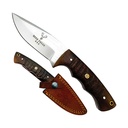
First light over a cedar break, gate wired shut, gloves already slick. This full-tang hunting knife rides easy on your belt, 3.75 inches of satin stainless ready for hide, rope, or camp chores. Brown pakkawood with finger grooves locks into your hand, leather sheath keeps it close. No drama, no learning curve — just a fixed blade that feels like it’s been in the family for years.
Hill Country Mornings and a Knife That’s Already Broken In
Cold air settles low in the draw while the limestone is still holding yesterday’s heat. You swing the gate, step over rusted wire, and the only thing you’re thinking about is whether the wind will hold. On your belt rides a full-tang hunting knife that doesn’t ask for attention. Brown pakkawood worn smooth against the heel of your hand, leather sheath creaking quiet when you kneel in the grass.
This isn’t a glass-case blade. At 8 inches overall with a 3.75-inch satin clip point, it’s built for the real work that waits after the shot and around camp. Stainless steel that shrugs off blood, dust, and a rinse from a plastic water jug in the bed of the truck. You don’t baby it; you just reach for it, like you always have.
Why This Fixed Blade Feels Right in Texas Whitetail Country
Most seasons, the work happens from the back of a tailgate or under a weak reflector light on a lease road. A good hunting knife has to make sense there. This full-tang clip point gives you enough belly for skinning, enough tip control for careful cuts inside a rib cage, and enough backbone to split joints without flinching.
The polished brown pakkawood handle settles into your grip with finger grooves that line up where they should, even when your hands are cold or slick. A mosaic pin runs through the scale — small detail, but it tells you someone cared about more than just stamping out another field knife. At 9 ounces, it has weight, but not the kind that fights you. It tracks steady through hide and meat, then does quiet duty trimming cord, opening feed sacks, or shaving tinder for a quick fire when the north wind turns sudden.
Carry Culture: A Hunting Knife That Rides Right All Over Texas
From pine thickets in East Texas to rock and cedar west of I-35, belt carry wins because it’s out of the way until it isn’t. The double-stitched leather sheath on this full-tang hunting knife sits high enough to clear a truck seat and low enough that you can draw cleanly in a blind or from under a jacket.
The belt loop holds tight on a worn work belt or a heavier gun belt. Snap closure keeps the blade secure when you’re crawling under fence or pushing through greenbriar. That same sheath doesn’t care if it’s hanging from denim in a Panhandle wheat field or riding on brush pants in the South Texas thornscrub — it stays put, breaks in, and darkens with seasons of sweat and dust.
Built for Texas Conditions: Steel, Wood, and Leather That Earn Their Keep
Stainless steel makes sense in this state. Humidity along the coast, sudden showers that turn caliche to gumbo, and long rides in a truck console will find weakness fast. The satin-finished blade wipes clean after a hog job or a deer quartering, and it won’t punish you if you forget to oil it every single time. It sharpens back up without drama on a basic stone or pocket sharpener tossed in a daypack.
The pakkawood handle looks like traditional hardwood, but it doesn’t swell, crack, or take on that sour, wet smell if you leave it in a damp blind bag or on a tailgate overnight. Brass hardware and that mosaic pin give it a touch of old-country style without turning it into something you’re scared to drag through mesquite.
Texas Knife Law and Fixed-Blade Confidence
Texas knife laws shifted to match how folks actually live and work. Under current law, a fixed-blade hunting knife like this falls under the general knife category. Its blade length sits well under the 5.5-inch mark that used to matter inside many city limits, and comfortably below the measurements that raise questions in more formal settings.
Out in the field, on private land, at the deer lease, or in the back pasture, carrying this hunting knife on your belt is squarely within how most Texans use their tools. Around town, common sense still applies — know where you’re headed and whether a visible fixed blade on your belt fits that place. For most hunters and landowners, this knife lives in the truck, at the ranch, or on the lease, ready when the season opens or when a calf needs a rope cut clean.
Legal Use Around Texas Land and Water
For cleaning fish along a tank dam, quartering a deer under a metal carport, or cutting trotline in a flat-bottom on a Hill Country river, this fixed blade aligns with how Texas game and fish work really happens. The straightforward design avoids spring mechanisms or automatic deployment, which keeps it squarely in traditional territory if you ever have to explain what you’re carrying.
From Lease Road to Back Porch Table
When you’re done in the field, this knife transitions cleanly to the house. Break down a smoked shoulder from a weekend pit session, trim backstrap for chicken-fried steak, or clean up cordage from a new feeder setup. Same knife, same edge, just a different table.
Questions Texas Buyers Ask About Fixed-Blade Hunting Knives
Are OTF knives legal to carry in Texas?
Under current Texas law, automatic knives — including OTF and traditional switchblades — are legal to own and carry for most adults in most places. The state removed the old switchblade ban and treats them like other knives, with restrictions mainly tied to certain locations like schools, secure government buildings, and some events. This particular blade is not an OTF knife; it’s a traditional fixed-blade hunting knife, which falls comfortably inside how most Texans have carried a knife for generations.
Is this hunting knife the right size for Texas field work?
A 3.75-inch blade is a sweet spot for Texas game. It’s long enough to handle field dressing whitetail, hogs, and exotics without feeling clumsy inside the chest cavity, but short enough to stay nimble skinning along legs and around the head. The 8-inch overall length keeps it compact on your belt when you’re climbing into a blind or squeezing behind the wheel of an old single-cab.
How does this compare to carrying a folding knife in Texas?
Folding knives and OTF knives ride lighter in a pocket, but a full-tang fixed blade like this gives you more strength and predictability when the work gets bloody, muddy, or rushed. There’s no joint to fail, no mechanism to gum up with fat or dust, and no doubt where the blade will be when you draw. For many Texas hunters, a folder lives in the front pocket for everyday tasks, and a fixed hunting knife like this waits on the belt for season and ranch work.
A Knife That Fits the Way Texans Actually Hunt
Picture a cool front finally pushing through after weeks of heat. You’re easing down a sendero, last light bleeding out behind a mesquite line. The shot breaks clean, and the real work starts on the ground. You unsnap the leather, pull that satin clip point free, and it settles into your hand like it’s been there for years.
Hide parts the way it should. Joints give without a fight. When the deer is hanging and the meat is cooling, you wipe the blade on an old feed sack, slide it back into leather, and climb into the truck. No story, no speech — just a hunting knife that does what it’s supposed to do in a place that expects tools to earn their keep.
| Blade Length (inches) | 3.75 |
| Overall Length (inches) | 8 |
| Weight (oz.) | 9 |
| Blade Color | Silver |
| Blade Finish | Satin |
| Blade Style | Clip Point |
| Blade Edge | Plain |
| Blade Material | Stainless Steel |
| Handle Finish | Polished |
| Handle Material | Pakkawood |
| Theme | None |
| Handle Length (inches) | 4.25 |
| Tang Type | Full |
| Pommel/Butt Cap | None |
| Carry Method | Belt Loop |
| Sheath/Holster | Leather |