Hill Country Heritage Skinning Knife - Polished Bone
14 sold in last 24 hours
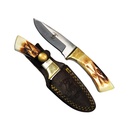
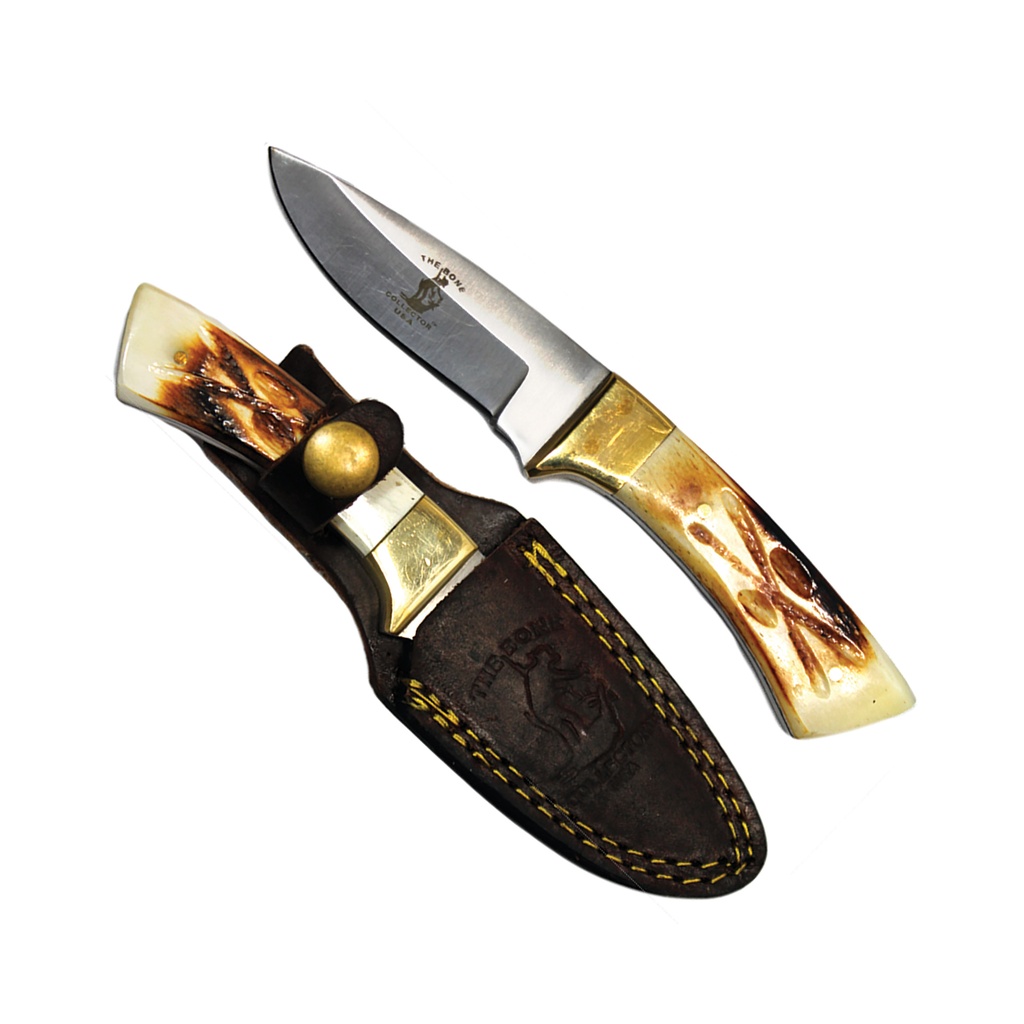
Cool dawn, red dirt on your boots, whitetail hanging from the gambrel behind a Texas barn. This compact skinning knife settles into your palm, polished bone against brass, 2.75 inches of drop point steel working clean on the hide. Full tang for control, leather sheath on your belt. No flash, no gimmicks—just a small, sure blade that handles Hill Country deer, Panhandle hogs, and every piece of camp work in between.
When a Small Blade Does Big Work
First light on a low fence place, frost on the grass between cedar and oak. The truck is still ticking as it cools, and a whitetail hangs from the gambrel off the side of a tin barn. This is where a compact skinning knife earns its keep. Not on a catalog page, but on the hide.
The Hill Country Heritage Skinning Knife - Polished Bone was built for that moment. A 2.75-inch drop point that doesn’t fight you. A full-tang spine you can feel under your thumb. Polished bone warm in the hand while your breath fogs in the cold. It’s a small knife, but in a Texas field, it feels like the right amount of steel.
Why Texas Hunters Trust a Compact Fixed Blade
On a Texas lease, a knife that’s too big slows you down. You’re working around joints, tight angles, thin hide, and you don’t have time to baby a blade. This compact fixed blade settles into that sweet spot—about 6.25 inches overall—short enough to disappear in the hand, long enough to give you leverage when you’re working on a buck at the skinning pole behind the barn.
The full-tang construction runs straight through the polished bone scales, so when you twist, push, or pinch-cut along the ribs, the knife doesn’t flex or argue. The brass bolster gives your index finger a sure stop, and that clean drop point profile lets you open up a deer or hog without blowing out the hide. Texas hunters know: a good skinner isn’t about size. It’s about control.
Bone, Brass, and Leather Built for Texas Country
In a state where a knife is as common as a pair of boots, plastic doesn’t tell the right story. This skinner carries the old materials that still make sense in modern Texas country—bone, brass, stitched leather.
The handle is real bone, polished smooth but left with jigged texture so it doesn’t get slick when there’s fat on your hands. The brass bolster and hardware catch the light on a tailgate, but they’re there for more than looks. That bit of weight at the front settles the blade in your grip for slow, careful work around tender meat.
It rides in a dark brown leather belt sheath, stitched in a color that matches the dust of a caliche road. A simple strap with a brass snap keeps it seated while you climb a ladder stand, step into a creekbed, or lean over the bed rail to hoist a hog. On a Texas ranch, good leather and bone don’t go out of style.
Texas Knife Laws and Carrying a Fixed Blade in the Field
Texas knife laws loosened up years back, which is why you see more big blades and OTFs riding on hips from Lubbock to Laredo. But even with that freedom, most hunters still reach for a compact fixed blade like this when it’s time to dress game. It’s simple, it’s predictable, and it stays put on your belt.
Fixed Blade Reality in Texas Country
Across Texas, from pine stands in the east to rocky draws in the west, a small fixed blade is the steady choice for field dressing. No flippers to fumble with when your hands are cold, no assisted mechanism to clog with hair and grit. You draw, cut, rinse at the water trough or camp spigot, and slide it back into the sheath.
Texas hunters often carry a bigger camp knife in the truck or pack. This one lives closer—in the small of the back, behind the right hip, or just off the buckle. It’s the blade you grab first, and most days, it’s the only one you end up using.
Legal Note for Texas Carriers
Modern Texas law is friendly to knife carriers, but ranch gates, processors, and certain workplaces can still have their own rules. This compact blade, with its manageable length and traditional look, reads as a hunting tool, not a weapon. It’s the kind of knife a Texas game warden expects to see when he walks up on your skinning rack: clean, practical, and obviously built for the field.
Skinning Performance From Hill Country to the Panhandle
On a Hill Country eight-point, the short drop point lets you trace along the inside of the leg without punching through the hide where you don’t mean to. The plain edge bites into that first layer, then glides with light pressure. Around the neck and shoulders, the compact blade gives you room to work without feeling like you’re fighting your own steel.
Move west or north, where hogs and heavier-bodied deer are the norm, and the full-tang construction comes into its own. When you’re pushing through thick hide or working around joints, you brace your thumb along the spine and feel real resistance. The steel holds up, the edge tracks straight, and the handle doesn’t shift under torque. It’s not a camp chopper. It’s a purpose-built skinner that stays sharp long enough to finish the job right.
Questions Texas Buyers Ask About Skinning Knives
Are OTF knives legal to carry in Texas?
Yes. Under current Texas law, OTF knives and other automatic or switchblade-style knives are legal to own and carry for most adults, with some location-based restrictions like schools, certain government buildings, and a few other sensitive places. For hunting and ranch work, many Texans still prefer a fixed blade like this for dressing game, and keep any OTF knife for everyday carry or truck duty.
Is this compact skinner enough for Texas deer and hogs?
It is. The 2.75-inch drop point is sized for precision, not bravado. On Hill Country deer, South Texas does, or smaller Panhandle pigs, it’ll handle full field dressing and skinning without feeling short. For quartering big boars or heavy camp chores, most Texans pair it with a larger knife or small hatchet, but they keep this one on their belt for every cut that matters.
Why choose a bone-handled fixed blade over a modern synthetic?
In Texas, a lot of hunters want gear that feels like it belongs beside an old lever gun and worn leather boots. Bone and brass do that, and they do it without giving up function. The polished bone on this knife shapes itself to your grip over time, the brass gives you balance, and the leather sheath rides clean on a belt all season. It’s a tool first, but it carries the kind of character you don’t get from plastic.
A Knife That Stays on Your Belt, Not in a Drawer
Picture a cool evening on a small place outside Kerrville. The last doe of the season is hanging from a mesquite limb, the sun’s thrown long shadows across the pasture, and there’s a skillet warming inside the camp house. You reach for your belt, draw this compact skinner, and the bone settles into your palm like it’s been there for years.
You make the first cut, hide pulls free cleanly, steel moves where you point it. No drama. No fight. Just a short, honest blade doing the job the way your grandfather expected a knife to work. When the hide’s off and the meat’s cooling, you rinse the blade at the outdoor sink, wipe it dry, and snap it back into its leather sheath.
Some knives come out for photos. This one comes out every time there’s work to be done on an animal in Texas country—and that’s how it earns its place.
| Overall Length (inches) | 6.25 |
| Blade Color | Silver |
| Blade Finish | Polished |
| Blade Style | Drop Point |
| Blade Edge | Plain |
| Blade Material | Steel |
| Handle Finish | Polished |
| Handle Material | Bone |
| Theme | Hunting |
| Tang Type | Full Tang |
| Sheath/Holster | Leather Sheath |