Hill Country Heritage Compact Skinning Knife - Natural Stag
14 sold in last 24 hours
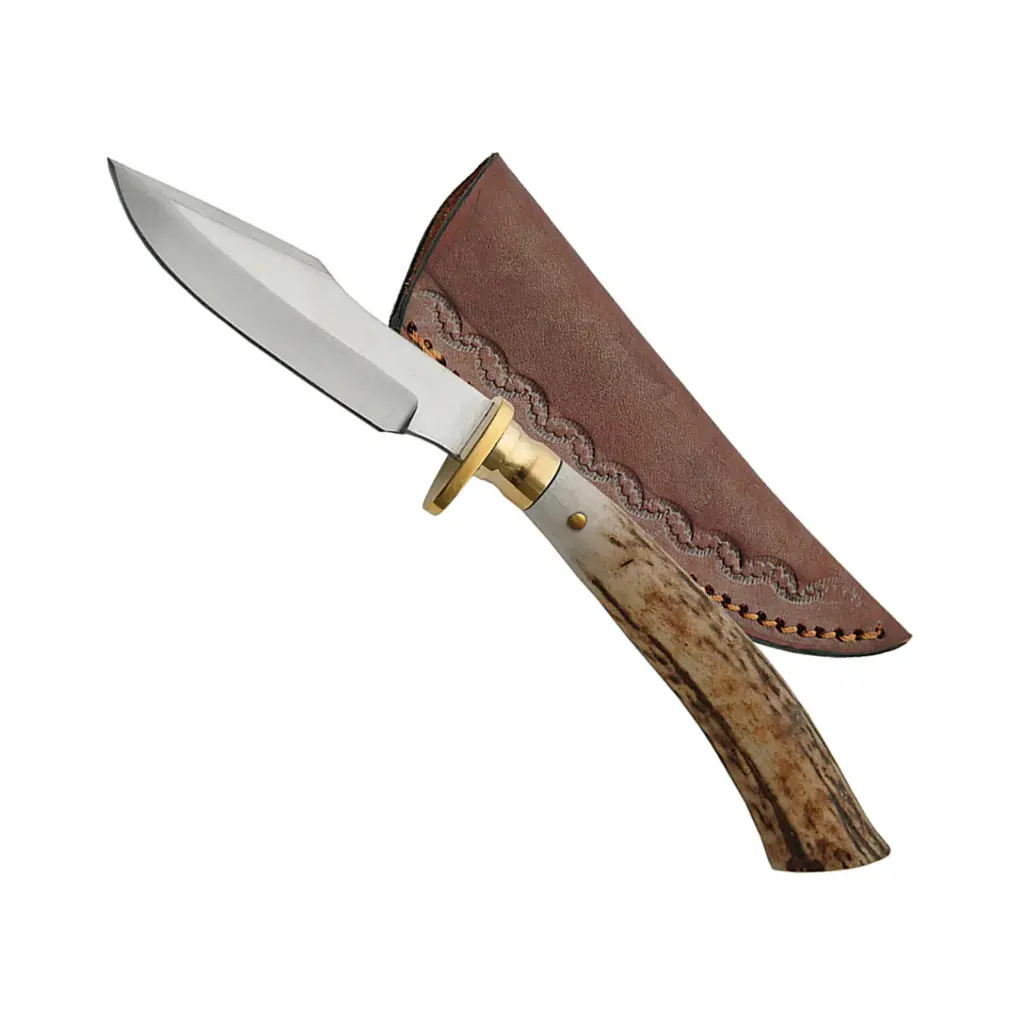
Deer’s hanging in the barn, radios low, floor still dusty from caliche. This compact fixed blade slides from its leather sheath and settles into your hand like it’s been there for years. The natural stag handle locks your grip, the brass guard keeps you honest, and the matte drop point glides through hide clean. Full tang steel, 7.5 inches nose to tail, rides easy on a belt. This is the knife that stays in the truck, season after season.
Heritage in Hand on a Cold Hill Country Morning
The first north wind has finally pushed through and the lease road is dusted white with caliche. You kill the truck lights a mile from camp. In the bed, next to the ice chest and feed sacks, rides a small leather sheath that’s seen more seasons than most guns. Inside is a compact skinning knife that feels like it grew out of the country itself: stag in your palm, matte steel at your fingertips, brass guard catching the dawn.
This isn’t a showpiece. At 7.5 inches overall with a 3.5-inch drop point, it’s built to work tight to the bone without fighting you. The natural stag handle gives you a sure grip when there’s fat, blood, and cold in the air. The full tang steel keeps the blade honest, from first nick up the hock to the last pull along the ribcage.
Why a Compact Skinning Knife Belongs on a Texas Belt
On most Texas places, you’re not walking far from the truck. What matters isn’t size; it’s control. A full-size camp knife can feel clumsy on a Hill Country whitetail or a South Texas hog, especially when you’re working in tight joints or along the neck. This compact skinning knife is cut for that reality—enough blade to open, quarter, and trim, without extra length getting in the way.
The brass guard is small but sure, stopping your fingers from sliding when your hands are cold or slick. The natural stag handle has just enough texture and curve to sit solid whether you’re choking up for detail work or pulling long, steady cuts down the flank. Pinned construction keeps everything tight, season after season, even when it lives on a belt, in a feed truck, or behind a pickup seat.
Field Details That Matter From Panhandle to Brush Country
A Texas season runs long. Bow opener in the heat, rifle in the cold, hogs and exotics all year if you’ve got them. A fixed blade skinning knife has to keep pace without turning into maintenance work. The matte silver drop point here is easy to bring back on a stone or ceramic rod—no coatings to baby, no fussy grinds that demand a shop edge every trip.
The leather sheath rides clean on a belt, flat enough to sit under a jacket or along a truck seat without poking. The scalloped stitching isn’t decoration so much as proof someone cared enough to build it right. Slide the knife home and it seats with a quiet confidence. No snaps to fight with gloves on, no plastic clips to crack in a cold Panhandle wind.
Texas Carry Culture and Fixed Blade Practicality
In this state, a lot of hunters still keep one knife for everything that matters in the field. This compact skinning knife earns that spot by staying simple. No hinges to freeze up with hair and tallow. No moving parts to fail halfway through a West Texas mule deer. Just a full tang steel blade and stag handle that can be rinsed, wiped, and put back to work.
It sits well on a work belt checking fences, just as at home riding behind the seat of a half-ton headed east on I-10 for a weekend at the lease. Small-town lockers, processor drop-offs, late-night skinning racks under bare bulbs—this is where a knife like this proves itself. If you guide, you already know: clients bring whatever they bought last week. You carry what won’t quit on you.
Understanding Texas Knife Laws for Fixed Blade Hunters
Texas knife laws shifted a few years back, and it opened up what you can reasonably carry without worrying. Today, a fixed blade hunting or skinning knife like this is legal to own and carry in most everyday situations across the state, with one key concept to keep in mind: location-restricted knives. State law mainly cares about blade length over 5.5 inches in certain protected places—schools, polling locations, secured government buildings, and a few others spelled out in the statute.
How This Compact Skinning Knife Fits the Law
With a blade of about 3.5 inches, this compact skinning knife sits well under that 5.5-inch threshold. For the vast majority of Texas hunters, ranchers, and weekend lease holders, that means this knife can ride on your belt to and from camp, around town before you head out, and in the truck without crossing into the “location-restricted” category under state law. Local ordinances can still vary, and it’s on you to know the rules where you live, but in terms of state code, this is a straightforward, legal-sized field blade.
Where common sense comes in is obvious: don’t walk into a courthouse, school event, or posted secure facility with any knife, no matter the size. Treat this compact skinning knife for what it is—a purpose-built tool for the ranch, the lease, the lease road gas station, and the drive home with a tagged animal in the cooler.
Questions Texas Buyers Ask About Skinning Knives
Are OTF knives legal to carry in Texas?
Texas law no longer singles out switchblades or OTF (out-the-front) knives the way it used to. The main legal line today is that 5.5-inch blade length and the list of “location-restricted” places where longer blades are off-limits—schools, certain government buildings, and a few other protected spots. So whether it’s an OTF or a fixed blade like this compact skinning knife, legality in Texas mostly comes down to blade length and where you’re carrying it, not the opening mechanism.
Is this compact skinning knife enough for Texas deer and hogs?
For typical Hill Country whitetails, East Texas piney woods deer, and most Hill Country or Central Texas hogs, a 3.5-inch drop point like this is plenty of blade. It opens, skins, and quarters clean without crowding you in the tight spots—neck, shoulders, and hocks. On bigger South Texas boars or heavier-bodied mule deer, you might reach for a heavier camp knife for bone work, but this compact skinner will still handle the hide and meat just fine.
Why pick a stag-handled skinning knife over synthetic?
In our heat and dust, synthetics have their place, but stag brings a few quiet advantages. The natural taper and texture of stag lock into your hand when things get slick. It also warms quickly in cold weather, which matters when you’re skinning under a north wind at a high fence in December. Beyond that, stag carries a kind of earned tradition in Texas—guides, older hunters, and seasoned hands trust it because they’ve used it for decades.
From Deer Camp to Drive Home: A Knife That Stays
Picture the first evening on a new lease outside Junction. The fire’s down to coals, someone’s telling the same old story about the buck that got away on the neighbor’s fence line, and a young hunter walks over with their first deer hanging from the gambrel. You reach for the same natural stag handle you’ve wrapped your hand around for years.
The compact blade slides through hide without fuss, brass guard catching your finger every time you lean in. You’re not thinking about the knife. You’re thinking about clean cuts, cooled meat, and that long drive down 83 in the morning. That’s what the right skinning knife does in this state—it disappears into the work and quietly earns its place on your belt, season after season.
| Blade Length (inches) | 3.5 |
| Overall Length (inches) | 7.5 |
| Blade Color | Silver |
| Blade Finish | Matte |
| Blade Style | Drop Point |
| Blade Edge | Plain |
| Blade Material | Steel |
| Handle Finish | Natural |
| Handle Material | Stag |
| Theme | None |
| Handle Length (inches) | 4.0 |
| Tang Type | Full Tang |
| Pommel/Butt Cap | Stag |
| Carry Method | Belt Carry |
| Sheath/Holster | Sheath |