
Lease Camp Shadow Hunting Knife - Bone Handle
3 sold in last 24 hours
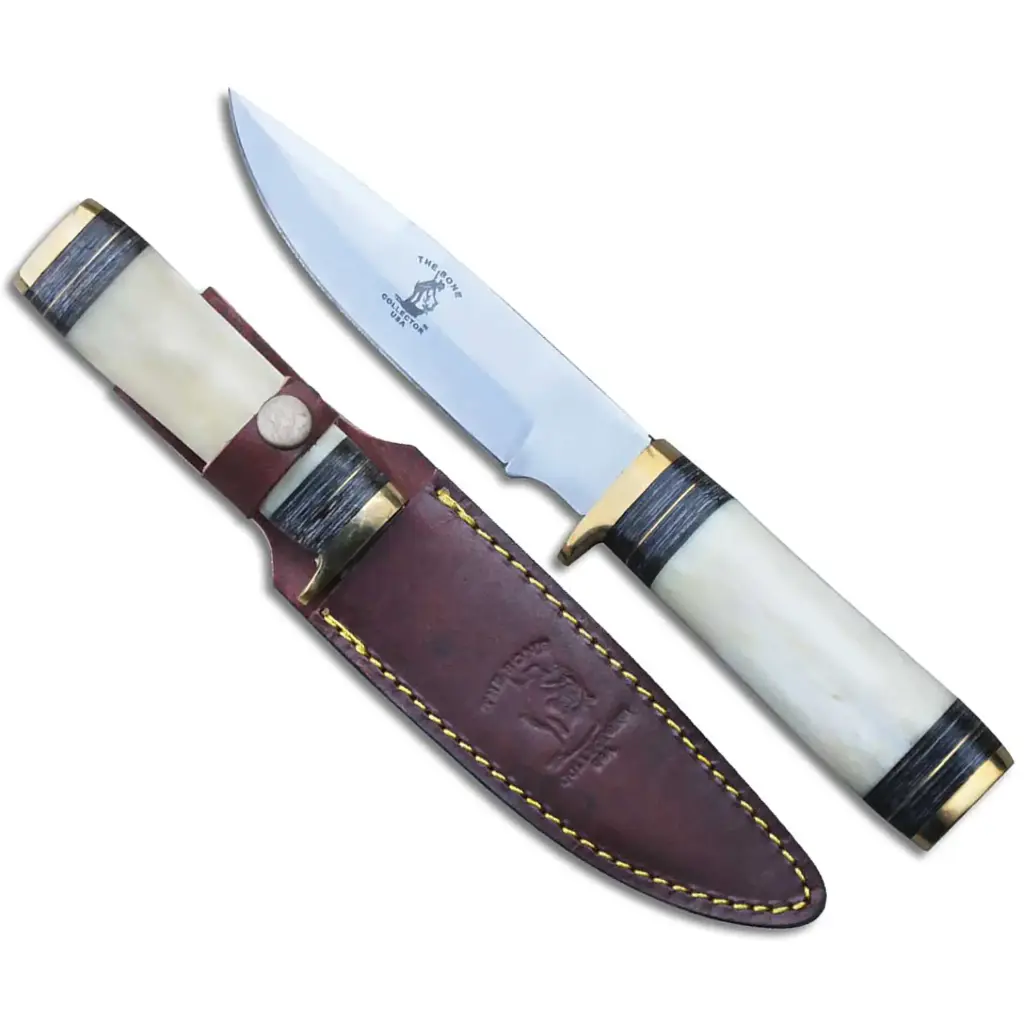
First light on a Hill Country lease, the coffee’s still boiling when this fixed blade hits your belt. The Lease Camp Shadow Hunting Knife rides easy in its leather sheath, bone handle filling the hand without slipping. The drop point blade makes quick, clean work of hide, rope, and camp chores. Quiet, traditional, and built to be passed from one season to the next, it’s the knife Texans keep on their hip when the gate chain closes behind them.
Lease Mornings, Wet Grass, and a Knife That Belongs There
Dawn on a low-fence lease outside Junction. Grass wet to the knees, mesquite dripping from a night storm that finally broke the heat. You swing the truck door closed, shrug into your jacket, and your hand finds this bone-handled fixed blade riding on your belt like it’s always been there. No clips, no gimmicks. Just a drop point blade, brass guard, and leather sheath made for walking senderos in the dark.
Why This Fixed Blade Fits Serious Texas Knife Buyers
Most folks looking for an OTF knife in Texas want speed and pocket carry. But there are days when a traditional hunting knife just makes more sense. This satin-finished drop point gives you a clean, controllable edge for field dressing whitetail in the Hill Country or quartering a hog in creek-bottom mud. The bone-style handle stays sure in a sweaty or bloody grip, and the brass guard keeps your hand where it belongs when you bear down through thick hide or stubborn joint.
Where a Texas OTF knife shines for quick utility cuts, this fixed blade owns the longer jobs: breaking down meat on a tailgate, trimming rope at a cattle pen, or working through cedar limbs to clear a blind. It’s the knife that doesn’t fold, doesn’t rattle, and doesn’t care if it lives in the sheath all summer and goes straight to work when October rolls around.
Carry Culture: How This Knife Rides in Texas Life
On a belt over jeans, this leather sheath sits high enough to clear a truck seat but low enough to draw without thinking when you’re standing in a sandy fenceline. The retaining strap snaps over the brass pommel, so it stays put bouncing across caliche roads or climbing a rickety tripod stand. In a South Texas blind, it rests against your hip, out of the way but close when you finally get hands on a hog that didn’t fall where it stood.
In the Panhandle, it might live behind the seat of a single-cab work truck, sheath wedged upright between a feed bucket and a rolled-up slicker. On the coast, it’s on your belt while you clean reds at the cleaning table and still sharp enough to slice bait the next morning. The polished bone look isn’t for show; it’s for visibility when you set it down on the tailgate under a dim skinning rack light and don’t want to lose it in the shadows.
Texas Knife Law, Fixed Blades, and Where This One Fits
Texas knife laws are straightforward these days, but they still matter. The state draws a line at blades longer than five and a half inches, calling those “location-restricted knives” you can’t carry into certain places like schools, bars getting most of their money from alcohol, or big events. Under that length, you’re in legal everyday-carry territory across most of the state, whether you favor an OTF knife or a traditional fixed blade.
Legal Reality for Texas Hunters and Landowners
Out on private land, on a deer lease, or working a ranch, that restriction doesn’t bite as hard. You can carry a larger fixed blade on your belt while running fence, checking game cameras, or quartering meat on your own tailgate. Where an OTF knife Texas buyer might be focused on inside-the-city carry, this bone-handled fixed blade is built for outside the city limits, where land and work matter more than door signage.
Most Texans running a knife like this are headed to a stand, a pasture, or a campsite, not a courthouse or stadium. Still, knowing where that legal line sits lets you choose whether to keep it behind the truck seat in town and on your belt once the pavement turns to gravel.
Blade and Handle Built for Texas Conditions
The satin drop point blade gives you a straight, predictable cut in real Texas work. It’ll slide through deer hide without popping guts, then trim cord, feed bags, and nylon straps back at camp. A plain edge sharpens fast on a pocket stone at a Coleman-lit camp table, so you’re not babying a fancy grind when you should be back at the fire.
Materials That Match Texas Weather Swings
The bone-style handle doesn’t care if it’s January cold on a Panhandle wheat field or August hot under a West Texas sun. Polished smooth but shaped to fill the hand, it won’t chew up your palm when you’re pushing hard through stubborn cartilage. The brass guard and pommel give it the weight and balance of an older-style hunting blade—the kind your grandfather laid on newspaper when he showed you how to skin a deer for the first time.
The leather sheath, dark and stitched in contrasting thread, takes on sweat, dust, and rain and looks better for it. Wiped clean and oiled once in a while, it’ll ride a belt season after season without sagging or giving up its grip.
Questions Texas Buyers Ask About Fixed Hunting Knives
Are OTF knives legal to carry in Texas?
Yes. Texas removed the old switchblade and automatic knife restrictions years ago. These days, an OTF knife is treated like any other knife under state law. The key legal line isn’t the mechanism—it’s blade length. Once a blade runs longer than five and a half inches, it becomes a “location-restricted knife,” meaning you can’t carry it into specific places like bars that make most of their money from alcohol, schools, or certain government buildings. Under that length, whether it’s an OTF, a folder, or a fixed blade like this one, it can be carried almost anywhere in Texas, subject to those location rules.
Is this fixed blade better than an OTF knife for Texas hunting?
For pure hunting work, yes. An OTF knife Texas hunters carry is handy for quick cuts—opening feed sacks, trimming cord, light camp chores. But when it’s time to open a deer from brisket to sternum or break down a hog on a tailgate, a solid, non-folding blade like this gives better control, easier cleaning, and less to fail when blood, fat, and grit get involved. It wipes clean, has no moving parts to jam, and rides in a sheath that won’t fold or flex when your hands are cold and tired.
How should a Texas buyer decide between this and a pocket OTF?
Think about where you spend more time. If most of your day is in town, in and out of offices, trucks, and stores, a compact OTF knife in Texas pockets makes sense—fast, discreet, easy to carry under a tucked shirt. If your time leans toward leases, pastures, and backroads, this fixed blade earns its space on your belt. Plenty of Texans carry both: OTF in the pocket for everyday tasks and a bone-handled hunting knife like this in the truck or on the belt when the pavement runs out.
First Use: A Night Under Texas Stars
Picture a cool front pushing across a Central Texas lease. Wind in the live oaks, fire popping, lantern hissing. A deer hangs from the skinning rack, steam rising in the chill. You draw this knife from its leather sheath without looking, the bone handle fitting your hand like it’s already logged a decade of seasons. The blade opens hide in one steady pull—no chatter, no struggle. Later, it slices backstrap for the skillet and rope for the trash bags before riding back on your belt as you walk to the bunkhouse under a hard, bright sky. That’s where this knife lives: on the belt of someone who doesn’t name their tools, just uses them, season after season, across Texas.