Midnight Crest Shirasaya Wakizashi Sword - Black Wood
8 sold in last 24 hours
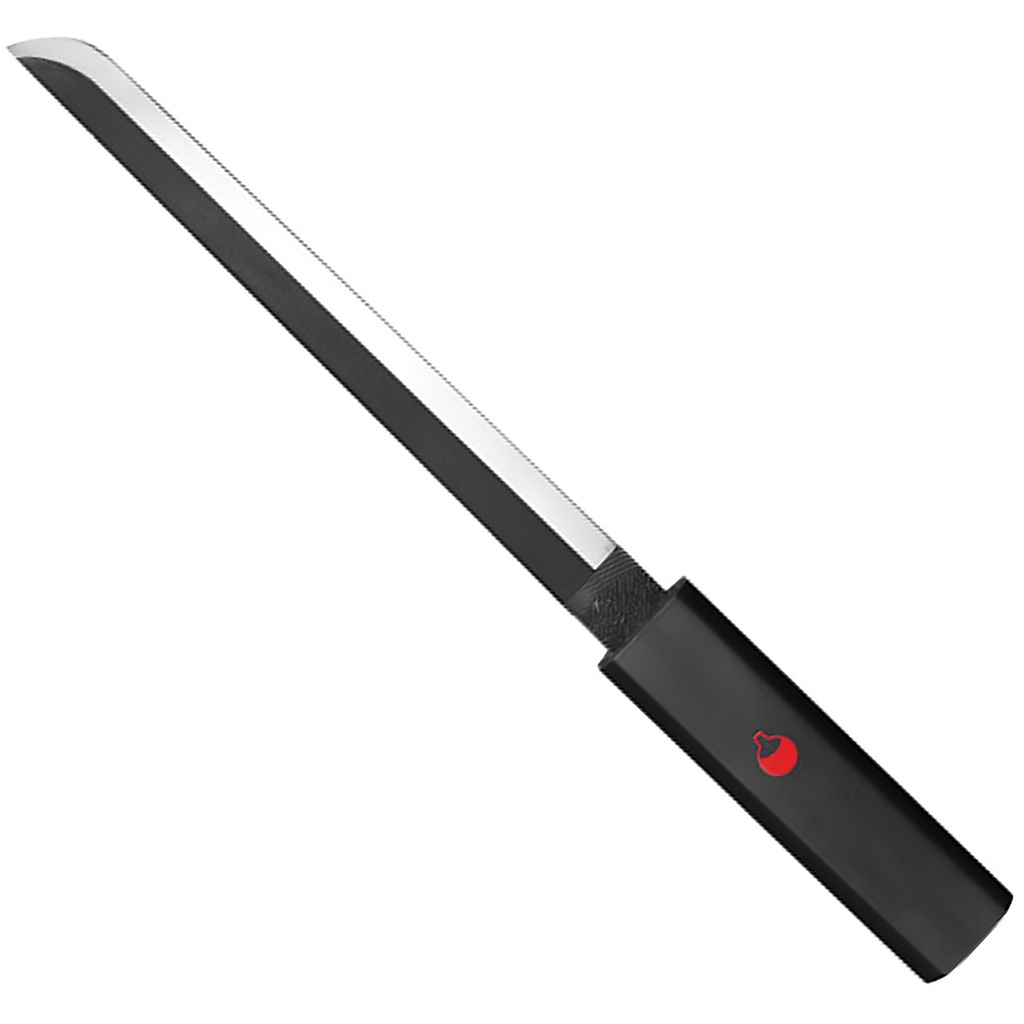
Late night in a Hill Country dojo or a quiet room off a Panhandle ranch house, this shirasaya wakizashi fits the scene. The 11.25-inch two‑tone stainless blade runs clean and straight, sliding into a minimalist black wood mount marked by a single red crest. At 17.5 inches overall, it carries light in the hand, steady on the wall, and speaks in the same low voice as the person who owns it—disciplined, deliberate, and not looking for attention.
Shirasaya Steel for Quiet Texans
There’s a certain kind of Texan who doesn’t hang loud steel on the wall. In a Houston townhouse study, a Hill Country dojo, or the back room of a Midland gun shop, the blades that stay are the ones that don’t shout. This shirasaya wakizashi sits in that camp—black wood, a single crest, and a straight 11.25-inch stainless blade that doesn’t need help being noticed.
At 17.5 inches overall with a 6.25-inch grip, it feels natural in the hand, like a short cane or a piece of hardwood you’ve handled for years. The two‑tone blade—polished edge and blackened spine—keeps to the same theme: nothing extra, nothing wasted, just a Japanese short sword built for people who appreciate discipline more than drama.
Why This Wakizashi Belongs in Texas Rooms
Texas homes carry stories—old rifles over limestone fireplaces in Kerrville, branding irons tucked in Amarillo garages, and the occasional sword resting where only family and close friends ever see it. This shirasaya wakizashi fits those private spaces. The minimalist black wood mount rides clean on a wall rack, across a bookcase in a Dallas office, or on a simple stand beside a tatami mat in a San Antonio dojo.
The rectangular handle has no guard and no excess fittings, so it reads as a piece of lacquered hardwood until you slide the blade free. That single red crest inlaid into the black wood gives just enough color to catch the eye when the light hits right, but it never turns the piece into decor for tourists. It’s for the person who trains, collects, or just likes knowing that not all the sharp things in the house are meant for opening boxes.
Blade and Balance Built for Dojo and Display
On the mat, a wakizashi like this lives in the details. The straight, single‑bevel stainless steel blade keeps things predictable during practice—easy line of sight, even draw, simple return. The black spine against the bright edge helps your eye track alignment under fluorescent dojo lights in Austin or under a single overhead light in a converted garage in Waco.
That 6.25-inch shirasaya grip runs smooth and uninterrupted. There’s no wrap to loosen and no raised fittings to snag on a gi sleeve. The rectangular profile gives enough purchase for a firm, directional hold without breaking the clean lines that make shirasaya mounts so distinctive. In the hand, it feels honest: you know exactly where the blade wants to go.
When it’s not being drawn, the sword holds its own as a display piece. The two‑tone steel, the long unbroken stretch of black wood, and the small red crest come together like a quiet painting. It fits a modern high‑rise condo in downtown Austin as easily as it does a cedar‑lined study outside Boerne.
Texas Knife Law, Swords, and Where This Piece Fits
Texans worry less about labels—knife, sword, short sword—and more about whether they’re on the right side of the law. Under current Texas law, a wakizashi with an 11.25-inch blade falls into the "location-restricted knife" category because the blade is over 5.5 inches. You can own it, keep it at home, and display it without issue, but you can’t legally carry it into certain places like schools, bars, or government buildings.
Understanding Texas Length Rules in Plain Terms
Think of it this way: under 5.5 inches, you’re dealing with normal everyday carry rules. Over 5.5 inches—like this wakizashi—and the law treats it more like a blade that stays put. That’s fine here, because this shirasaya isn’t built for belt carry through a San Angelo feed store. It’s built for serious practice on private mats, for cutting drills under a sensei’s eye, or for quiet display where you control the room.
There’s no spring, no switch, no automatic action to worry about from a Texas perspective. Where switchblades and OTF knives used to raise questions, the state has largely opened the door on those. With this wakizashi, your only real concern is length—and that’s handled by keeping it on your own property or transporting it directly and respectfully to a training space that allows it.
Texas Training and Collecting with a Shirasaya Wakizashi
Across the state, from strip‑mall dojos in Lubbock to traditional koryu schools tucked into side streets in Dallas, there’s always a handful of students who show up early, leave late, and care about more than just punching a time clock. This sword is for them. The shirasaya style forces focus. No guard to hide behind, no flashy fittings to distract from basics—just edge, spine, and your hands doing what they’re supposed to do.
Use Cases That Make Sense in Texas Life
In a Houston suburb, it might stay in a climate‑controlled home dojo and only come out for kata and controlled cutting drills. In El Paso, it might live on a low stand in a spare bedroom, paired with a longer blade and a stack of worn training manuals. Out in the country, it could rest on a shelf in a workshop office, a personal reminder that not all discipline is measured in acres or cattle.
Collectors get something different out of it. Japanese‑style swords in Texas often drift toward over‑decorated, overly shiny imports. This one takes the opposite route—minimalist mount, simple two‑tone blade, restrained crest. It slides easily into a broader collection of Western and Eastern blades without clashing, bridging the space between a working ranch knife and a high‑polish katana.
Questions Texas Buyers Ask About Shirasaya Wakizashi Swords
Are OTF knives legal to carry in Texas?
OTF knives and traditional switchblades are legal to own and carry in Texas now, as long as you respect the same length and location rules that apply to other blades. The old statewide ban on switchblades is gone. The focus is on blade length and where you take it, not how it opens. This wakizashi isn’t an OTF knife, but it sits under the same overall length framework—over 5.5 inches means you treat it as a location‑restricted blade.
Can I keep this shirasaya wakizashi displayed in my Texas home?
Yes. Texas law has no problem with you owning or displaying a wakizashi like this in your home, office, or private dojo. The 11.25-inch blade length only becomes an issue for public carry in restricted locations. On your own property or in a space you control, it’s exactly where a short sword like this is meant to live—on a stand, on a rack, or resting along a shelf where you can reach it when practice time starts.
Is this more for training or for collecting?
It’s built to satisfy both. The stainless steel blade and simple shirasaya mount make sense for kata work, solo drills, and cutting practice under supervision. At the same time, the black wood, red crest, and two‑tone finish give it enough presence to stand as a dedicated display piece. In Texas terms, it’s the sword you keep where you spend the most time—study, office, or home dojo—because it earns its place in the room.
First Draw in a Texas Room
Picture a quiet evening in a San Antonio bungalow or a stone‑faced house outside Fredericksburg. The day’s work is done, the house has gone still, and you’ve turned off every light but one. The black wood mount waits on its stand. Your hand closes around the smooth shirasaya grip, and the blade slides free with that soft, direct sound steel makes when it leaves home. No flourish, no audience, just you, the short arc of the wakizashi, and a room that suddenly feels sharper. In a state that respects tools and the people who learn them, this is the kind of sword that fits right in.