
Range Bench Intel-Grade Operator's Manual - Black & White
10 sold in last 24 hours
Out on a Hill Country lease or at a Panhandle range, this intel‑grade AK‑47 operator’s manual earns its space in the bag. In 38 clean, black‑and‑white pages, it breaks down safety, operation, teardown, and ammo basics in language that feels written on a tailgate, not in a boardroom. When dust, sweat, and questions show up at the same time, this is the booklet you toss on the bench and actually use.
When the Rifle’s on the Bench, This Manual Goes Beside It
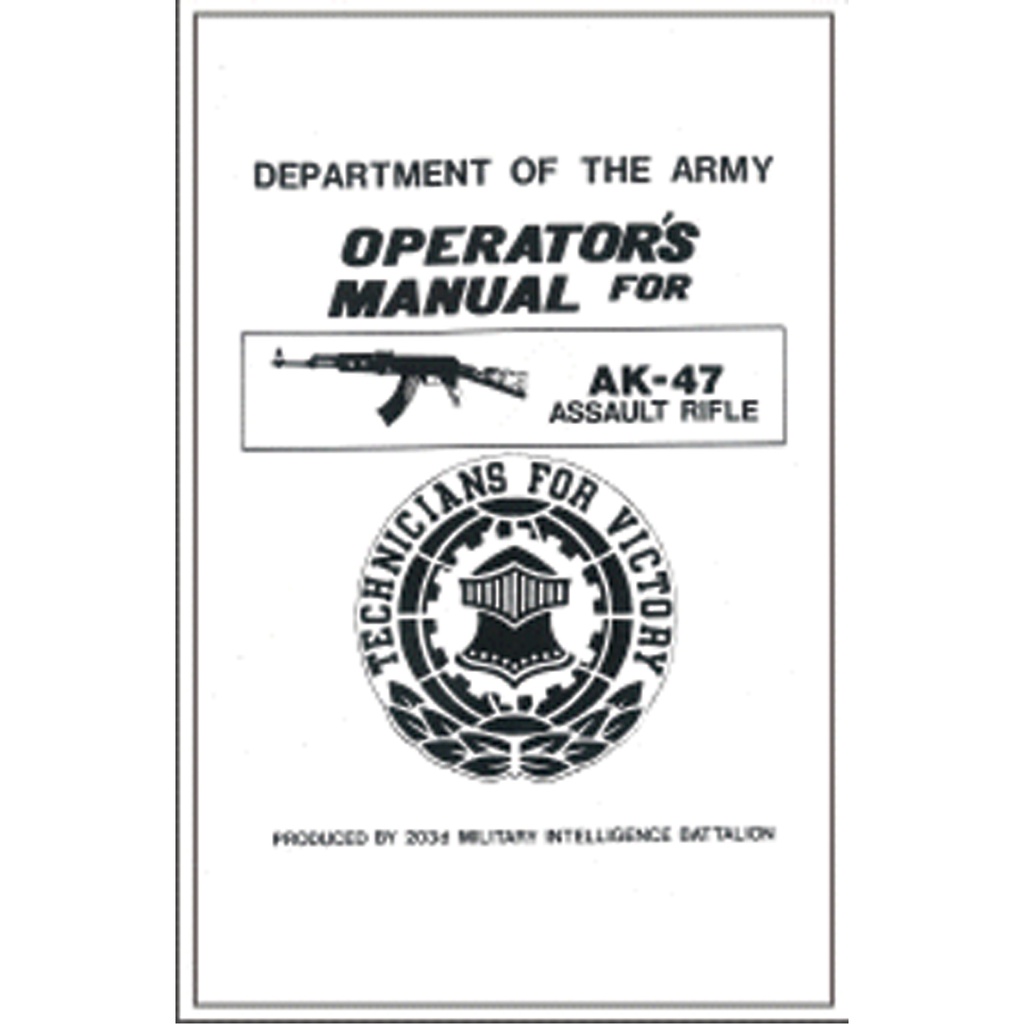
On a caliche range road outside Lubbock, the wind pushes dust across the firing line. A used AK‑pattern rifle just changed hands, and the new owner is turning it over like a puzzle. That’s when this intel‑grade operator’s manual lands on the bench—black‑and‑white cover, battalion crest, simple title that tells you exactly what it is. Not a coffee‑table book. A working guide.
This isn’t written for armchair debates. It’s made for Texans who run rifles on real dirt—lease roads outside Junction, backstops cut into East Texas pine, makeshift berms past the last mailbox. When questions show up faster than answers, this manual makes the rifle make sense.
Texas OTF Knife Buyers Still Need a Rifle Manual That Reads Like a Tool
If you’re the kind of person who searches for an OTF knife in Texas because you value fast, clean function, you think the same way about your rifles. Gear either works or it doesn’t. This AK‑47 operator’s manual is built with that same mindset—minimalist, direct, and ready to live in a range bag or truck console.
Across 38 pages, everything essential is there: safety first, basic operation, how to run the controls without guessing, and what to check before the first round ever leaves the chamber. It covers disassembly and assembly step by step, in plain language that doesn’t assume you’ve spent time in an armory. Ammunition basics are laid out clearly, so the guy at the stall next to you doesn’t become your only source of truth.
Inside the Intel-Grade Layout: What 38 Pages Actually Do for You
The design looks like something born in a battalion S‑2 shop: Department of the Army style header at the top, AK‑47 profile centered, crest stamped like a unit mark. But what matters is how it reads on a hot afternoon when sweat is running into your eyes and the rifle is stripped on a folding table.
You get clear, unhurried line art instead of muddy photos. Each diagram matches the text right beside it, so you’re not flipping back and forth while keeping track of a recoil spring that wants to jump. Safety points come before tricks and tips, and the language stays dry and specific—no stories, no war‑stories tone, just how to run, clear, and care for the rifle.
Field maintenance routines are written for real use: how to keep the rifle running after a day of blowing dust in West Texas or wet brush in the Big Thicket. Cleaning priorities are spelled out so you don’t waste time on the wrong details or skip the ones that matter.
OTF Knife Texas Buyers Carry Blades; This Rides in the Same Console
Most Texans who care enough to search out a serious Texas OTF knife also keep a truck well stocked. Flashlight. Tie‑down straps. First‑aid kit. And usually, a manual or two that explain the tools that ride back there. This operator’s manual fits that pattern.
It’s thin enough to slip into a range bag pocket or console organizer, heavy enough in content that it doesn’t feel disposable. The black‑and‑white print means it’s easy to read in full sun on a tailgate, and it doesn’t glare under a shop light when you’re working over the rifle at midnight before a hunt south of Uvalde. Like a good OTF knife Texas buyers favor, it’s built for repetition—thumbed, dog‑eared, smudged with CLP and dust, and still readable.
Texas Gun Culture, Texas Knife Culture, and Why Manuals Still Matter
Across the state—from indoor lanes in Houston to pasture berms outside Abilene—there’s an understanding: tools are only as good as the person running them. Texas knife culture has already embraced modern autos and OTFs, backed by clear Texas laws that finally caught up with reality. Rifle culture isn’t any different. Owning an AK‑pattern rifle without understanding its internals is like clipping an OTF knife to your pocket and never learning how to maintain the mechanism.
This manual fills that gap quietly. No ego, no gloss, just intel laid out so you can hand it to a nephew at his first ranch shoot or a buddy who just traded into his first rifle. It becomes the common language around the bench, the thing you point to when opinions start outrunning facts.
Texas Law, Responsibility, and Where a Manual Fits In
What Texans Already Know About Carry and Compliance
Texans have watched their knife and firearm laws loosen over the last decade. Switchblades and OTF knives that were once off‑limits are now legal to own and carry in most settings, with location‑based exceptions. The same culture that pushed to clean up outdated knife laws also expects owners to know what they’re doing when they press a button or pull a trigger.
That’s where a booklet like this earns its keep. It doesn’t talk about statutes. It talks about safety and mechanical understanding—the parts you control every time you load a magazine or clear a malfunction. Texas law gives you room to own capable tools. Manuals like this help make sure you’re the kind of owner who deserves that room.
Range Use Cases That Feel Familiar in Texas
Picture a Saturday near San Antonio, where a few families meet on family land to check rifles before deer season. Someone drags out an AK that’s been riding in a safe for years. Nobody quite remembers how dad used to strip it. This manual comes out, drops open on the hood, and suddenly the group has a clear, shared reference. No guesswork, no "I think it goes this way." Just ordered steps and simple line drawings.
Or a weekday evening in a Dallas‑area indoor range. A first‑time buyer has an AK on the lane and a puzzled look when the dust cover won’t seat. Instead of calling it quits, they pull this booklet from the bag, flip to the right page, and work it out in a couple of minutes. Confidence goes up. Bad habits never get started.
Questions Texas Buyers Ask About AK‑47 Operator’s Manuals
Are OTF knives legal to carry in Texas?
Yes. Under current Texas law, automatic knives and OTF (out‑the‑front) knives are legal to own and carry for adults, with restrictions focused mainly on certain locations—like schools, some government buildings, and places that prohibit all weapons. Blade length and type are no longer banned the way they once were, but you’re still responsible for knowing and respecting those location‑based limits.
Is this AK‑47 manual useful if I’m new to rifles?
It was built with new owners in mind. The language is plain, the diagrams match what you actually see when you crack the rifle open on a bench, and the sections move in the order you’ll experience the rifle: safety, operation, disassembly, cleaning, reassembly, then ammo basics. If you can follow a set of directions to field‑strip an OTF knife, you can follow this manual through a full teardown.
Why carry a physical manual when I can just watch videos?
Because Texas ranges and ranches don’t always come with cell service, and pausing a video with oily hands is a good way to smear a screen, not learn a process. A physical manual lies flat on a truck tailgate, shrugs off CLP and dust, and doesn’t change when someone edits a channel. It gives you a fixed reference you can return to year after year, or hand to the next person without worrying it’ll disappear.
First Use: A Familiar Texas Scene
You’re parked along a fence line outside Stephenville, late sun running low across the pasture. An AK‑pattern rifle is laid out on an old moving blanket in the truck bed, field‑stripped farther than you meant to take it. Instead of guessing, you reach for the slim black‑and‑white booklet riding in the console. It opens where you left a thumb crease last time. In a few quiet minutes, the rifle goes back together clean, correct, and ready. That’s where this manual belongs—in the middle of real Texas work, doing its job without calling attention to itself.