Range-Bred Doctrine Combatives Field Manual - Yellow
13 sold in last 24 hours
Hot dust, steel targets, and a quiet corner of the barn or range house. This combatives field manual sits flat in a pack or truck console, giving you rifle-bayonet and hand-to-hand doctrine laid out like a seasoned NCO would teach it. From stance to follow‑through, it turns scattered drills into a working system you can run, refine, and pass on.
Combatives Doctrine That Belongs Beside a Rifle Rack
Out past the last mailbox, where the gravel turns to caliche and steel silhouettes line a fenceline, training looks different. You run rifles, you run footwork, and you keep a few things close that don’t need batteries. This combatives field manual belongs in that stack — next to the shot timer, not buried on a bookshelf.
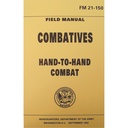
This is a straight reprint of the Army’s FM 21-150, the 1992 combatives and hand-to-hand combat field manual. No commentary, no theory layered on top. Just rifle-bayonet work and empty-hand doctrine laid out the way units have been absorbing it for decades. In a Texas context, it fits anywhere a serious shooter, police trainer, or rancher takes their training past the square range.
How a Combatives Field Manual Works in Texas Training
Most Texans serious about defense already have their firearm program wired. The gap shows up at contact distance — in a stock trailer alley, cramped hallway, or between parked trucks at a dim gas station outside small towns. That’s where this combatives field manual earns its space.
FM 21-150 walks you from basic fighting stance through strikes, falls, throws, and weapon-retention style scenarios. The structure lets you turn a slab of concrete behind a barn in the Hill Country or a mat in a Houston garage gym into a small training cell. You can run sections in order or carve out specific blocks — bayonet fundamentals one weekend, takedowns the next.
Because it’s doctrine, not a personality-driven system, it slots cleanly beside whatever you already do. Martial artists in Dallas can pull sequences into their existing classes. Small-town officers can build in-service drills without reinventing anything. A rancher outside Abilene can pick two pages and give his kids a simple, repeatable framework for balance, posture, and finishing a fight.
Reading Like an Instructor, Not a Brochure
This combatives manual is softcover, yellow, and blunt. Big block letters, Army seal, FM 21-150 at the top. Inside, the language is the same: simple, directive, written like someone expects you to train with it before sunrise and again after supper.
Techniques are grouped by range and purpose. Rifle-bayonet sequences strip away flair and focus on drive, angle, and recovery. Hand-to-hand sections move from basic strikes and blocks into more advanced counters, takedowns, and finishes. You can almost hear the cadence of a range NCO in the way progressions are organized: stance, movement, application, partner work.
Because it’s a compact manual, it slides into a patrol go-bag in San Antonio, a range bag in Midland, or the map pocket of an old farm truck outside Lubbock. Pages are dense enough to carry a full session but laid out clean enough to skim on a tailgate between runs.
Texas Law, Force Options, and Where Combatives Fits
Texas gives adults wide latitude with knives and defensive tools now — switchblades and OTFs are legal, and most blades ride without issue as long as you respect the few location restrictions. That freedom brings a quiet responsibility: understanding what happens when distance disappears and steel isn’t the first or only answer.
Why Combatives Matters in a State With Broad Carry Laws
From Houston parking garages to Panhandle pastures, you can’t assume you’ll always have reach, clean sightlines, or time. This combatives field manual lives in that narrow band where fights turn from standing to grounded, from talking to hands on clothing. It doesn’t replace firearms or edged tools; it fills the gap before they come into play or after they’re fouled.
For Texas instructors building full-spectrum programs — firearms, blades, and empty-hand — FM 21-150 gives a base you can actually defend in a courtroom or command staff meeting: established doctrine, not improvised techniques from a random video. For private citizens, it’s a framework to understand force escalation and control beyond just drawing a weapon.
Running Drills in Real Texas Spaces
You don’t need a polished dojo to use this. A concrete pad outside a shop in Odessa, a carport in Waco, or a shaded patch of yard near the Brazos can all be turned into a training lane. The manual breaks movements down in a way that works in boots and jeans, not just mats and gis.
Partner drills can be run on grass or a garage mat. Rifle-bayonet patterns adapt easily to modern carbines with training barrels, letting you explore muzzle strikes and positional work that make sense in barns, tight hallways, and around vehicles. The manual’s sequencing keeps those sessions safe and progressive instead of chaotic.
Questions Texas Buyers Ask About Combatives Manuals
Are OTF knives legal to carry in Texas?
Yes. Under current Texas law, automatic knives and switchblades, including OTF designs, are legal to own and carry for adults, with a few location-based restrictions similar to how firearms and other weapons are treated. School properties, certain government buildings, and secured areas can have tighter rules. Anyone training combatives alongside blade or firearm work should stay current on Texas weapons statutes and local policies, especially if they’re law enforcement or security staff.
Is this combatives field manual practical for modern Texas carry and defense?
For Texans who carry daily — appendix rigs in Austin, OWB holsters in the Panhandle, or a fixed blade on a ranch — the principles in this field manual still track. Balance, posture, closing distance, breaking it, and keeping your feet under you in tight quarters haven’t changed. You can adapt these drills around modern carbines, duty pistols, and common EDC blades, then pressure-test them in home layouts, around trucks, and on the same rough ground you live and work on.
Who in Texas gets the most from this combatives manual?
It hits hardest for three groups: instructors building programs in departments or private ranges, serious private citizens who already train hard with guns and want to close the contact-distance gap, and martial artists looking to blend in a more duty-focused approach. Whether you’re teaching rookies in a Central Texas academy, running a small training group on a South Plains farm, or tuning your own skills in a garage gym in San Antonio, this manual gives you a backbone you can build sessions around.
From Truck Console to Training Ground
Picture an early Sunday in late October. Air just cool enough to see your breath, mesquite casting long shadows over a worn concrete slab behind a shed. Rifle leans against a post. This yellow combatives field manual sits open on a tailgate, pages held down by a half-empty box of ammo. You run a short block of footwork, a few entries, a takedown sequence, then go right back to carbine work, tying the two together.
When you shut it and slide it back into the truck console, you’re not thinking about having bought a book. You’re thinking about the next session, the next drill, and the quiet advantage of having doctrine in your hands instead of scattered notes. That’s how this combatives field manual fits a Texas life: close by, well-used, and part of the way you train, not just something you read.