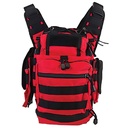
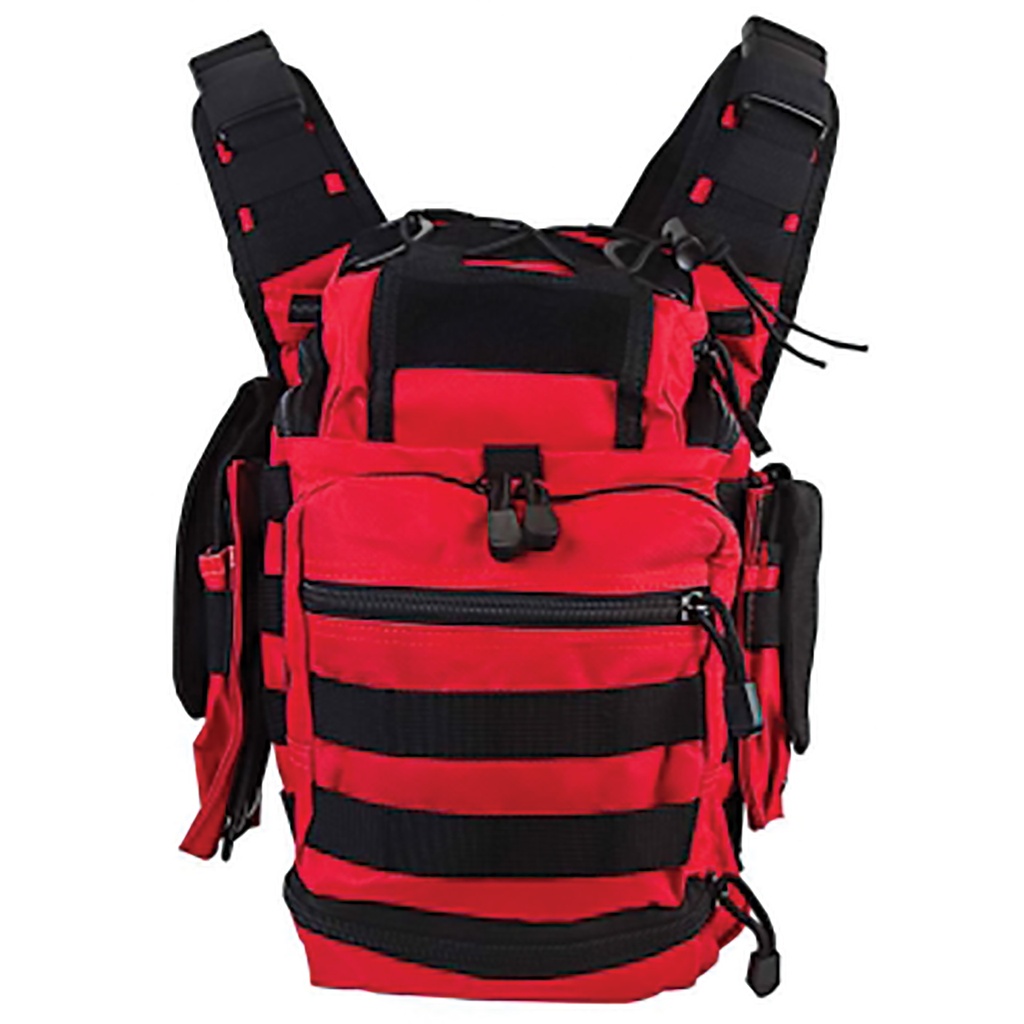
Redline Command Rapid‑Access First Responder Utility Bag - PVC Red with Black Trim
7 sold in last 24 hours
South of Abilene, shoulder of 84, strobes washing the mesquite—this is the bag you drag from the truck. The high‑vis red shell cuts through dust and dark, while seven tight compartments keep shears, tourniquets, gloves, and mags right where muscle memory expects them. The concealed carry pocket stays quiet until it matters. Sling it, drop the padded strap when space gets tight, and work fast. For Texans who live between highway miles, radio calls, and long shifts, this is the utility bag that keeps the scene in order.
Redline Command Utility Bag Built for Texas Response Work
Shoulder of I‑35 outside New Braunfels. Tractor‑trailer in the ditch, cruisers half on the grass, fire rolling in from town. You swing the truck door open, grab one thing, and move. That’s where this Redline Command first responder utility bag earns its keep—built for the nights when the call comes on the way home, not during training.
The high‑vis red PVC shell isn’t for looks; it’s for the chaos of a wet Houston shoulder at 2 a.m., for gravel turnouts in the Panhandle where dust eats light. Against asphalt, blood, mud, and bar ditch grass, this bag stands out. The black MOLLE grid on the face gives you modular options for the add‑ons that make sense for your shift, your county, your crew.
Why This First Responder Utility Bag Works Across Texas Terrain
Texas response work doesn’t look the same from El Paso to Beaumont. One week you’re working wrecks on a Hill Country two‑lane, next week you’re staged under stadium lights in Dallas. This bag was built to move with you, not slow you down.
Seven organized compartments line the shell, each one sized for real gear—not pocket junk. Front zip sections swallow gloves, chest seals, tape, and trauma shears without turning into a junk drawer. The lower compartment runs wide for bulk—pressure dressings, spare CATs, airway kits—stacked, not jammed. Side pockets zip and flap down tight so nothing shakes loose on washboard ranch roads outside Uvalde or on concrete joints ringing Loop 410.
The form factor stays compact and boxy, easy to set down on caliche, concrete, or a stained ER bay floor without rolling. Reinforced stitching at stress points takes the weight when you’ve over‑loaded it after a long night run. You’re not babying this thing in and out of a suburban; you’re dragging it across gravel, up metal steps, into tight hallways. It’s built for that.
Carry, Access, and Control When Texas Seconds Matter
The padded single shoulder strap rides clean across body armor or a uniform shirt. Sling it tight running up a ditch outside Lubbock, loosen it walking the long straight hallway of a San Antonio hospital. When space gets tight inside a cramped trailer or a crowded apartment in Houston’s older neighborhoods, you can strip the strap and work off the top grab handle without snag.
Zippers run with pull tabs sized for gloved hands—think nitrile in August or cold‑stiff leather on a Panhandle winter night. You’re not fighting hardware while you’re trying to find gauze. Every compartment opens in a way that gives you a full look at what’s inside, not a narrow slit you blindly dig through while someone yells vitals.
The concealed carry pocket stays flat and quiet against the body side of the bag, out of sight and out of mind until a scene gets sideways. Magazine pouches ride inside where only you know what’s staged. In rural counties where backup might be twenty minutes out across pasture roads, having a controlled, concealed setup in the same bag as your medical gear isn’t a luxury. It’s just being honest about the work.
Texas First Responder Culture, Gear, and Legal Reality
In this state, the line between on‑duty and off‑duty blurs fast. Off shift in Corpus, stuck behind a multi‑car pileup on the causeway, you’re still the one people look at when they see the radio mic, the boots, the calm. That’s why this bag stays staged in the truck or SUV, not buried in the closet—it’s a first responder utility bag meant to live in the wild mix of family life, overtime, and sudden scenes.
Texas law treats this like what it is: a gear bag. No special restrictions, no odd carve‑outs. Your responsibility isn’t whether you can carry this, it’s what you choose to put in it. Tourniquets, trauma kits, IV rolls, extra mags—your call, your county, your policy. The MOLLE webbing and interior layout just make it easier to keep everything squared away no matter how hot, dusty, or humid the shift turns.
Texas Use Case: Highway Wreck Outside Waco
You’re third on scene, trooper already doing what he can, volunteer fire still miles out. You grab this bag from the truck, shoulder it, and walk the line of cars. One pocket holds nothing but gloves and cheap flashlights. Another holds dressings and tape. You’re not sorting gear with phone flashlights in your teeth; you’re moving from compartment to compartment, each one assigned to a task before you ever left your driveway.
Texas Use Case: Tornado Season in North Texas
Storm line spins up north of Decatur. Sirens, scanners, power out for half the town. You stage at a school gym turned shelter, this bag riding the bench beside a box fan. When families start filing in banged up from flying debris and shattered glass, you’re not digging for basics. The bag becomes a little red command post in the corner, every zipper leading to a known set of tools.
Questions Texas Buyers Ask About First Responder Utility Bags
Are OTF knives legal to carry in Texas?
Yes. Under current Texas law, OTF knives and other automatic or switchblade‑style knives are legal to own and carry for most adults, as long as the blade length stays within the rules for "location‑restricted knives." The real concern isn’t the mechanism—it’s where you carry and how long that blade is. Many Texans keep an OTF knife either on their person or staged in a response bag like this one for fast, one‑handed access alongside medical gear. If you’re working around schools, certain government buildings, or other restricted locations, know the blade length rules and your agency policies before you pack it.
Will this first responder utility bag handle West Texas heat and truck life?
It was built for it. The PVC shell shrugs off the kind of heat that turns a pickup cab into an oven outside Midland in August. Zippers and webbing are meant to live in a truck, not a closet. Toss it behind the seat, let it bake on the floorboard, drag it out on caliche and hot asphalt—wipe it down and it’s back in service. The bright red stays visible even after miles of dust and sun.
Is this overkill for a volunteer medic or off‑duty carry in Texas?
Not if you’re the one folks turn to when something goes wrong. For a small‑town volunteer, a ranch hand with medical training, or a city cop who always ends up first on scene, this bag keeps your gear in one known place instead of scattered between console, glove box, and back seat. You decide how deep to stock it—basic trauma, full med loadout, or mixed medical and defensive—but the structure gives you room to grow without ever turning into a bottomless duffel.
Built for That First Hard Use in Real Texas Conditions
Picture the first time it really earns its spot. Late summer storm blew through outside College Station, limbs down, traffic lights dead, a tangle of metal on a frontage road. You crack open the truck door, grab the red bag by the top handle, and step into wind that still smells like rain and hot pavement. The padded strap drops across your shoulder without a thought. You already know which zipper holds gloves, which one holds the tourniquets, which corner hides your backup steel and mags.
No rummaging. No guessing. Just a red block of order amid sirens, hazard flashers, and the low murmur of people waiting for help. That’s what this first responder utility bag is for—not to look tactical in the back seat, but to turn Texas chaos into something you can actually work with when seconds start to matter.