Rhythm Cane Dojo Nunchucks - Natural Rattan
11 sold in last 24 hours
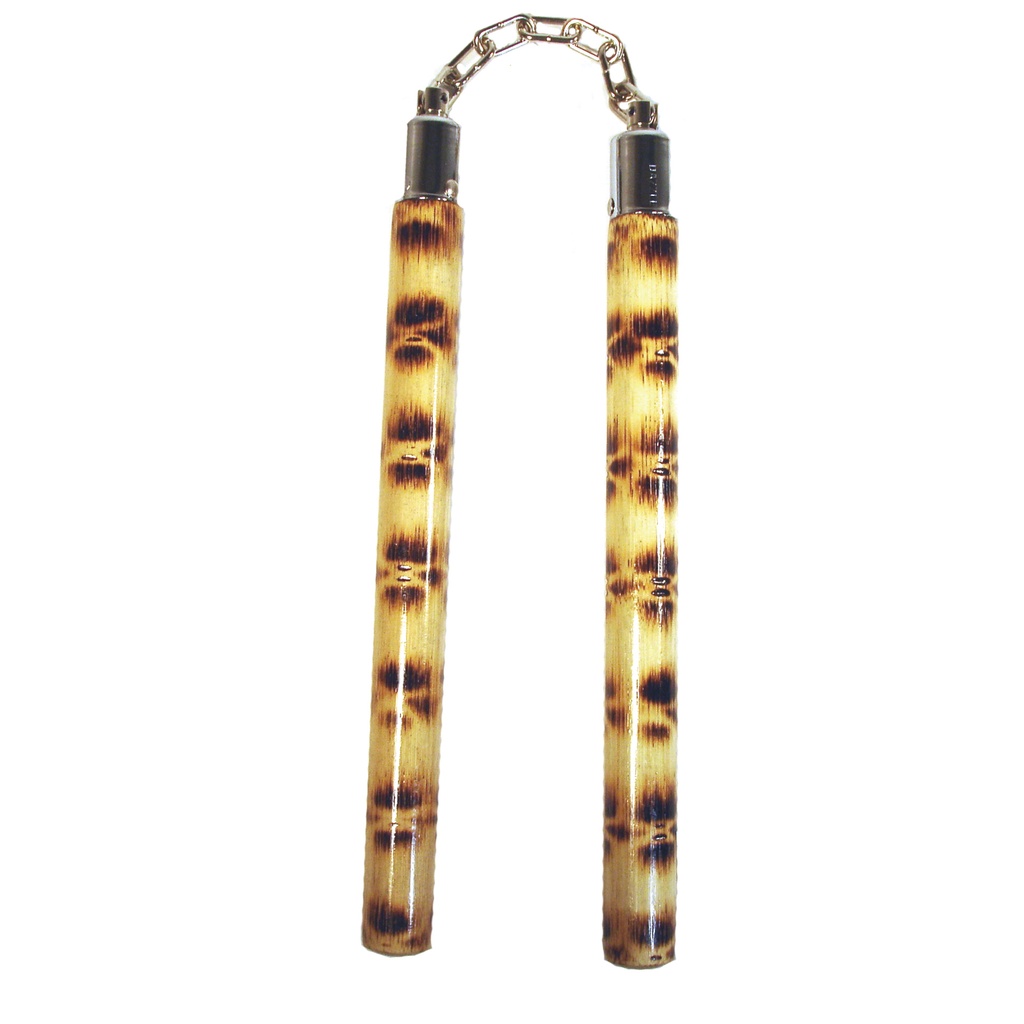
Late class in a strip‑mall dojo off I‑35, mats still warm from sparring. These natural rattan nunchucks move clean through drills—light in the hand, quick on the chain, and forgiving when you clip a forearm. The smooth cane grain grips steady as you work rhythm, recoil, and control. Built for Texas schools and home garage practice where repetition matters more than bruises, they’re the set you hang by the heavy bag and reach for every session.
Rhythm Cane Nunchucks Built for Real Texas Dojo Work
End of the week in a Plano strip center, parking lot buzzing with trucks and parents on their phones. Inside, pads snap, kids line up, and the weapons class pulls down a bucket of rattan. These dojo nunchucks aren’t wall trophies. They’re the ones that get scuffed on rubber mats, dropped on concrete in the alley, and passed from black belt to nervous beginner without a second thought.
The natural rattan sticks feel light when you first pick them up, but once that chain starts swinging, they settle into a tight circle. The cane grain catches just enough in your palm to keep them anchored when your hands sweat, without tearing skin on long nights of drills. This is gear for Texas schools that need something students can learn on, not something they’re afraid to touch.
Why These Dojo Nunchucks Fit Texas Training Culture
Drive down any major Texas highway and you’ll see the same thing: small dojos tucked between taquerias, oil change bays, and nail salons. In those schools, nobody wants flashy weapons that crack on the first bad block. They want something that holds up to three classes a night, five days a week.
These dojo-grade rattan nunchucks answer that. The rattan is resilient but not punishing, so when a beginner mistimes a spin in a Fort Worth garage gym or a Houston after-hours class, they feel the mistake without taking a bone-deep bruise. The short, smooth-swivel chain keeps the arc tight—ideal for cramped rooms where twenty students are working the same pattern and the instructor needs control more than chaos.
In Texas, training doesn’t stop because it’s hot, crowded, or loud. This set is built for that reality: light enough for long cardio rounds, tough enough to live in a gear bin with focus mitts and cracked puzzle mats, and traditional enough to satisfy old-school instructors who still care about clean technique.
Traditional Rattan Feel, Modern Class Demands
Every inch of these nunchucks serves a purpose. The cylindrical handles give a consistent grip from top to bottom, so a student in San Antonio can work figure-eights, blocks, and strikes without hunting for a flat spot or index point. The natural cane grain creates a tactile surface that stays honest in the hand—no foam, no rubber, nothing hiding sloppy technique.
The glossy finish isn’t just for looks. It cuts down on splinters, makes wipe-downs between classes quick, and lets the rattan slide smoothly against a gi sleeve or T-shirt. The burned ring pattern isn’t decoration so much as a quiet visual metronome—the lines blur when your rhythm’s right, stutter when it’s off.
Under the chain, dark-finished metal caps bite clean into the cane, keeping the connection solid through thousands of repetitions. When an instructor in El Paso hands this pair to a white belt on their first weapons night, they know the weak link won’t be the gear.
Texas Context: Training Weapons, Carry Laws, and Reality
Texas is straightforward about weapons. The law classifies nunchucks—"nun-chaku"—as a type of club. After statewide reforms, they’re legal to own and possess for adults, and Texans use them in dojos, home gyms, and private training spaces every day. But that doesn’t mean they’re just another accessory to toss in a backpack for public carry.
How Texas Law Treats Nunchucks
Where a Texas OTF knife is now broadly legal to carry in most everyday situations, nunchucks live in a different lane. They’re purpose-built striking tools, and Texans treat them that way. You’ll see them hanging on the wall of a Corpus Christi school, stashed behind the heavy bag in a Midland shop, or in the corner of a spare room turned home dojo in Lubbock.
Use them where they make sense: controlled practice, supervised classes, and personal training sessions. That respect for context is what separates a serious martial artist from someone showing off in a parking lot.
Training Over Showboating in Texas Gyms
In a Houston warehouse gym after hours, the coach flicks on half the lights, pulls this rattan pair off a hook, and starts slow: wrist rolls, chambered strikes, basic blocks. No music. No crowd. Just the sound of cane cutting air and chain catching at the end of each arc.
That’s where these nunchucks belong—in spaces where repetition builds timing, not in places where a mistake turns into a problem. Texans understand tools, from fencing pliers to nunchucks. You use them where they’re meant to be used and you respect the line between practice and public.
Built for Texas Dojos, From Dallas to the Valley
Martial arts schools across the state share the same headaches: gear that breaks under heavy use, weapons students are scared to pick up, and inventory that doesn’t move because it’s all flash and no feel. These natural rattan dojo nunchucks solve those problems quietly.
In a Dallas strip-mall karate school, the owner orders them by the dozen. They know the rattan will survive years of beginner mistakes and intermediate drills. In a Brownsville taekwondo school that offers a weapons add-on class, these stay in the school store because parents like that they’re lighter and less brutal than hardwood. In Austin, a backyard practitioner buys a pair for solo training under a carport fan, working combinations between rounds on the heavy bag.
Everywhere they land, the feedback is the same: easy to learn on, responsive when you get better, and honest about your skill. No extra padding to mask a bad catch, no exaggerated weight to fake power. Just rattan, chain, and the rhythm you bring to it.
Questions Texas Buyers Ask About Dojo Nunchucks
Are OTF knives legal to carry in Texas?
Yes. Under current Texas law, OTF knives and other automatic knives are legal to own and carry for most adults, with extra location-based restrictions applying to any "location-restricted knife" over 5.5 inches in blade length. Local ordinances and specific locations—schools, certain government buildings, secured areas—can add more limits. Always check the latest Texas statutes and your local rules before you clip any knife in your pocket or on your belt.
Are these rattan nunchucks good for beginners in Texas dojos?
They’re built for that. The lightweight rattan and short, smooth-swivel chain make them ideal for Texas beginners learning in crowded classes—from kids’ programs in suburban academies to adult weapons nights in small-town gyms. They sting enough to teach respect, but they don’t punish every mistake the way heavier hardwood can.
Should I choose rattan nunchucks over foam for home training?
If you’re brand new or putting these in the hands of a young child, foam has its place. But for most Texas adults and serious teens, rattan is the natural next step. These natural cane nunchucks give you real feedback, real balance, and real timing, which matters whether you’re training in a Houston garage, a Hill Country barn, or a rented studio off Loop 410.
First Session With These Nunchucks in a Texas Setting
Picture a quiet night in a converted shed outside New Braunfels. Door propped open, cicadas working the treeline, one shop light over a mat rolled out on concrete. You take these natural rattan nunchucks off a nail, feel the grain under your fingers, and start slow—simple spins, easy passes, controlled strikes into a hanging bag.
The chain tracks true, the arc tight, the impact sharp without being cruel. Sweat hits the mat, breath settles, and the noise of the highway fades. In that space, under that light, you understand why Texans keep tools like this close: not for show, but for the quiet work of getting better, one clean rep at a time.