Roadside Signal Long-Range Emergency Strobe Light - Red
12 sold in last 24 hours
Somewhere between Fort Stockton and Sonora, the shoulder turns to caliche and help runs thin. This long‑range emergency strobe throws a red pulse up to three miles, a steady 60–70 flashes a minute off one D battery for as long as 60 hours. The metal clip latches onto a vest, traffic cone, or truck rack in seconds. You don’t buy it to show off. You buy it so when things go wrong in the dark, you’re still seen.
Long, Empty Highway, One Red Pulse
Out past the last gas station between Lampasas and Brady, the road shoulders get narrow and the sky gets big. When a trailer tire shreds or a radiator hose lets go after midnight, you don’t need decoration—you need a hard-to-miss signal that keeps working long after cell service cuts out.
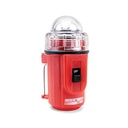
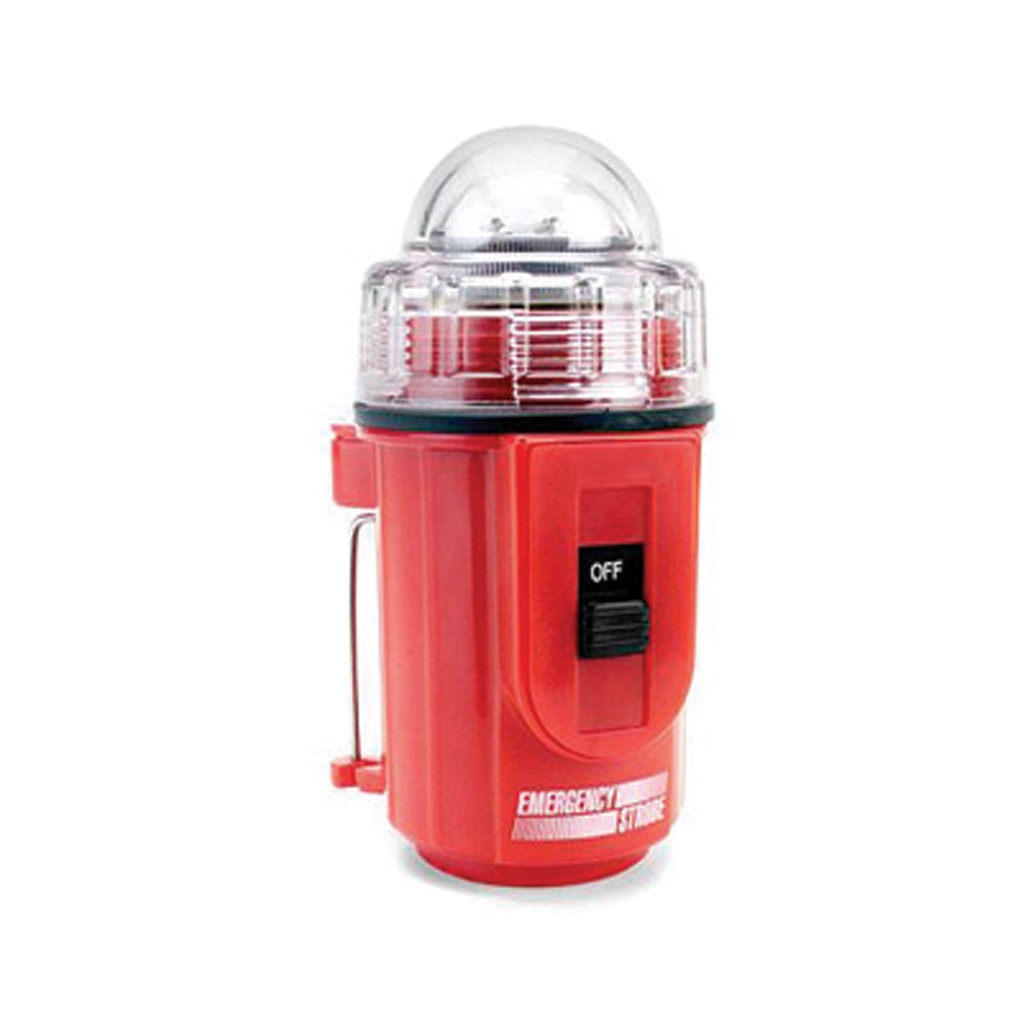
This long-range emergency strobe light is built for those stretches. A tall red body that’s easy to find in a cluttered truck door, a clear dome that throws light in every direction, and a metal clip that snaps onto a vest, cone, or headache rack without fuss. Flip the black sliding switch and it starts hammering out 60 to 70 flashes per minute, a red heartbeat you can see from up to three miles away on a straight run of highway.
Why This Emergency Strobe Belongs in a Texas Truck
Most nights, it’ll ride quiet—wedged in the map pocket, glove box, or door bin beside registration papers and worn work gloves. But when you’re changing a tire on I-35 with cattle trucks blowing past, or waiting on a wrecker on Highway 59 in a hard rain, this light becomes the loudest thing you own.
Powered by a single D battery, it can hold a signal for up to 60 hours straight. That matters on a long holiday weekend when roadside help runs thin, or after a Gulf storm when half the county is sitting in the dark. You set it on the asphalt behind your truck, clip it high on a ladder rack, or snap it to a reflective vest. It keeps flashing through dust, drizzle, and exhaust haze, cutting through the kind of mixed light—headlamps, taillights, work lights—that usually swallows weaker beacons.
In a state where a “short drive” can mean three hours between towns, a three-mile visibility range isn’t overkill. It’s how you convince the next driver to move over before they’re on top of you.
Texas OTF Knife Buyers Still Need a Reliable Emergency Beacon
The same person who looks for the best Texas OTF knife to keep in the center console usually thinks past blades. You might carry a switchblade for cutting tow straps or feed sacks, but it won’t flag down a DPS unit from half a mile back on a foggy farm-to-market road. That’s where this emergency strobe light earns its place beside your knives.
Texas drivers who already know where to buy an OTF knife in Texas are building out a larger kit—seatbelt cutter, glass breaker, good steel, and one simple, stubborn beacon. This light doesn’t care if your hands are slick with oil or rain; the sliding on/off switch is broad and black, easy to thumb in the dark. Once you feel that click, you don’t have to babysit it. You go back to dealing with the problem—broken hitch, disabled trailer, stalled truck—and let the strobe handle the job of being seen.
Built for Ranch Roads, Job Sites, and Flooded Intersections
Texas emergencies don’t always happen on clean pavement. Sometimes you’re flagging a buddy down at a dark gate two miles off the highway. Sometimes you’re standing in rising water at a low-water crossing outside New Braunfels, trying to point rescue crews toward a stranded car. Sometimes a storm has rolled through Odessa and the job site is running generators and work lights while power crews fight wind downed lines.
The red housing on this emergency strobe is easy to track in mud, gravel, and tall roadside grass. It’s palm-sized and light, but tall enough to clear the top of a traffic cone or the lip of a toolbox. The clear ribbed lens throws light in a full circle instead of just forward, so it doesn’t matter if you set it down straight, cockeyed, or clipped sideways to a fence post. As long as it’s pointing generally up, it’s doing the job.
Plastic housing keeps weight low and shrugs off the bumps and dings of living in a truck. The metal clip takes the load when you latch it to steel—vest grommets, headache racks, trailer rails. It’s not a gadget you baby. It’s the thing you forget in the truck bed, then find later still ready to flash.
Safety Expectations in a State That Runs at Highway Speed
Texas doesn’t have a statute that says you must carry an emergency strobe light, but anyone who’s changed a tire on 281 at dusk knows what the law doesn’t cover: common sense. Troopers, deputies, and road crews all read the same language of light. A red, consistent, high-frequency strobe means pay attention, slow down, and steer wide.
Where Texans ask whether an OTF knife is legal to carry, they’re talking about blades, springs, and length. This isn’t that conversation. This is the gear no one questions you for owning. The kind of thing a DPS officer sees on your dash and nods at—clear sign that you’ve thought ahead about visibility, not just your own skin.
Using a Strobe in Texas Roadside and Storm Conditions
On a two-lane outside Huntsville, you break down at night. You pop the hood, grab this strobe from the door, and clip it to your rear license plate bracket or set it in the crown of the road ten yards behind your bumper. The three-mile reach means oncoming headlights catch the flicker early, long before they see your hazard lights. In a Hill Country thunderstorm, it can ride on a fence post at a washed-out low-water bridge, pulsing until crews can get barricades in place.
From Petro Yard to Panhandle Lease Road
Oilfield hands and wind techs spend a lot of time far from town, on dirt tracks where one missed turn can put a pickup in a bar ditch. This emergency beacon clips to a hard hat at a crowded site, marks a disabled truck in a lease road rut, or rides the edge of a loading ramp until the last trailer is backed in. It’s not delicate gear; it’s throw-it-in-the-crew-truck gear.
Questions Texas Buyers Ask About Emergency Strobe Lights
Are OTF knives legal to carry in Texas?
They are. Under current Texas law, automatic knives—including OTF switchblades—are legal to own and carry for most adults. There are still location-based restrictions: the law limits blades in certain places like schools, polling locations, and secured government areas, and defines “location-restricted” knives primarily by blade length. If you’re already checking Texas knife laws for your OTF carry, you’re the kind of person who understands why an emergency strobe belongs next to that knife in your truck.
Where should I keep this emergency strobe in my truck?
Some Texans toss it in the driver’s door pocket so it’s the first thing they grab after hitting the hazard lights. Others clip it to a sun visor, keep it in the center console with their OTF knife and registration, or stash it in a roadside kit behind the seat. The main rule is simple: you should be able to reach it in the dark without digging.
Do I really need a beacon if I already have flashers and a flashlight?
Hazard lights and a handheld flashlight are better than nothing, but they’re not built to throw a single, unmistakable signal down a long, straight Texas highway. A flashlight beam is directional and easy to miss from an angle; vehicle flashers sit low and get lost in brake lights and traffic. A dedicated long-range emergency strobe stands taller, flashes harder, and keeps working up to 60 hours on one D battery. If you break down miles from town or ride out a storm without power, that difference matters.
Ready for the Night You Hope Never Comes
Picture a late drive back from a high school game in San Angelo, or a Sunday run from the deer lease outside Junction with a trailer full of gear. The sky’s dark, the stations are mostly static, and you feel the truck pull as a tire gives up. You ease onto the shoulder, step out into the wind and noise, and reach for what you packed on purpose.
One thumb on the switch and this emergency strobe starts its red cadence, throwing a steady pulse down the asphalt while you work—lug wrench on the rim, jack on the frame, eyes on the next set of headlights. You’re not waving a flashlight or trusting a dying phone screen. You’re seen, clearly, from far off. That’s how Texans think about gear: knives for cutting, lights for signaling, both close at hand when the road turns mean.