Ruck-Ready Army Survival Field Manual - Signal Yellow
10 sold in last 24 hours
West of Junction, a ranch road turns to caliche and guesswork. That’s where this Army survival manual earns its keep. A reprint of FM 21-76, it turns heat, cold, no water, and no landmarks into steps you can follow. Navigation, fire, food, shelter—plain talk, no filler. Signal-yellow cover stands out in a truck door or ruck pocket. For Texans who’d rather carry knowledge than count on luck.
When the Map Runs Out, Doctrine Takes Over
Out past the last windmill, the Hill Country stops giving you road signs. Cedars close in, draws start to look the same, and that wide Texas sky doesn’t tell you much if you don’t know how to read it. This is where the Ruck-Ready Army Survival Field Manual - Signal Yellow earns its space in your kit—quiet, flat, and full of hard-won guidance from FM 21-76, the U.S. Army survival manual that was written for people who didn’t get to tap out and go home.
It’s not theory. It’s doctrine shaped by miles under a ruck and nights spent in country that didn’t care if you made it back. Texans recognize that kind of voice. The same mindset that makes a ranch hand keep extra water in the truck and a good blade on his belt makes room for a survival manual that has actually been used in the field.
Why This Survival Manual Belongs in a Texas Kit
From the Panhandle breaks to the brush country south of San Antonio, Texas terrain punishes people who assume they’ll stay close to pavement. This survival manual walks you through navigation when landmarks vanish, water when the stock tanks are dry, and fire when the only fuel is sparse and stubborn. It doesn’t care if you’re in uniform, in hunting camo, or in work jeans—it assumes you need direct answers and you need them now.
Originally issued in October 1970 as FM 21-76, this reprint keeps the content intact: how to find your way when the compass fails, how to read the ground and the sky, how to think straight when the sun is hammering down and you’re on your last quart. It’s the kind of book a Texas game warden would respect, a Guard NCO would recognize, and a West Texas leaseholder would toss into the glovebox “just in case.”
High-Visibility and Hard-Use: Built for Truck, Ruck, or Range
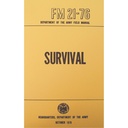
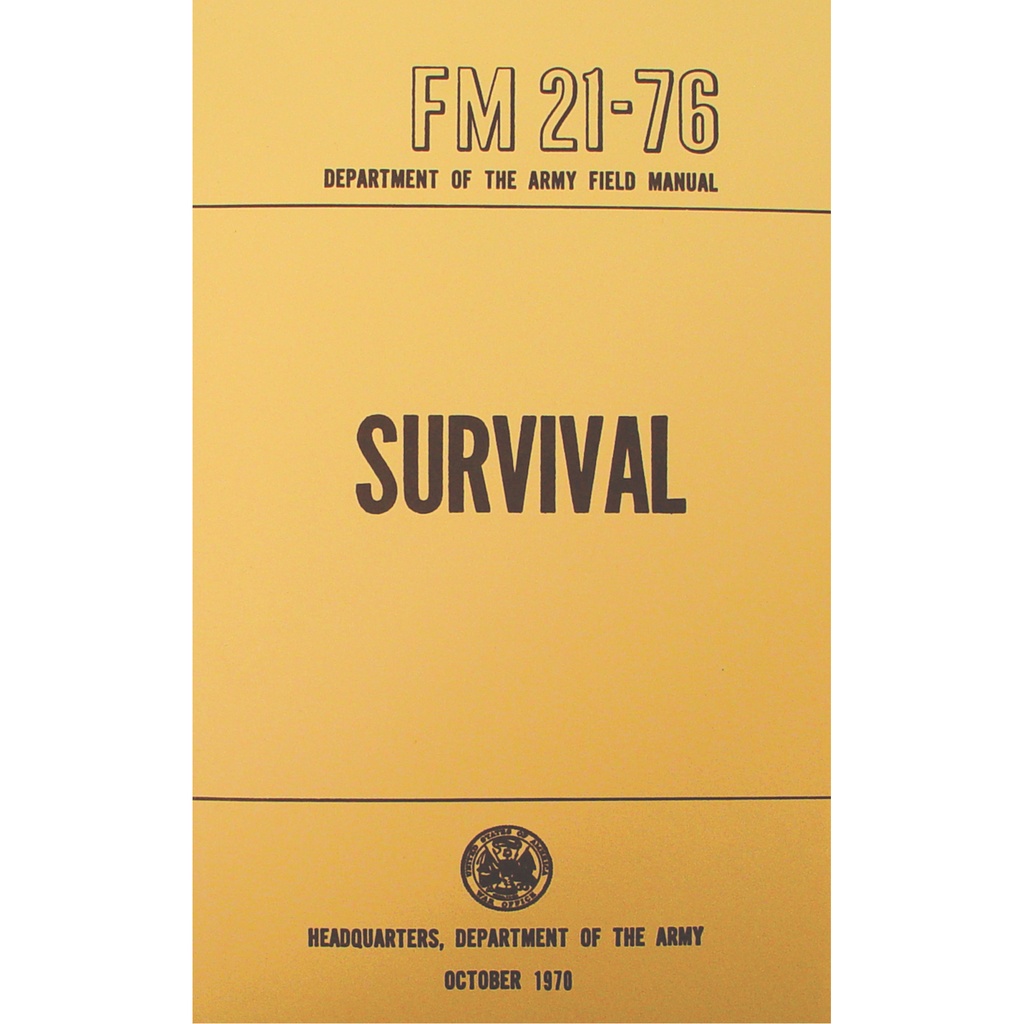
The signal-yellow cover isn’t a design flourish; it’s a field decision. In the dark cab of a ranch truck, under the rear seat of a side-by-side, or packed deep in a range bag, that bright yellow jumps out when you need it. Matte finish, bold black "SURVIVAL" across the front, FM 21-76 at the top, and the Department of the Army seal at the bottom—it reads like issue gear because that’s what it was.
Texas buyers don’t baby their gear. This survival manual is built to live with dust, sweat, and repeat use. It rides flat against a ruck frame, tucks into a door pocket, and disappears under a seat until the day you slide a hand back and grab it—right after a GPS dies, a phone overheats, or a simple day hunt stretches into something else. Where a Texas OTF knife handles the cutting, this book handles the thinking.
Field Manual Guidance for Real Texas Problems
Texas delivers extremes that don’t care how prepared you thought you were. This survival manual was written for that attitude: indifferent weather, rough ground, and long distances between help.
Heat, Distance, and No Reliable Water
From August dove fields near Uvalde to pronghorn country near Dalhart, heat and distance define most Texas survival problems. FM 21-76 walks through water discipline, improvised sourcing, and signs of dehydration in a way that cuts through wishful thinking. The book doesn’t offer miracles; it offers priorities—what to do first, what to protect, and what you can afford to ignore until later.
Navigation When the Land All Looks the Same
North of Lubbock, section lines and fields blur into each other. Down along the coast, marsh and flat water can turn you around just as fast. The manual’s navigation chapters stay practical: sun, stars, terrain association, pace count, and how to build a mental map when the paper one blows away or gets soaked. It teaches the same mindset a seasoned Texas guide uses—never move without knowing how you’ll get back.
Texas Buyers, Survival Manuals, and the Law
Unlike an OTF knife in Texas, which has seen its legal status change over the years, a survival manual doesn’t ride the edge of any statute. There’s no restriction on owning, carrying, or keeping this Army survival field manual in your truck, pack, or office. If you’re already paying close attention to Texas knife laws and how switchblades and OTFs fit into current code, this is the piece of kit you don’t have to second-guess.
Many Texas buyers pair their preferred Texas OTF knife or fixed blade with this survival manual when they build a bag they can live out of for a few days. The law tells you what you can carry. Doctrine tells you what to do when that’s all you’ve got.
Why Texas OTF Knife Owners Reach for Doctrine Too
A fast-deploying OTF or automatic gets you into work—cutting cord, shaping tinder, cleaning game, opening packaging. This survival manual tells you which work matters most when the day goes sideways. In the Big Bend backcountry, on a lease in La Salle County, or camping with kids near Possum Kingdom, Texans who like their gear to earn its keep tend to want both: a blade that answers now and a book that has already thought it through.
Questions Texas Buyers Ask About Survival Manuals
Are OTF knives legal to carry in Texas?
Yes. Under current Texas law, OTF knives and other switchblades are legal to own and carry for most adults, thanks to changes that removed the switchblade ban from the Penal Code. There are still location-based restrictions—certain government buildings, schools, and secured areas are off-limits, and large blades can fall under the “location-restricted knife” rules. Many Texans who carry an OTF knife Texas-wide also keep a survival manual like this one on hand so skill and knowledge keep pace with their hardware.
Is this survival manual practical for modern Texas conditions?
It is. While the manual was written in 1970, heat, thirst, getting lost, and running short on shelter haven’t changed. Texans use this Army survival manual to sharpen their thinking for hunting trips, border-region ranch work, Guard training weekends, and long-haul travel where the next town might be 80 miles away. The language is direct, and the methods are built for people who can’t wait for rescue.
Should I carry this manual if I already have a GPS and phone?
If you spend real time off pavement in this state, yes. Batteries die faster in August heat around Laredo than they do on a desk in Dallas. Signal disappears faster in the Davis Mountains than it does on I-35. A GPS and a phone are tools; this survival manual is a plan. Texans who build serious go-bags, ranch trucks, or hunting rigs treat it like a non-electronic backup for everything that can fail.
First Use: A Quiet Test in Texas Ground
Picture a cold front pushing over the Edwards Plateau. You’ve stayed back on a lease to track a blood trail that wandered deeper than you planned. Phone is down to single digits, last bar of service just blinked out. You sit on a limestone outcrop, flip open the signal-yellow survival manual, and lay a thumb along a page that reminds you how to read your way out by terrain and light. Your OTF knife rides in your pocket, ready for the work the book calls out. That’s the pairing: good steel and solid doctrine, both chosen by someone who knows what this land can do when you stop respecting it.