
Shadow Lineage Training Sai Set - Black Leather
4 sold in last 24 hours
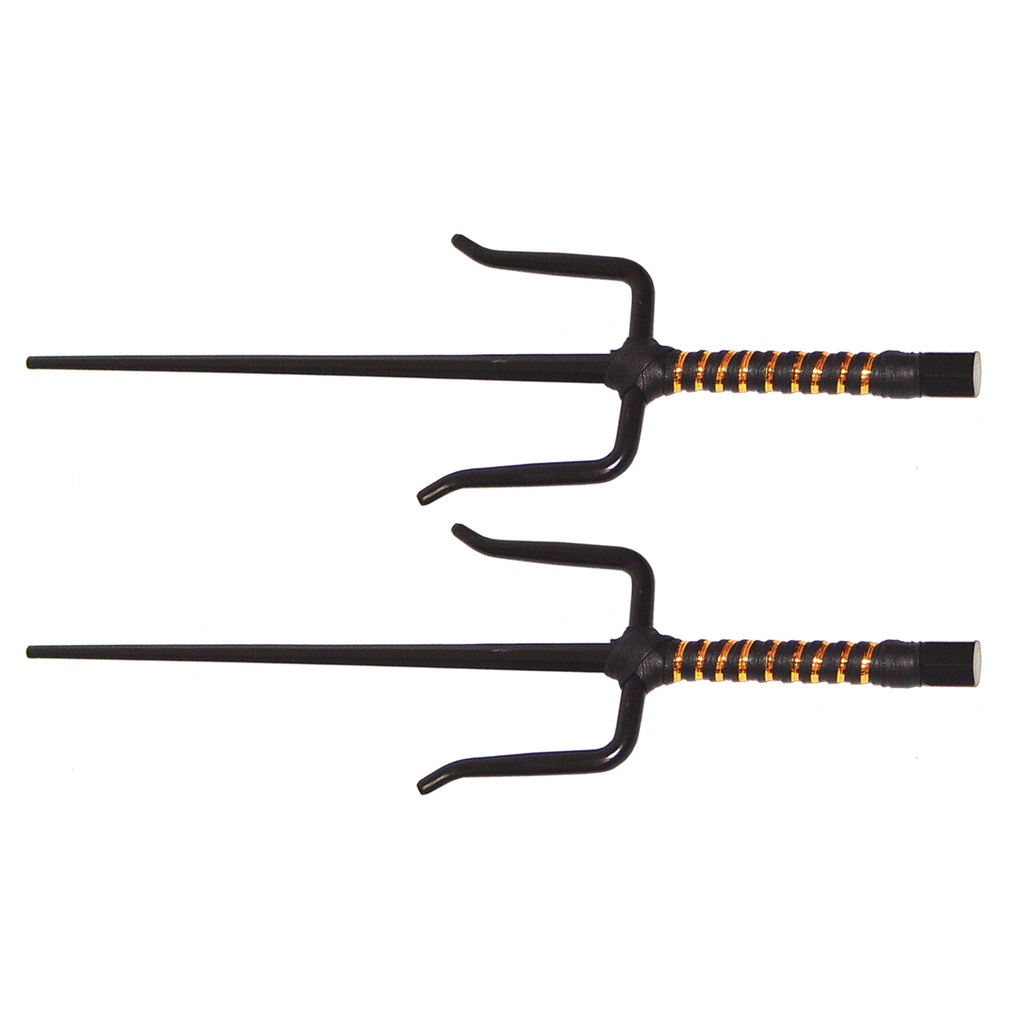
In a quiet Houston dojo or a converted garage in Lubbock, this Shadow Lineage Training Sai Set feels right at home. Each 19.5-inch metal sai carries solid weight and balance, with black leather-wrapped grips and gold bands that lock into your hand. Not wall-hangers pretending to be weapons—these are practice-ready, kata-clean tools for the martial artist who trains with purpose, not props.
Shadow Lineage in a Texas Dojo
The strip mall looks like any other on a San Antonio access road—taqueria on one side, insurance office on the other. But inside the dojo, the mirrors are clean, the mats are worn, and the room goes quiet when the Shadow Lineage Training Sai Set leaves its rack. Black metal, 19.5 inches each, leather-wrapped grips that bite just enough into your palm. Not costume pieces. Training tools.
This pair feels built for the serious practitioner who happens to live under Texas sun—someone who runs forms in a cooled Houston warehouse gym, or drills blocks and traps in a Hill Country garage with the fan pushing hot air in a circle. The all-metal frame carries enough weight to matter, but not so much it drags your wrist. You can work with these for an hour without feeling like you're swinging crowbars.
Why This Sai Pair Fits Texas Training Culture
Texas doesn’t have much patience for flimsy gear, and martial arts weapons are no exception. The Shadow Lineage Training Sai Set answers that with a full metal construction from pommel to tip. At 19.5 inches, each sai lands in that sweet spot where kata, bunkai, and controlled impact training all feel honest and repeatable.
The black finish takes the glare off under bright fluorescent dojo lights or a single LED bar in a backyard training space. The side prongs sit compact and slightly angled, close enough for clean trapping and redirection drills without snagging on loose sleeves. These are the details a Texas instructor notices when they’ve watched dozens of cheap practice sai rattle themselves loose over a semester.
Wrap your hand around the grip and the leather tells you what kind of work this set is meant for. The spiral gold-tone bands aren’t just decoration—they give your fingers natural indexing points, so you know exactly where you are in the weapon without looking. That matters when you’re moving fast, in bare feet on a mat in Austin or over concrete in a Brownsville carport.
From Display Rack to Dojo Floor
Plenty of martial weapons look good on the wall and fall apart the first time they’re used. This set was built to bridge that gap. On a rack in a Dallas suburban dojo, the black metal and gold accents read clean and professional—a matched pair that says the instructor cares what tools the students handle.
In the hand, the central prong stays straight and true. The tapered tip gives line and focus to thrusts, even when you’re only striking air and heavy bags by school policy. The curved side prongs are symmetrical and consistent from one sai to the other, which keeps partner drills honest. You don’t have one good piece and one that always feels just a little off.
For the collector running a martial weapons wall in a Fort Worth office or a spare room in El Paso, this set pulls its weight visually. The modern black finish lands somewhere between traditional and tactical, so it doesn’t clash beside bokken, bo, or a modern training katana. But the real value shows when a visiting instructor or old training partner asks, “Can I take those off the wall?” and you can say yes without worrying.
Texas Law, Sai Weapons, and Where They Stand
Texas used to be stricter about what could and couldn’t be carried. Over the last several years, the legislature has loosened most of those rules. Today, sai fall into the broader category of bladed or impact weapons, but they are not treated like firearms. There’s no special separate ban on traditional martial arts pieces like this Shadow Lineage Training Sai Set.
That said, there is a difference between owning and training, and walking through public spaces with metal weapons in hand. Most serious practitioners in Texas keep their sai in a case or bag, traveling from home to dojo, parking lot to training hall, without trying to make a statement in between. It’s legal to own and transport them in most normal situations, but it’s still smart to keep them cased and out of sight when you’re not on private property or inside a school or gym that allows them.
How Texas Dojos Typically Handle Sai
Across Houston, Austin, Dallas, and smaller towns in between, traditional schools treat weapons like this with clear structure. They live on the rack or in a locked closet. They come out for advanced classes or focused weapons nights. Students are taught not just how to move with them, but how to carry them—leaving the building in a zip case, not spinning them through the parking lot.
In Texas, that’s less about fear of the law and more about respect: for the tool, for the public, for the art. This set fits that approach. It’s serious enough to deserve that respect, not a foam prop shaped like a sai and sold as a toy.
Shadow Lineage Training Sai Details in Real Use
These are full-length pieces at 19.5 inches, which means a six-foot student in a Plano dojo and a shorter practitioner in Corpus Christi can both find comfortable lines without feeling under- or over-armed. The weight tells you it’s all metal the moment you lift one off the rack, but the balance sits low, closer to the grip than the tip, which makes rapid rotations and grip transitions smoother in live training.
The handle’s leather wrap matters most when you’re sweating through a summer class with the AC losing a fight against August heat. Bare metal gets slick. Cheap cord unravels. Here, the leather stays planted, and the gold bands give your hand something to bite against without tearing skin. That matters when you’re drilling hundreds of repetitions, not just posing.
Texas Training Scenarios This Set Excels In
Picture an evening weapons class in Waco. The instructor calls for advanced students only. The bo and jo come down first, then the sai. This set is the one that gets handed to the student who has proven they’ll treat it correctly—no spinning, no throwing, no theatrics. Just crisp lines, precise blocks, controlled redirections.
Or imagine a solo practice session in an Amarillo backyard, fence high, neighbors used to the sound of strikes on a post or heavy bag. The light fades, and the black finish on the Shadow Lineage Training Sai Set keeps the reflection out of your eyes. You run the same kata you’ve done for years, but the tools in your hands finally match the way you’ve always pictured the form.
Questions Texas Buyers Ask About Sai Weapons
Are OTF knives legal to carry in Texas?
Texas removed its ban on switchblades and automatic knives several years ago. Today, OTF knives are legal to own and carry in most everyday situations, with location-based restrictions still applying in sensitive places like schools and certain government buildings. Blade length limits now fall under the broader "location-restricted knife" rules, so a compact OTF carried in a pocket is legal just about anywhere an average Texan goes, while larger blades face some limits. The bottom line: in Texas, an OTF knife is treated as a tool, not contraband—same way this sai set is treated as a martial arts weapon, not a crime by itself.
Can I openly carry this Shadow Lineage Training Sai Set in public in Texas?
It’s legal to own and transport a metal sai set in Texas, but walking down a city sidewalk with bare weapons in hand will draw law enforcement attention fast. Most practitioners carry them cased or bagged, heading directly from home to dojo or private training space. That keeps you within the spirit of Texas law and within the expectations of most schools and instructors.
Is this sai pair better for display or for real training?
It will do both, but it was built with training in mind first. The full metal length, consistent side prongs, and leather-wrapped grip all support regular dojo use—kata, partner flow, and controlled impact work. If you’re a collector, it will sit cleanly on a rack. If you’re a martial artist in Texas, it’s meant to leave that rack often.
First Session with the Shadow Lineage Set
You lock up the truck outside a low, brick dojo that’s seen twenty summers come and go. Inside, the class has already warmed up. Your instructor nods toward the weapons rack, and you know which pair is yours—the black metal, gold-banded grips of the Shadow Lineage Training Sai Set. You lift them, feel the weight settle into your hands, and step onto the mat.
The air is thick, the AC behind, but the leather holds under your grip. The form you’ve run empty-handed for months suddenly has edges and reach. Blocks feel sharper. Lines feel honest. Out in the lot, traffic hums along a Texas highway. In here, it’s just you, the floor, and a matched pair of sai built to carry years of work without complaint.