Raven Wake Heritage Viking Sword - Midnight Black
8 sold in last 24 hours
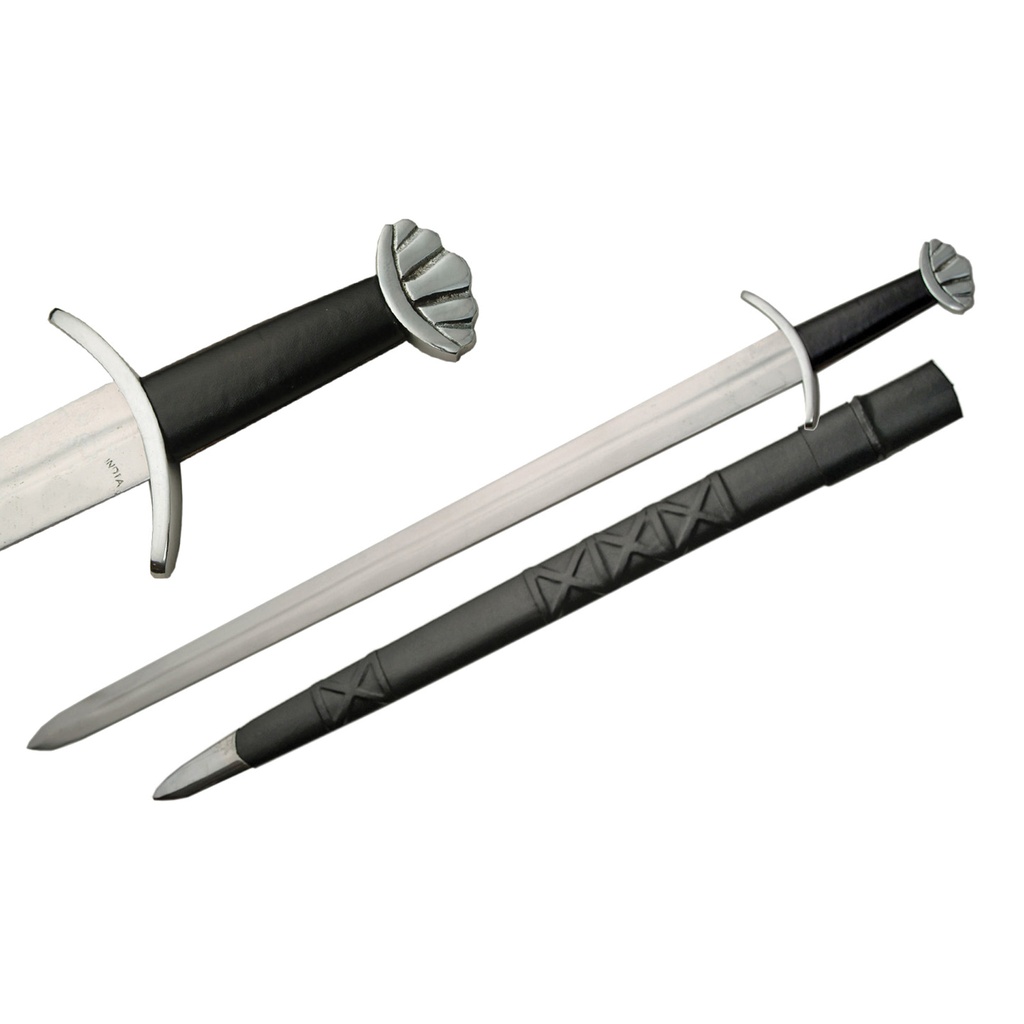
Caught between museum piece and modern steel, this Viking sword carries a 39-inch straight blade, silver guard, and lobed pommel that feels older than its finish. The midnight black grip and sheath quiet the look, so the lines do the talking. On a wall, in a case, or in the hand, it reads the same: simple, serious, and built to be noticed.
When a Viking Sword Belongs on a Texas Wall
There’s a certain kind of house you see off a Farm-to-Market road. Metal roof, pecan tree, maybe a retired F-150 parked under a lean‑to. Step inside and you’ll find a rack of rifles, a few good knives, and, every now and then, a blade that’s there for the story as much as the steel. That’s where this heritage Viking sword fits — on the wall of someone who’s swung plenty of working blades, but keeps one long piece of history for the nights the wind comes up and the past feels close.
The straight, double‑edged blade runs out to about 39 inches, clean satin from guard to rounded tip. No gaudy etching, no fantasy curves, just a Viking line drawn in steel. A silver crossguard holds the transition to a midnight black grip, and the lobed pommel closes it out with that unmistakable Norse profile. It looks old, but it carries like new.
Heritage Viking Sword Built for Modern Texas Rooms
This isn’t meant for brush clearing along the Guadalupe or riding in the truck next to a toolbox. It’s built for the spaces where you talk, not cut — game rooms, offices, studies cooled by a slow ceiling fan and a good story. The black scabbard keeps the silhouette tight and muted, with raised X‑pattern bands and a silver chape at the tip so the eye follows the length without ever getting lost in decoration.
On a stone fireplace in the Hill Country, across barnwood in a Panhandle bunkhouse, or in a downtown Houston loft that still smells faintly of welding and oil, this Viking sword becomes a quiet centerpiece. The black grip keeps fingerprints from shouting, the satin blade catches just enough light to let visitors see the edge, and the matching silver guard and pommel frame the whole thing like hardware on a good saddle.
Why a Texas Collector Reaches for a Heritage Viking Sword
A Texan who already owns half a dozen working knives doesn’t bring home a heritage Viking sword for chores. They hang it because it says something about the way they think about time and steel. The straight blade and lobed pommel come out of an older world, the same way a Bowie or a stockman folder tells a chapter of this one.
In a collection that might already hold a cavalry saber, a reproduction Alamo-era knife, or a dress sword from a relative’s service, this piece fills the northern gap — the sea‑roads and shield‑walls that came long before wire fences and windmills. The minimal ornamentation keeps it from drifting into costume; it looks right next to a well‑oiled lever gun or a blued revolver, not out of place.
Steel, Balance, and the Way It Feels in Hand
For all its presence as a display blade, the feel still matters. When you lift it down in a San Antonio garage or a Lubbock shop, the weight comes on steady but not clumsy. The straight crossguard gives your leading hand a sure index, and the tapered cylindrical grip fills the palm without hot spots. That lobed pommel anchors the back of the hand, so the sword wants to track in line with your forearm instead of wandering.
The satin blade finish sheds fingerprints easier than mirror polish and looks honest under LED shop lights or a single lamp over a desk. Edges run plain and even; it’s a blade you can explain to a nephew or a friend without needing to apologize for gimmicks. The black sheath carries tight along the length, and the silver tip at the chape gives you a clean visual stop, like the last note of a song you’ve heard before.
Questions Texas Buyers Ask About Viking Swords
Are swords like this legal to own and display in Texas?
Yes. Texas law treats a sword as a "location-restricted knife" because of the blade length, which puts it over the everyday carry limits for some places. You can legally buy, own, and display a Viking sword like this at home, on private property, and in many other settings. State law doesn’t forbid the sale or possession of long blades; the restrictions focus on where you carry them — certain government buildings, schools, and a few other locations are off‑limits.
Most Texans keep a sword like this on the wall, on a stand, or in a display case. If you ever move it between homes or take it to a show, you transport it sheathed, secured, and out of the way, the same way you’d haul a long gun you’re not planning to use on the road.
Does this Viking sword work for reenactment or is it only for display?
This heritage Viking sword is built first for display — the clean satin blade, black synthetic-style grip, and decorative scabbard speak to presence more than punishment. A reenactor in Texas hill-fort events or coastal festivals might carry it on a belt for look and ceremony, but it’s not meant to be your primary training blade for full-contact work against shields or armor.
In practice, it’s ideal for walk‑on roles at festivals, photo shoots on a ranch, themed weddings out on a family place, or as the centerpiece in a game room that’s already halfway to a mead hall. You get the silhouette and the stance of a Viking sword without needing museum insurance to hang it on the wall.
How does it fit into a Texas home or shop collection?
Most buyers in this state are already set on practical blades — a folder in the pocket, a fixed blade in the truck, maybe a machete hanging in the shed. This Viking sword steps into a different role. Over a bar in a Fredericksburg rental, it becomes the story guests tell when they go home. In a Midland office, it hangs across from framed leases and drilling maps, a reminder that every frontier had its steel.
Collectors in Dallas suburbs might mount it above a media console next to shields and axes, while a rancher outside Kerrville could run it along a log wall above old branding irons and bridles. It doesn’t clash with modern Texas; it threads the old world into the one outside your window.
From Longships to Livestock Guard Dogs: A Closing Picture
Picture a cool front finally pushing through after a long August, the first night you can open the windows. You’re standing in a den lined with cedar planks, a game on low, dogs asleep. On the wall, this Viking sword runs black and silver above a row of mounts and framed photos — brandings, brand‑new calves, kids in caps and gowns.
You take it down, feel the weight, the way the lobed pommel settles into your palm. The blade catches a line of light from the kitchen and throws it back along the room. It doesn’t need a speech. It just hangs there in your hand, one more piece of steel in a state that understands what metal can mean — past, present, and everything still coming.