Shadowline Street-Control Kubaton Keychain - Black Aluminum
12 sold in last 24 hours
You step out of the H‑E‑B after dark, keys in hand. The Shadowline Street-Control Kubaton sits in your grip, not your pocket—5.5 inches of grooved aluminum you don’t have to think about. It rides quiet on the ring, looks like any other key, but that tapered control tip gives you leverage if someone crowds your space. No flash, no blade, just a Texas-ready, non-lethal answer when you’d rather get home than make a scene.
When Your Key Ring Becomes Your Backup
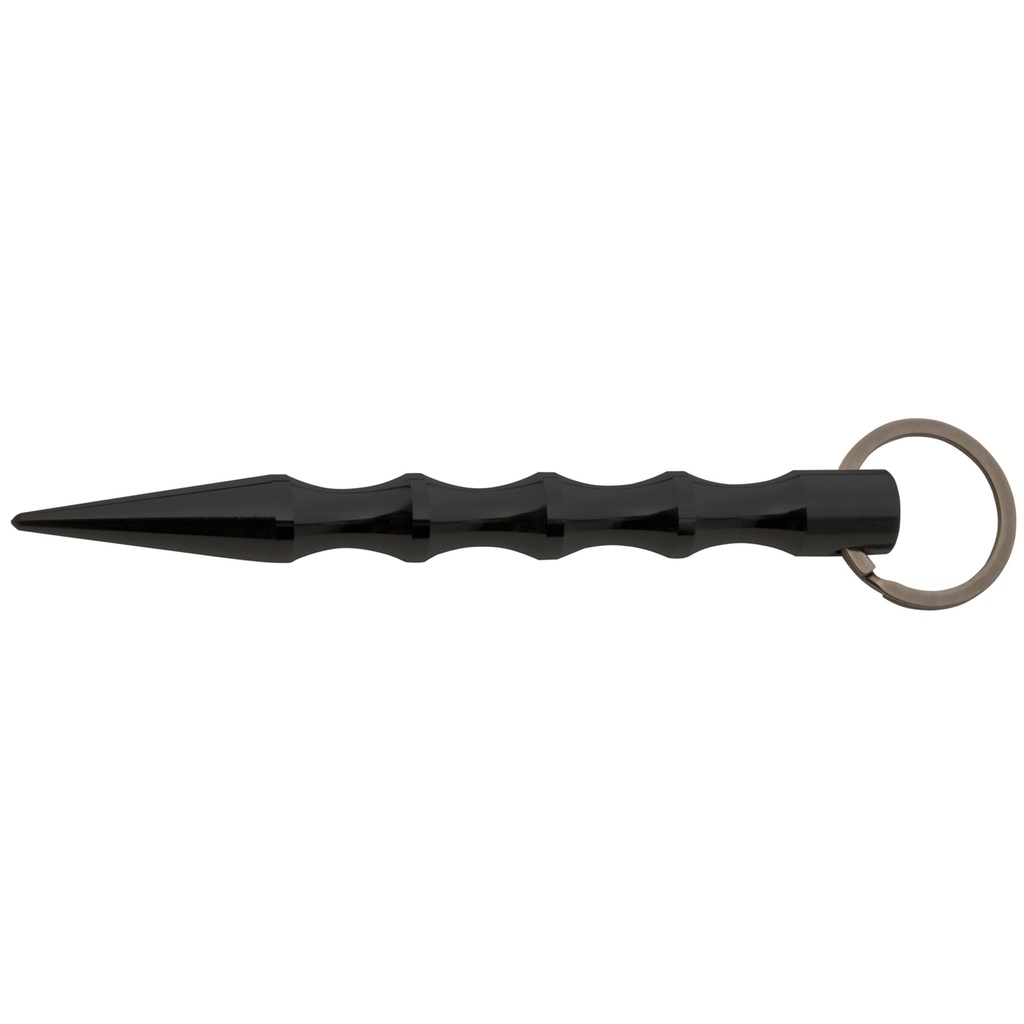
The parking lot is half-lit and wide open. Grocery sack in one hand, keys in the other. That’s where the Shadowline Street-Control Kubaton Keychain earns its keep. It doesn’t sit buried in a purse or glove box. It’s already in your hand, riding your keys, a slim 5.5-inch bar of black aluminum that doesn’t look like a weapon but feels like one when you close your fingers on those grooves.
This isn’t about bravado. It’s about having quiet control in the everyday places Texans actually move—suburban driveways outside San Antonio, apartment lots in Houston, late-shift exits behind Dallas warehouses. A defense keychain that gives you leverage instead of panic.
Why Texans Reach for a Kubaton Instead of a Blade
Plenty of Texans carry a knife. Not everyone wants to draw one. A kubaton keychain like the Shadowline fits the gap between empty hands and edged steel. You get a non-lethal option that still lets you strike, press, and control without cutting anyone open.
The body is aircraft aluminum, turned down to a slim cylinder that disappears on a full key ring. Four contoured finger grooves bite just enough into your grip to lock it in even if your hands are sweaty from August heat or rain blowing sideways off the Gulf. The tapered point doesn’t slash—it focuses force. Ribs, thighs, joints, pressure points; the tool does the work when you drive it with intent.
In tight spots—crowded bar exits in Austin, festival parking fields, downtown garages—you don’t want to brandish a big blade. You just want something that gives you confidence while you walk from door to truck.
Control, Not Flash, in Texas Carry Culture
Most folks in Texas who stick with their gear long-term choose tools that don’t draw attention. This kubaton keychain was built for that. No logos screaming off the side, no odd shapes. Just a glossy black finish that reads like any other key fob to anyone not paying close attention.
The 5.5-inch length is deliberate. Short enough to vanish on your key ring, long enough to clear your fist at both ends when you grip it. That means you can hammer-fist with the butt or drive the pointed tip forward while still hanging onto your keys. The solid steel key ring ties into your existing setup—truck keys, house keys, gate keys—and doesn’t feel like some extra thing you have to remember.
In summer, when you’re walking out in shorts and a T-shirt with no jacket to hide gear, this is the piece that still goes with you. You might leave the bigger hardware in the truck console. The Shadowline rides right out the door because it’s already there.
Texas Law, Practical Reality, and Non-Lethal Tools
Texas knife laws have opened up over the years—OTFs, autos, and long blades all have their place depending on where you are and what you’re doing. But there’s something to be said for a tool that never raises eyebrows in a school pickup line, church parking lot, or office complex.
Where a Defense Keychain Fits in Texas Carry Laws
Under current Texas law, kubatons and defense keychains are generally treated as impact tools, not blades. They don’t fall under the same categories as knives, switchblades, or OTFs. That makes them a natural choice for Texans who move through mixed environments—workplaces with HR policies, posted venues, or properties where a visible knife might be questioned even if it’s legal.
It’s still on you to know local rules, employer policies, and any special restrictions at schools or secured facilities. But for everyday life—running errands in Lubbock, walking the dog in a San Antonio neighborhood, cutting through a dim breezeway in Fort Worth—this kind of non-lethal keychain gives you options without the legal gray area that can come with more aggressive hardware.
Texas Scenarios Where a Kubaton Makes Sense
Picture a nurse walking to her car after the late shift in a Tyler hospital lot. Hands full, brain tired, she’s not digging for a knife. The kubaton is already laced between her fingers on the key ring. Or a college kid crossing a campus lot in Waco after night class, not wanting to be the one flashing a blade around a security patrol. Same story—a quiet tool that gives them a way to say "back off" with more than words.
Built for Grip When It Gets Real
Defense tools fail when they slip. The Shadowline’s four finger grooves give you indexing without thought. In the dark, you don’t need to fumble. You wrap your hand, feel the ridges, and know which way the point is facing. The glossy black aluminum feels smooth but not slick, and the solid one-piece body means there are no joints or hinges to fail under pressure.
At 5.5 inches, it balances reach and concealment. You’re not trying to swing it like a baton. You’re using short, sharp movement—jabs to joints, rakes across muscle, hard presses into soft spots near the collarbone or above the knee. It’s not complicated. It’s leverage in the hand of someone who decided ahead of time that they’d rather be ready than surprised.
Questions Texas Buyers Ask About Kubaton Keychains
Are OTF knives legal to carry in Texas?
Yes. Under current Texas law, OTF knives and other switchblades are legal to own and carry for most adults, with location-restricted rules on certain large blades in specific places like schools, certain government buildings, and secure facilities. A kubaton keychain like this isn’t an OTF knife at all—it’s a non-lethal impact tool—so it typically sits outside knife restrictions. Still, it’s smart to stay current on Texas statutes and any posted policies where you work or visit.
Is this kubaton keychain too obvious to carry at work in Texas?
The Shadowline was designed to blend. On a key ring sitting on a Houston office desk or hanging from a belt loop in an Austin tech shop, it reads like a slender fob or stylus to most people. No serrations, no blade, no wild colors. If your workplace frowns on anything that looks like a weapon, you’ll still want to use judgment, but for many Texans in regular jobs—hospital staff, warehouse crews, retail managers—it passes as a normal part of a key set until and unless you need to use it.
Should I carry this instead of a knife in Texas?
It’s not an either-or for most Texans. Many carry a folding knife or OTF for utility and keep a kubaton for close-range defense where they don’t want to escalate to lethal force. The advantage of this defense keychain is simple: it’s always in your hand when you’re locking a door, starting your truck, or walking through a dim stairwell. If you’re building a layered carry setup for Texas life—home, truck, work, and everywhere in between—this is a quiet, low-profile layer that fills a different role than your primary blade.
Ready When You Step Off the Concrete
End of the night, lot mostly cleared, cicadas loud in the trees. You lock the door behind you, slip keys out, and they land in your hand just like they always do—with the Shadowline Street-Control Kubaton settled between your fingers. No show, no drama, just a slim piece of black aluminum that makes the walk to your truck in Abilene or Amarillo feel less exposed.
You didn’t pick it because it looked tough. You picked it because it disappears until you need it and doesn’t turn every stop at the school, the office, or the grocery run into a conversation about weapons. That’s how Texans actually carry—quietly, deliberately, with tools that match the life they’re living, not the movie they’re watching.