Ghostline Minimalist Samurai Katana Sword - All-White
11 sold in last 24 hours
Midnight on the Gulf, blinds drawn, just the hum of the AC and the soft rasp of a blade leaving its saya. This all‑white katana feels more like stillness than steel—curved for kata, balanced for flow, clean enough to hang in a studio or office. At 37.5 inches, it tracks through forms without fighting you. On a stand, it doesn’t shout. It waits. For the next round, the next drill, the next quiet night.
A Quiet Blade for Quiet Texas Rooms
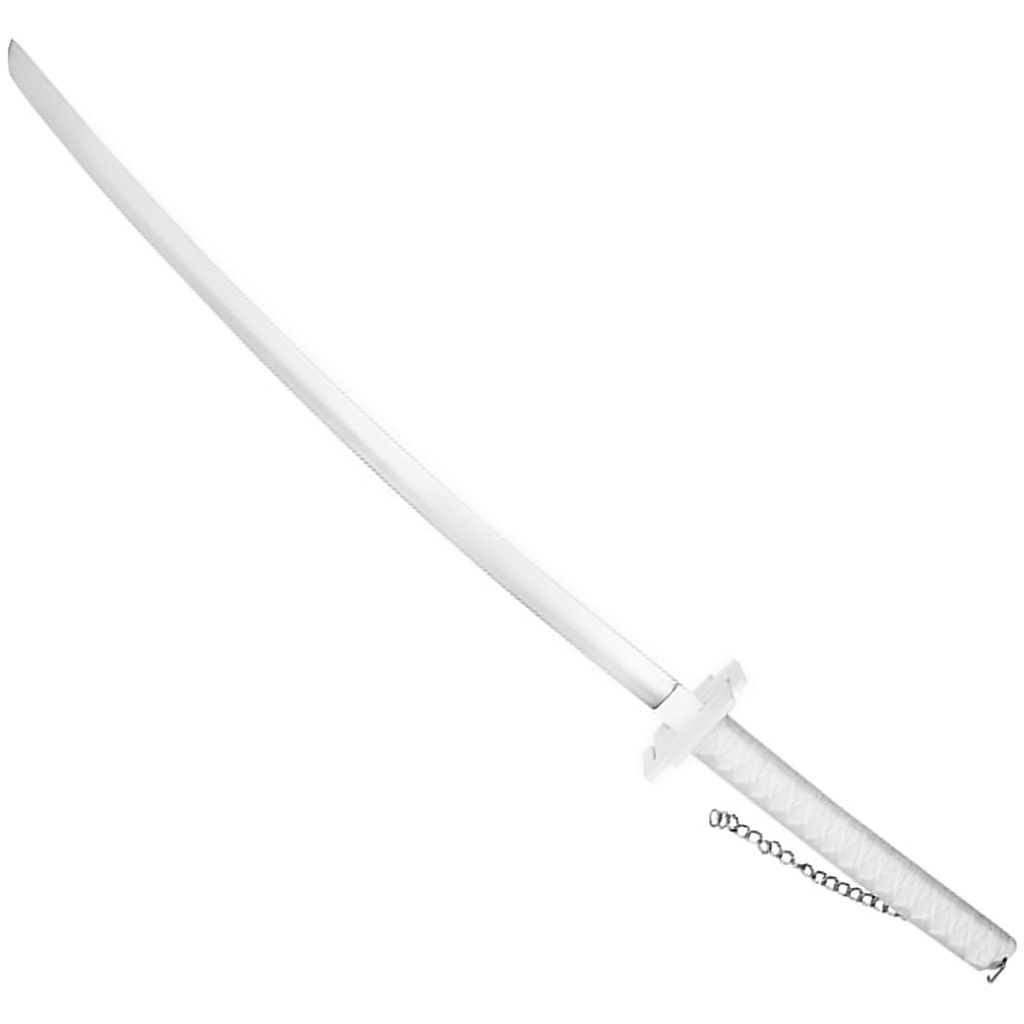
Late night in a Houston townhouse, blinds half‑closed against the sodium glow. The day’s dust from I‑10 still in your chest. You clear a patch of floor, set your stance, and slide this all‑white katana from its saya. No noise. Just the dry whisper of steel on wood and the small swing of the chain at the pommel.
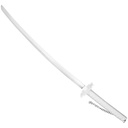
This isn’t a wall‑hanger trying to look mean. It’s a clean, 37.5‑inch katana built for kata practice and display, where motion and line matter more than ornament. The all‑white blade, guard, handle, and saya turn everything into silhouette: your shoulders, your hips, the arc you cut through stale apartment air.
Why This Minimal Katana Belongs in Texas Practice Spaces
Across the state, from strip‑mall dojos in San Antonio to converted warehouses on the east side of Austin, practice time is borrowed time. After work. Before the kids wake up. Between late shifts. You don’t need a flashy sword fighting for attention. You need one that disappears into the drill.
The gentle curve of this katana feels right in slow forms and faster cuts. The weight spreads down the length of the blade instead of bunching up at the guard, so when you pivot on a worn garage mat in Lubbock or a polished wood floor in a Dallas studio, the tip tracks where your eyes are already going. The all‑white finish lets you see every angle against dark mats, mirrors, or the plain drywall of a spare room.
Set in its matching saya, the sword reads like a clean line instead of a threat. It can share space with framed prints, a guitar on a stand, or a row of training gear without turning the room into a movie set. It’s there if you want to run through katas before a long week. It’s calm when you don’t.
Design Details That Matter When You Train
Form practice in Texas has its own rhythm. High ceilings in a converted Houston garage mean wide, arcing cuts. Low ceilings in a Panhandle farmhouse push you to keep your work tight. This katana handles both. At roughly 37.5 inches overall, it rides the line between full ceremonial length and manageable practice blade.
The curved, single‑edge blade carries an all‑white finish from tip to habaki, matched by a rectangular tsuba that keeps your grip honest without catching clothing. The handle wears a traditional wrap texture, also white, so your hands lock in the same way every time you step into a form—barefoot on tatami or in socks on cool Austin concrete.
Near the pommel, a subtle silver‑tone chain swings just enough to mark motion. It’s a modern accent, but it also gives you a sense of follow‑through; in a mirror, that glint shows where the cut ended, where recovery begins. For display, the chain is the only thing that breaks the monochrome field, just enough to catch an eye without loud engraving or painted symbols.
Texas Display Culture: From Studio Walls to Office Shelves
In Texas, what you hang on your wall says more than what you talk about. A flashy fantasy blade over the couch tells one story. An all‑white katana on a simple stand in a home office tells another.
In a downtown Dallas high‑rise, this sword can sit behind your desk, white against a dark bookcase, reading more like a design object than a weapon. In a Hill Country home studio, set under a narrow window, it anchors the room without breaking the quiet. The monochrome finish keeps it from clashing with guitars, framed rodeo photos, or minimalist furniture.
Visitors who know training see the curvature, the wrap, the balance point. They understand why you chose something this simple. Those who don’t just see clean lines, white on white, and a hint of movement in the chain when the air kicks on.
Texas Law, Real Talk: Where a Katana Fits
Texas isn’t shy about blades, but it is precise. Under state law, this katana counts as a location‑restricted knife because the blade is over 5.5 inches. That means it’s legal to own and display at home, in your studio, or on private property across the state, but there are places you cannot carry it.
Where This Sword Stays Off Your Shoulder
You don’t shoulder a katana to stroll into a Houston office tower, a San Antonio school, a college campus, or most government buildings. Those are the kinds of locations Texas law singles out for longer blades. Out on your own land in East Texas, in a private martial arts school, or at home, this sword belongs in the room with you. In the truck, it should ride cased and out of the way, headed to practice or a display spot—not worn into public spaces where long blades draw the wrong kind of attention.
That’s the balance most Texans settle into: train where it’s yours, display where it fits, leave the public showmanship to someone else.
Questions Texas Buyers Ask About Samurai Katana Swords
Are OTF knives legal to carry in Texas?
They are. Texas removed the switchblade ban years ago, so automatic and OTF knives are legal at the state level. The main limit is blade length over 5.5 inches in certain locations. That’s where this katana lives legally too: fine to own and keep on your own ground, but not something you carry into schools, many government buildings, or similar restricted places. Shorter everyday folders ride in pockets; long blades like this stay in homes, studios, and private spaces.
Is this all‑white katana built more for practice or for show in Texas homes?
It does both well. The 37.5‑inch length and curved profile suit slow, controlled kata in a San Antonio dojo or a cleared‑out Midland garage. The minimalist all‑white finish, matching saya, and small chain detail make it clean enough to live on a stand in a Houston living room or an Austin office. If you want something to swing hard into targets, you pick a heavier work blade. If you want something to move through forms and then rest where you can see it, this fits.
How do I decide if this katana is right for my Texas setup?
Picture where it lives first. If you have a dedicated practice corner in a Dallas apartment, a spare room in a Killeen house, or a wall in a Fort Worth studio that needs one strong, quiet piece, this all‑white katana earns its place. If you’re looking for an aggressive, battle‑worn look or a blade for cutting dense targets out on family land, it’s the wrong tool. This one is for people who care about line, posture, and a room that feels calmer with a sword in it.
First Draw in a Texas Room That’s Finally Yours
End of a long week in Austin, traffic still ringing in your ears. The house is quiet. You flip off the overheads and let one lamp burn. The white saya rests on its stand, just below eye level. You step in, wrap your fingers around the textured handle, and draw.
The blade leaves the scabbard in one smooth pull. No rattle. No drama. Just the soft click as the last inch clears and the faint tug of the chain behind your hand. In the lamplight, the sword is nearly the same color as the wall, so the only thing that really shows is your movement. That’s the point. In a state that understands steel, you don’t need to prove anything. You just need a blade that lets the work speak for itself.