Stage Serpent Balanced Belly Dancing Sword - Wood & Brass
11 sold in last 24 hours
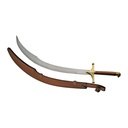
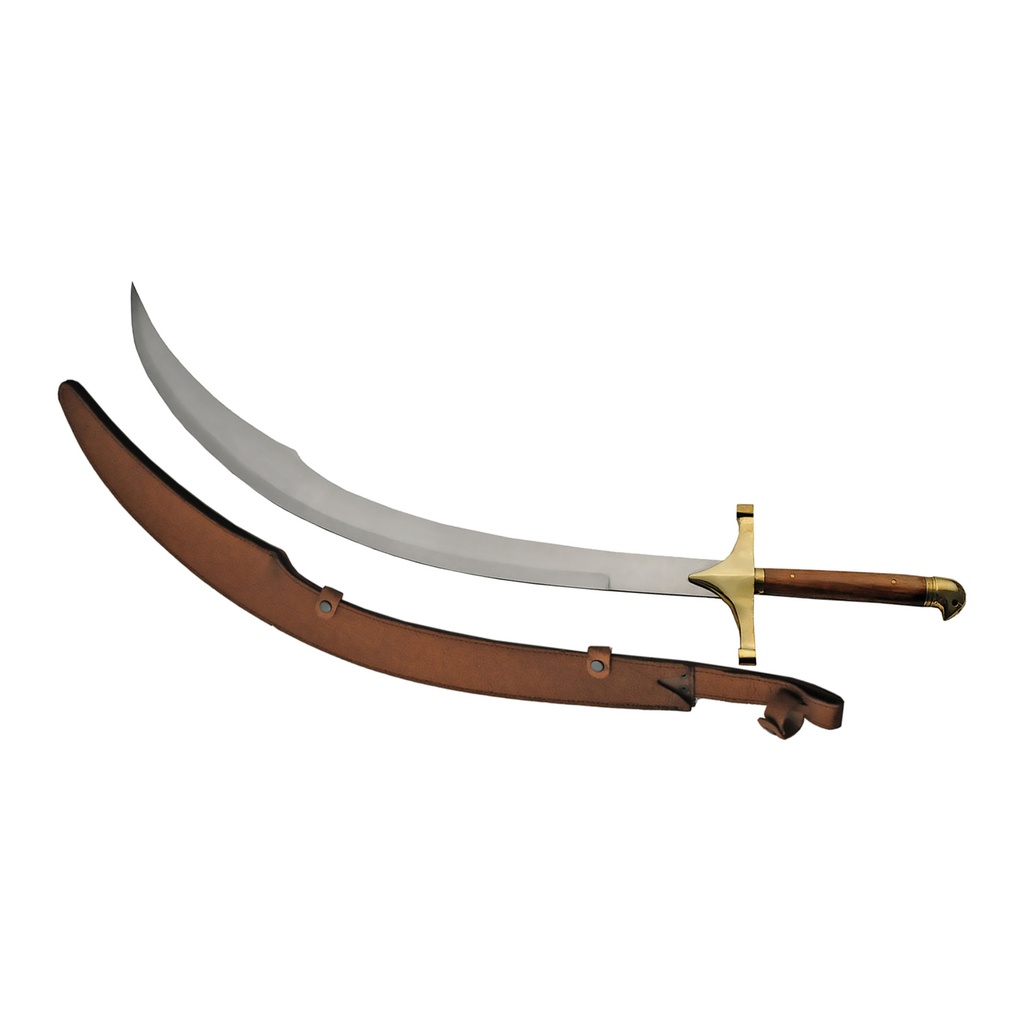
Under warm light, this scimitar-inspired belly dancing sword does what plastic props can’t. The 27-inch curved blade, full tang, and wood-and-brass hilt give you real weight and predictable balance across head, hip, and hand. At 34 inches overall with a curved leather sheath, it carries like a true sword but moves like a performance partner—steady, smooth, and ready every time you step on stage.
When a Belly Dancing Sword Has to Move Like Part of You
On a small Austin stage behind a taqueria, the music’s low, the crowd close. There’s nowhere to hide sloppy balance or cheap props. When the sword goes up on your head and the room goes quiet, you need steel that tracks straight, settles true, and doesn’t wander with every breath. That’s where this stage serpent earns its keep.
This belly dancing sword isn’t a wall-hanger pretending to be stage gear. The long, 27-inch curved blade carries real presence, but the full tang running through the handle keeps the weight predictable. Once it’s up—on head, hip, or hand—it stays where you put it, no surprises.
Curve, Balance, and the Kind of Control Texas Stages Demand
Texas venues aren’t always built for dance. One night you’re in a polished Houston theater, the next you’re working a narrow strip of floor in San Antonio with concrete underfoot and no wings to retreat to. That’s why the way this sword balances matters more than how it photographs.
The scimitar-inspired curve isn’t just for show. That 27-inch sweep gives you a long, clean line that reads from the back row, but the mass follows the arc in a way that feels steady instead of top-heavy. The full tang construction ties blade to handle all the way through, so the sword doesn’t flex or shift when you tip from hip balance to a slow, careful backbend.
Wood in the grip warms in your hand, never slick like cheap plastic. Brass at guard and pommel adds enough forward and rear weight to anchor the blade, so when you roll it from palm to forearm or glide it into a head balance, it settles instead of teetering. Under stage light in Dallas or a dim bar set in Lubbock, that gold-toned brass throws a quiet glow that frames your movement without stealing it.
Why This Belly Dancing Sword Fits Texas Performance Life
Texas performers live in their cars. Gear rides from costume rack to trunk to quick-change corner, then back again. A belly dancing sword has to survive hot parking lots in August and cold concrete floors in January without warping, loosening, or looking tired.
This blade’s satin finish shrugs off fingerprints and quick backstage wipes without needing constant polish. No flashy etching to weather or flake—just clean steel that still looks sharp after another night in a San Marcos club or a festival in Fort Worth. The wooden handle takes the bumps of fast pack-outs, and the brass pins lock it down so the grip doesn’t start to wiggle after a season of shows.
The brass guard is simple and straight, sized to protect your hand on flourishes without catching fabric. The curved pommel hooks just enough to give you a tactile end point when you spin or reverse your grip, useful when sweat and stage nerves would make a lighter, cheaper prop twist off line.
Carrying a Performance Sword Across Texas Without Drama
Texas law treats this as a real sword, not a toy. It’s a bladed instrument over the standard pocket knife range, so how and where you carry it matters. For most dancers, that means treating it like a piece of performance equipment: move it from home to venue, keep it sheathed, and don’t walk city streets with bare steel in your hand.
From Car to Stage the Right Way
The curved leather sheath on this sword isn’t just costume dressing. It covers that 27-inch blade completely, following the arc so it rides close instead of jutting out at odd angles. Slip it through the belt loop when you’re hauling gear across a parking lot in Corpus or through a busy festival ground in Austin, and it stays tight to your side instead of swinging like a machete.
Most Texas dancers carry it cased in a bag or with the sheath looped to a belt until they’re inside the venue. Once you’re at the stage, you uncase, rehearse, perform, and sheath again. That’s the rhythm this build supports: real steel, treated with real respect, moved with purpose.
Respecting Real Steel in a Performance Setting
This isn’t a foam prop or dull plastic trainer. Even when not sharpened for cutting, a single-edged, full-tang blade of this length can do damage if mishandled. Texas venues and event organizers tend to look more favorably on performers who show they understand that—keeping the sword sheathed off stage, storing it securely in backstage areas, and transporting it discreetly.
The included curved leather sheath and the sword’s understated styling—smooth steel, wood, and brass without big fantasy spikes or aggressive edges—help signal that this is a professional tool used in a controlled context, not a stunt carried for shock value.
Built for Rehearsal Rooms from El Paso to Houston
Rehearsal is where you learn a sword’s character. In a dance studio off I-10 in El Paso, wood floors, mirrors, and ceiling fans don’t leave much margin for a clumsy blade. You feel quickly whether a sword fights you or cooperates.
At 34 inches overall, this piece fills your frame without dragging you off center. The weight tracks along that full tang and settles into the wood and brass hilt, so spins feel consistent instead of wobbling at the midpoint. Balances on head or hip feel repeatable—once you find the sweet spot, it’s easy to return to it, night after night.
The single edge keeps one side smooth against skin, fabric, or hair work. When you slide it along a forearm or trace it across the line of a hip scarf, there’s no surprise bite from a second edge. For troupe work in San Antonio or solo sets in Denton, that predictability matters more than theatrics.
Questions Texas Buyers Ask About Belly Dancing Swords
Are OTF knives legal to carry in Texas?
Texas removed its old switchblade restrictions years ago. OTF and automatic knives are legal to own and carry in most everyday situations, as long as you respect location-based rules—certain places like schools, secure government buildings, and some events still restrict blades. This belly dancing sword isn’t an OTF knife, but it still falls under the broader bladed weapon rules: treat it as performance equipment, transport it sheathed, and check with venues or event organizers about their specific policies.
Is this belly dancing sword sharp enough to be dangerous on stage?
Any full-length steel blade with a single edge and full tang deserves respect. Many performers choose to keep the edge semi-dull for safety in tight troupe work or crowded venues, relying on the sword’s weight, line, and shine to carry the visual impact. The construction here—real steel, real hilt hardware—means it can be sharpened, but for most Texas dancers, the priority is consistent balance and stage presence, not cutting power.
How do I know this is the right sword for my Texas shows?
If you’re working real venues—from Houston belly dance showcases to small-town cultural festivals—you want a sword that looks authentic under lights, feels predictable in rehearsal, and moves legally and discreetly between home and stage. This piece checks those boxes: full-tang reliability, a 27-inch curved profile that broadcasts beautifully, a wood-and-brass hilt that sits right in the hand, and a curved leather sheath that keeps transport simple. When a plastic prop starts holding you back, this is the natural next step.
First Night Out with a Real Performance Blade
Picture a warm evening in San Antonio, windows open in a second-floor studio over the River Walk. You pull this sword from its curved sheath, feel the weight settle into your palm, then roll it gently onto your head for the first full run. The brass guard catches the low light, the long blade draws a clean line in the mirror, and your balance feels calmer than it ever did with a hollow prop.
By the time you carry it into your first show—maybe a small festival stage in Waco or a late-night set in Deep Ellum—you’re not thinking about the steel anymore. You’re thinking about the music, the crowd, and the way the sword moves like it’s part of you. That’s when you know you picked the right one.