Target-Line Precision Throwing Star - Silver Steel
12 sold in last 24 hours
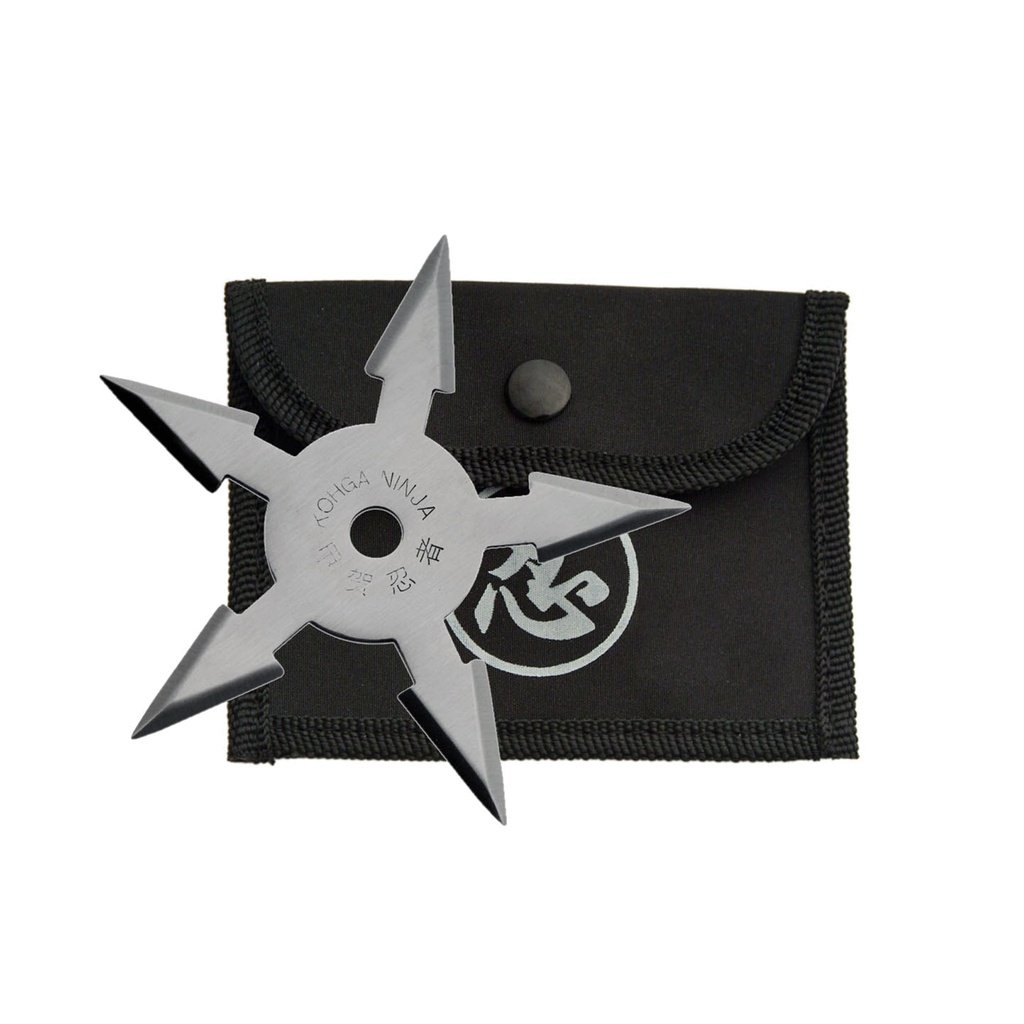
Late light on a Hill Country fence line, plywood propped against a mesquite. This precision throwing star runs a clean, even arc, the five-point silver steel easy to track against rough-cut boards. At four inches across, it throws honest—stable, predictable, no drama. The nylon pouch slips into a range bag or console. It’s training gear for Texans who like their practice quiet, repeatable, and tight to center.
When a Quiet Evening Needs a True-Flight Throwing Star
Out behind a metal shop on the edge of town, the noise dies down after closing. The grinders stop, the bay doors roll halfway shut, and a sheet of plywood leans against a stack of pallets. That’s when this precision throwing star comes out of the pouch. No crowd, no noise, just the steady rhythm of steel biting wood and the dry scent of dust and oil in the air.
This five-point silver steel throwing star is built for that kind of Texas evening—back lots, fence lines, quiet ranges on acreage just outside city limits. At four inches in diameter, it settles into a balanced spin that doesn’t wander. You feel it in the grip before the first throw: weight centered around the engraved hub, each tapered point matching the next so the flight tells you if your form is honest.
How a Precision Throwing Star Fits Texas Training Culture
Texas has no shortage of places to run drills—martial arts schools tucked into strip centers in San Antonio, converted warehouses in Dallas, small-town dojos sharing space with boxing gyms. For students who cross-train with throwing weapons, a predictable, stable throwing star makes the difference between random hits and repeatable progress.
This throwing star earns its place in that world. The brushed silver steel gives enough surface visibility under bright fluorescent lights in a Houston studio or under LED floodlights in a backyard range outside Lubbock. At about four inches across, it’s big enough to read in flight but compact enough that a missed throw doesn’t skip wildly down a gravel drive.
The steel points are sharpened at the tips for clean penetration into plywood, pine, or dense foam targets—materials you’ll actually use in a Texas garage or back pasture, not fantasy props. The circular center hub gives your fingers a clear anchor, so release feels consistent from throw to throw. You’re not guessing; you’re tracking minor changes in grip and stance like you would with a well-sighted pistol at an indoor range in Austin.
Carry, Store, and Train: Real-World Texas Use Cases
The included black nylon pouch isn’t decoration. It keeps the star where it belongs—flat, concealed, and safe when you’re moving between home, class, and private land. Slip it into a range bag next to mitts and wraps in El Paso, or tuck it into a truck console when you’re headed to a buddy’s place outside Abilene where the only neighbors are cattle and windmills.
The snap-secured flap keeps those sharp tips from chewing through fabric or catching on loose gear. Reinforced stitching holds up to the kind of casual rough handling Texas gear sees: tossed onto a workbench, crammed into a duffel with gloves and hand wraps, or riding under the back seat for weeks between sessions.
Whether you’re working single-throw focus drills against a marked bullseye or running controlled multi-throw routines at ten feet, this star gives you a readable pattern. Misses don’t lie—they show you exactly how you released, and because the tool is consistent, you know the error is in your form, not the steel.
Texas Law, Switchblades, and Where Throwing Stars Fit In
Understanding Texas Knife and Weapon Laws in Practice
Texas has loosened many restrictions over the years. Switchblades and OTF knives are legal under state law now, and the old bans that confused buyers for decades are largely gone. But the state still treats bladed weapons seriously, especially once you step off your own land or a controlled training space.
Throwing stars like this one fall into that broader category of bladed weapons. On your own property, on private land with permission, or inside a legitimate martial arts or training facility, practicing with a throwing star is generally treated much like working with other training weapons. Step into public spaces, schools, certain government buildings, or events, and the rules change fast.
Texas knife statutes are detailed, and local ordinances or specific location rules can add another layer. Anyone carrying or transporting throwing weapons, OTF knives, or other specialty blades in Texas should read current state law and check for any local restrictions where they live, train, or travel. Laws can and do change, and an assumption from a few years back is not a defense.
OTF Knife Texas Questions and How Buyers Think About Gear
Many buyers who search for an OTF knife in Texas also look at other tools that reward precision and control, like throwing stars for training or demonstration. The same mindset applies: understand how your gear is classified, where it’s legal to carry, and where it’s smarter to keep it in a range bag or at home.
OTF knife Texas questions usually center on legality and everyday carry. Throwing stars, while not everyday carry tools, sit in that same space of specialized gear that belongs in the right setting. This silver steel star is built for those controlled environments—private ranges outside town, martial arts schools, and closed training spaces—not for walking around city streets.
Questions Texas Buyers Ask About Throwing Stars
Are OTF knives legal to carry in Texas?
Under current Texas law, OTF knives and other automatic or switchblade-style knives are legal at the state level. The old statewide ban on switchblades is gone. That said, Texas still restricts certain blades and weapons in specific locations—schools, secure government buildings, some events, and similar places. Length limits and "location-restricted knife" rules can apply depending on the blade. Anyone carrying an OTF knife in Texas should read the current statutes, check any local rules, and pay attention to posted signs at venues. Laws change; it’s on the carrier to stay current.
Where can I safely use a throwing star like this in Texas?
The right place is controlled and private: your own property with a safe backstop, a friend’s land with permission, or a legitimate martial arts or weapons-training facility. Many Texans set up plywood or foam targets on rural land outside cities like Waco or Amarillo, making sure there’s no chance of a stray throw leaving the area. Public parks, school grounds, and crowded urban spaces are not the place for throwing practice, no matter how well you handle a star.
How does this throwing star compare to other training tools for a Texas buyer?
This silver steel star earns its keep through consistency. For the price of a cheap novelty piece, many buyers expect wobble, uneven points, or soft metal. Instead, you get a balanced five-point design in real steel with a readable flight path, a pouch that keeps it from damaging other gear, and a size that feels at home from a garage in Corpus to a fenced back lot in Midland. It’s not a toy—it’s a straightforward training tool.
Silver Steel, Texas Evenings, and the First Clean Stick
Picture a late fall evening just outside San Marcos. The air’s dry, the cedar line throws long shadows, and you’ve hammered a target frame into the packed ground a few yards off the back porch. You slide this throwing star from its nylon pouch, feel the weight settle between your fingers, and take that first measured step.
The brushed silver catches a little of the last light as it leaves your hand, turning once, then again, before it hits home with a solid, honest thud. No drama, no show—just a clean stick into cut lumber and the quiet satisfaction of repetition. That’s where this star belongs: in the hands of someone who values control, respects the law, and likes their practice as steady as a West Texas horizon.