Backroad Bearing Pocket Lensatic Compass - Black & Gold
4 sold in last 24 hours
Crossing Hill Country ranch roads or pine breaks in East Texas, this pocket lensatic compass keeps you oriented when the bars vanish. Flip the lid, sight along the wire, and lock a bearing fast through the lens. Lightweight and compact, it disappears in a pocket or kit until you need it. For Texans who trust a real bearing over a dead phone, this is the quiet backup that earns its space.
When the Road Turns to Caliche and the Signal Drops
There’s a point on a Texas backroad where the pavement gives up, the bars vanish, and the GPS map turns into a blank shrug. Out past the last mailbox, where mesquite crowds the fence line and ranch tracks spider off in every direction, a phone isn’t much help. A simple pocket lensatic compass, though—that still means something.
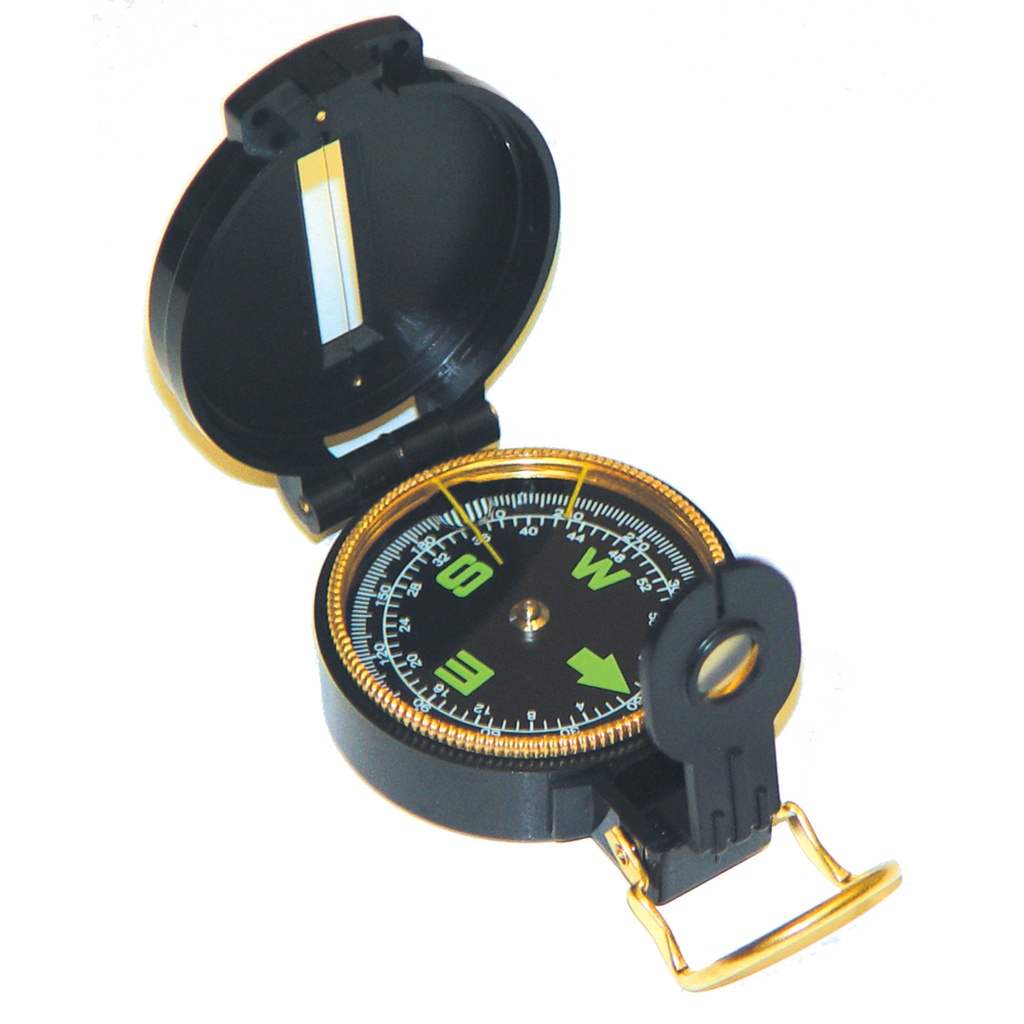
The Backroad Bearing Pocket Lensatic Compass – Black & Gold is built for those stretches. Thumb loop braced, lid flipped, sighting wire aligned over a distant windmill or water tower, you can pull a clean bearing and keep moving with purpose instead of guessing at the next fork.
Field Confidence with a Texas Lensatic Compass
This isn’t a desk toy pointing vaguely north on some office shelf. It’s a true lensatic compass, the kind you drop into a truck console before heading from Kerrville to a low-water crossing, or into a daypack before you step off the trail in the Sam Houston forest.
The black dial carries bold green cardinal letters and crisp white degree markings that stand out when the light goes flat before a Hill Country storm. The hinged cover frames your view with a straight reference slot and wire, letting you sight past brush lines, tank dams, or power poles. The gold-tone thumb loop folds down until it’s needed, then locks into your grip so the compass settles steady in your hand instead of wobbling with every breath.
You lift it, pick a far landmark on the horizon, and the lens brings the index lines into focus over the degree scale. No guessing, no squinting. Just a clean number you can walk to and trust on the way back.
Why a Pocket Compass Still Matters Across Texas Country
Texas has a way of making things look closer than they are. A windmill in West Texas might be a mile away across open pasture. A creek bottom in East Texas can hide your landmarks in two minutes once you drop under the canopy. Out on the Gulf marsh, channels curve and twist until every bend looks like the last.
This pocket-sized lensatic compass is built for those places. Lightweight enough to forget about until the landscape turns tricky, compact enough to ride in a jeans pocket, glove box, or range bag without taking up real estate meant for more gear. It’s the piece you hand to a kid on their first deer lease trip, teaching them how to take a bearing on the camp road so they can find their way back if they track a hog a little too far.
For search-and-rescue volunteers staging in Central Texas cedar, for hunters pushing through South Texas brush, or for scouts learning navigation on the Llano, a small field compass like this keeps the basics close at hand. No batteries. No updates. Just a clean bearing that doesn’t care how far you are from the nearest tower.
Texas Conditions, Texas Carry: How This Compass Fits In
On a hot August afternoon, this compass rides easy in a front pocket while you walk fencelines, checking for downed wire after a storm. The plastic housing shrugs off sweat, dust, and the grit that creeps into everything on a caliche road. The gold accents aren’t for show—they make the moving parts easy to spot when you’re working fast or teaching a group lined up at a tailgate.
In a truck, it tucks beside a map book and a folding knife, ready when you’re deep in the Oil Patch and a field road sign doesn’t match what the GPS swears should be there. In a ranch bag or bug-out kit, it rides next to spare mags, a poncho, and a water filter. When the phone dies, this little disk becomes the one tool you’re glad isn’t tied to a charging cord.
At night, the high-contrast markings still pull a read under a red headlamp while you cross a dark pasture or step off from camp before dawn. It doesn’t broadcast your position, doesn’t light up, doesn’t care about service. It just points, every time, the same way it did the day you dropped it in your pack.
Teaching Real Navigation in a Texas Landscape
Texas kids grow up in big spaces. Deer leases bigger than some states. Lakes that feel like inland seas. Pine forests where every trail looks the same by the third bend. A lensatic compass like this becomes more than gear—it’s a way to teach them how to move through that size without fear.
From Scout Camp to First Season on the Lease
At a Hill Country scout camp, an instructor stands by a picnic table, passing these pocket compasses around. The kids sight on a distant ridge, read the bearing through the lens, and walk it out. By the end of the day, they’ve learned that direction isn’t a phone feature—it’s a skill. Later, on a lease outside Junction, that same compass rides in a youth hunter’s pocket as they follow a trail back to camp under a fading sky.
Backroads, Pipelines, and Section Lines
Pipeline inspectors, survey hands, and rural linemen all know the same thing—once you’re a few miles off the highway, your sense of direction is one wrong turn from useless. This compass backs up the mental map when brush and bends play tricks. Sight along a distant tower or pump jack, note the bearing, and the return trip doesn’t depend on guesswork.
Questions Texas Buyers Ask About Pocket Lensatic Compasses
Are OTF knives legal to carry in Texas?
Texas law used to draw hard lines on automatic knives and other so-called “illegal knives.” That changed. Today, switchblades and OTF knives are legal to own and carry across most of the state for adults, with restrictions focused on location and certain sensitive places rather than the mechanism itself. City ordinances and specific venue rules can still apply, so serious carriers keep up with both state code and local rules. A compass like this doesn’t touch any of that—it rides in your pocket anywhere a normal tool is welcome, from state parks to deer leases to the glove box of a company truck.
Will this compass hold up to real Texas field use?
It’s built for exactly that. The housing is tough enough for a life in truck doors, range bags, and daypacks that see dust, sweat, and the odd drop on hardpan. The hinged lid protects the dial and sighting wire when it’s tossed into a console or pack. It’s not a glass-shelved showpiece; it’s the kind of field compass you can hand around at a tailgate without babying it.
Why carry a lensatic compass when my phone has GPS?
Because Texas has more dead zones than coverage maps admit. In the Davis Mountains, along remote Panhandle section roads, or down in deep creek bottoms, there are plenty of places where a phone is just a camera. A lensatic compass doesn’t lose signal, doesn’t die at 3% battery, and doesn’t care how remote you get. It gives you a bearing you can follow today, and a skill you’ll still have 20 years from now.
A First Bearing You Won’t Forget
Picture a cool November morning outside Mason. You park at the edge of a rocky pasture, watching the first light slide across shallow draws and live oak clusters. Before you step off, you flip this black-and-gold compass open on the hood, sight on a distant cedar ridge, and lock in your bearing through the lens. The phone goes in a cargo pocket, forgotten. The compass rides light in the other, thumb loop folded flat, waiting.
Hours later, with a quartered deer on a sled and the sky going from blue to ash, you pull it back out. Same ridge. Same bearing. You follow it home without second-guessing a step. In a state this big, that kind of quiet certainty is worth more than another app. It’s the kind of tool Texans keep close, and pass down.