Rangeline Bearing Lensatic Field Compass - Military Green
15 sold in last 24 hours
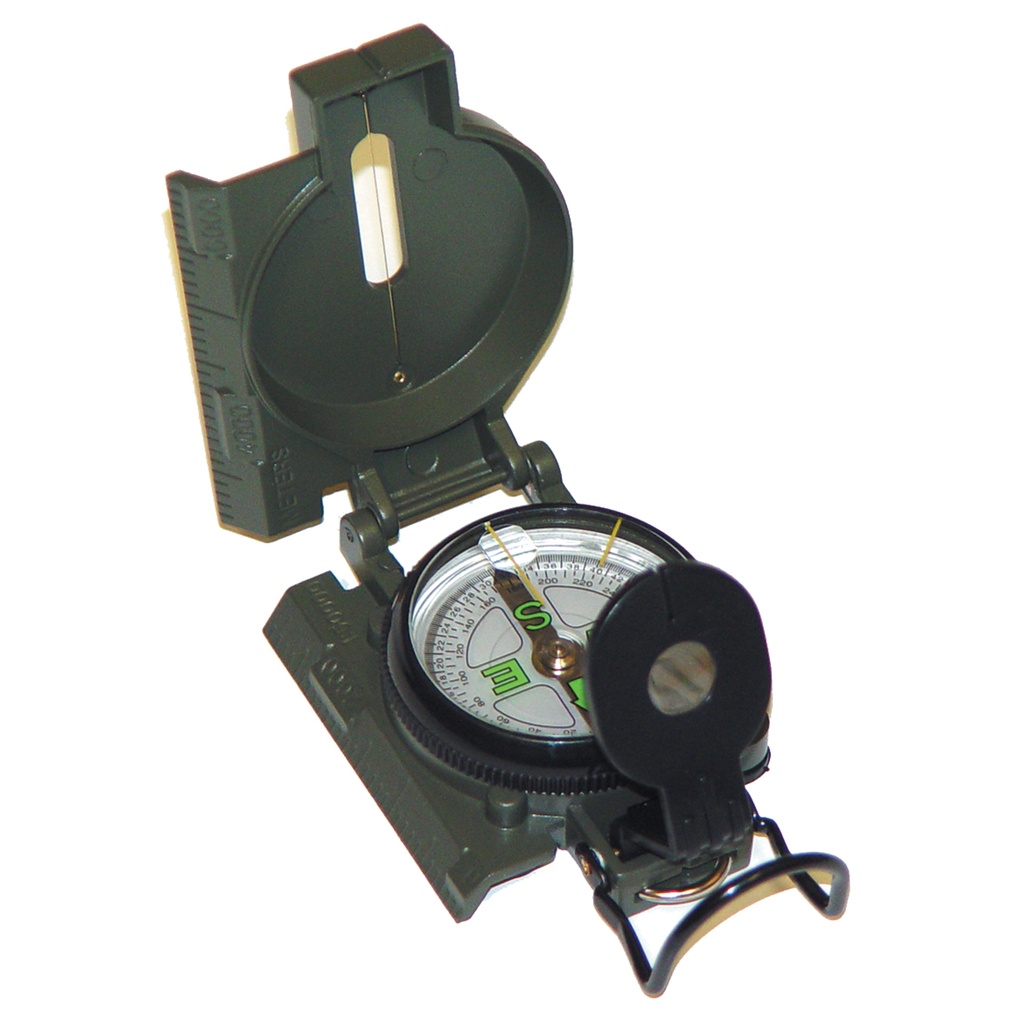
Somewhere past the last cell bar, you’re still moving. This lensatic field compass snaps open in your palm, metal body warm from a Texas afternoon. The 2-inch dial, clicking bezel, and 1:50,000 scale line up your route when mesquite, cedar, or coastal fog erase the trail. It rides small in a pocket or pack lid, but settles decisions that matter: which draw, which fenceline, which way back to the truck. This is the kind of tool Texans keep close.
When the Road Ends and the Land Opens Up
There’s a point where the pavement gives out. Out past the feed store, past the last subdivision, until it’s just caliche dust, cedar, and sky. Out there, a phone is a camera and a clock, not a way home. That’s where a lensatic field compass like the Rangeline Bearing belongs.
This metal-bodied compass in flat military green feels like the gear you’d find in a ranch truck that’s been running the same pastures for thirty years. It folds shut with a solid clack, rides quiet in a cargo pocket or pack lid, and comes out clean when you need to pick a line across country that doesn’t bother with signs.
OTF Knife Texas Buyers Still Trust a Compass When Signals Die
The same person who looks for an OTF knife Texas legal to carry is often the one who still respects a simple, honest tool. Out on a lease in Shackelford County, or working fence lines outside Kerrville, you learn quick that when storms roll in and the power goes, satellites and towers can fade. A lensatic compass doesn’t care.
The Rangeline Bearing opens into a full sighting instrument. The 2-inch dial sits deep and protected in its metal housing. A black clicking bezel lets you set a bearing with gloved hands. The sighting wire in the lid and the magnifying lens line up your azimuth on a far mesquite, windmill, or wind tower and keep you honest as you walk. It’s the same kind of method the Guard and ROTC units run on training fields in Central Texas: simple, repeatable, and not dependent on anything you have to charge.
How a Texas OTF Knife Buyer Uses a Lensatic Compass for Real Ground
You’re parked on a two-track outside Sonora, sun dropping behind low hills. You’ve got your trusted Texas OTF knife clipped in your pocket and this compass riding in the center console. You unfold a topo map across the hood, wind kicking dust and oak leaves, and you’re trying to sort a dry creek bed from a marked ranch road.
The 1:50,000 map scale stamped into the Rangeline Bearing’s body turns that paper into distance you can feel under your boots. One measured run of the scale, and you know how far that next draw really is. The degree markings on the dial, backed by likely luminous tips, keep you moving the right way even when the sun has dropped and the only light is from a small camp lantern or the dash glow from your truck.
In the Hill Country, you use it to shoot a back bearing from a ridge so you can find the truck after easing down into the cedar for a last-light shot. Out in the Panhandle, you line up a section line across open wheat and CRP when fog rolls across the flats and every windmill looks the same. On the coast, it keeps you oriented when the bay, the marsh, and the sky all turn to one gray sheet before a front.
Texas Carry Culture: Where a Compass Rides Beside the Blade
Folks asking where to buy OTF knives in Texas usually think about pocket clips, blade length, and how fast a knife clears their jeans. They want something that fits state law, fits their hand, and fits their way of carrying in the heat. But that same mindset applies to everything else they keep close.
The Rangeline Bearing lensatic compass rides where your other trusted gear lives. In a truck console next to a folding map of West Texas highways. In a chest rig pocket on a hog hunt, just above where your OTF rides horizontal on the strap. In a pack lid, tucked beside a headlamp and a small first-aid roll. It’s compact, built of real metal, and the folding thumb ring gives you a locked-in grip as you sight a ridge or tree line in a hard crosswind.
It’s not a plastic novelty you toss in a glove box and forget. The weight tells you it’s there. The matte finish keeps reflection down when you’re trying to stay subtle in mesquite and huisache, or on a back corner of public land where you’d rather draw no extra eyes.
Texas Law Doesn’t Touch Your Compass, But It Shapes How You Use Gear
Folks who dig into Texas knife carry laws and search for the best OTF knife in Texas start thinking different about all their gear. They learn what’s legal, what’s smart, and what’s just internet noise. A compass runs outside of all that. No statute cares how you orient yourself on the land.
Legal Calm in a World of Changing Rules
Switchblades and OTFs used to be the problem. Not anymore. Today, most Texans can carry an OTF knife Texas-wide without issue, so long as they respect location restrictions and the broader weapon rules. But a compass like the Rangeline Bearing stays clear of any debate. Keep it on your dash or in your pocket as you cross county lines and city limits; there’s nothing about it you need to justify.
That legal silence is its own kind of comfort. While you think through blade length, open carry questions, or how an auto-opening knife looks to a small-town deputy during a roadside talk, your compass is just that—navigation, no drama.
Why Texas Outdoorsmen Still Train With Map and Compass
Plenty of ranchers, hunters, and SAR volunteers around Amarillo, San Angelo, and Laredo still run land-nav courses the old way. Map, pace count, and a lensatic compass. No phones, no shortcuts. The Rangeline Bearing fits right into that world. Its thumb ring anchors the body into the heel of your hand while your index finger rides the side, giving you a steady sight picture even when you’re breathing hard and sweating through your shirt in August.
The clicking bezel lets you set and hold bearings in the dark or when your glasses fog crossing a creek. You feel each notch as you turn, count them off, then lock in on the faint glow of the dial. That’s the kind of practical, tactile feedback no app replicates.
Questions Texas Buyers Ask About Lensatic Field Compasses
Are OTF knives legal to carry in Texas?
Yes. Under current Texas law, automatic knives, including OTF and switchblade-style knives, are legal for most adults to own and carry. The state removed the old switchblade ban, and there’s no blanket prohibition on OTF knives. Instead, you pay attention to places where weapons in general are restricted—schools, some government buildings, secure facilities, and certain events. Blade length can matter in a few specific contexts, so it’s smart to know local rules, but simply owning or carrying an OTF isn’t the issue it used to be.
Why would I carry this compass if my phone has GPS?
Because Texas is big, coverage isn’t. Head west of Ozona, south of Marfa, or deep into a pine stand in East Texas and you’ll find dead zones. Batteries die in August heat and freeze on a Panhandle hunt. The Rangeline Bearing lensatic compass doesn’t care about bars or charge levels. Paired with a paper map, it gives you a reliable way to pick a direction, measure distance with the 1:50,000 scale, and hold a bearing across broken country. It’s the backup that becomes the primary when things get serious.
How do I decide between this compass and a cheaper plastic one?
Ask where you’ll actually use it. If you’re teaching kids basic direction in a backyard in Fort Worth, plastic is fine. If you’re crossing low country in South Texas, tracking a blood trail through thick cedar, or working remote fencelines, metal matters. The Rangeline Bearing’s metal housing takes impacts, rides in a hot truck, and shrugs off being dropped on caliche or rock. The lensatic sighting system, thumb ring, and clicking bezel give you real precision, not just a general sense of north. For Texans who trust their gear more than their luck, that upgrade is worth it.
Where This Compass Makes the Most Sense in Texas
Picture a November front sliding across the Edwards Plateau. Wind turns, light goes flat, and that familiar draw you thought you knew looks different in the gray. You pull the Rangeline Bearing from a chest pocket, flip the lid, and watch the dial settle. You line the sighting wire on a windmill you marked on your map an hour ago, roll the bezel until it meets your bearing, and start walking.
Your OTF rides in your pocket like always, a tool for cutting fence wire, opening feed sacks, or clearing brush. The compass rides a little higher, not as loud but just as important. Both answer a simple Texas question: if something goes sideways, can you handle it without waiting on someone else?
From rolling Panhandle wheat to Live Oak country, from marsh edges near Anahuac to the broken canyons outside Del Rio, this lensatic compass earns its place. Not because it’s flashy, but because it does one quiet job every time—pointing you where you chose to go, and then getting you back.