Brushline Classic Fixed Blade Hunter - Gold Bolster Bone
6 sold in last 24 hours
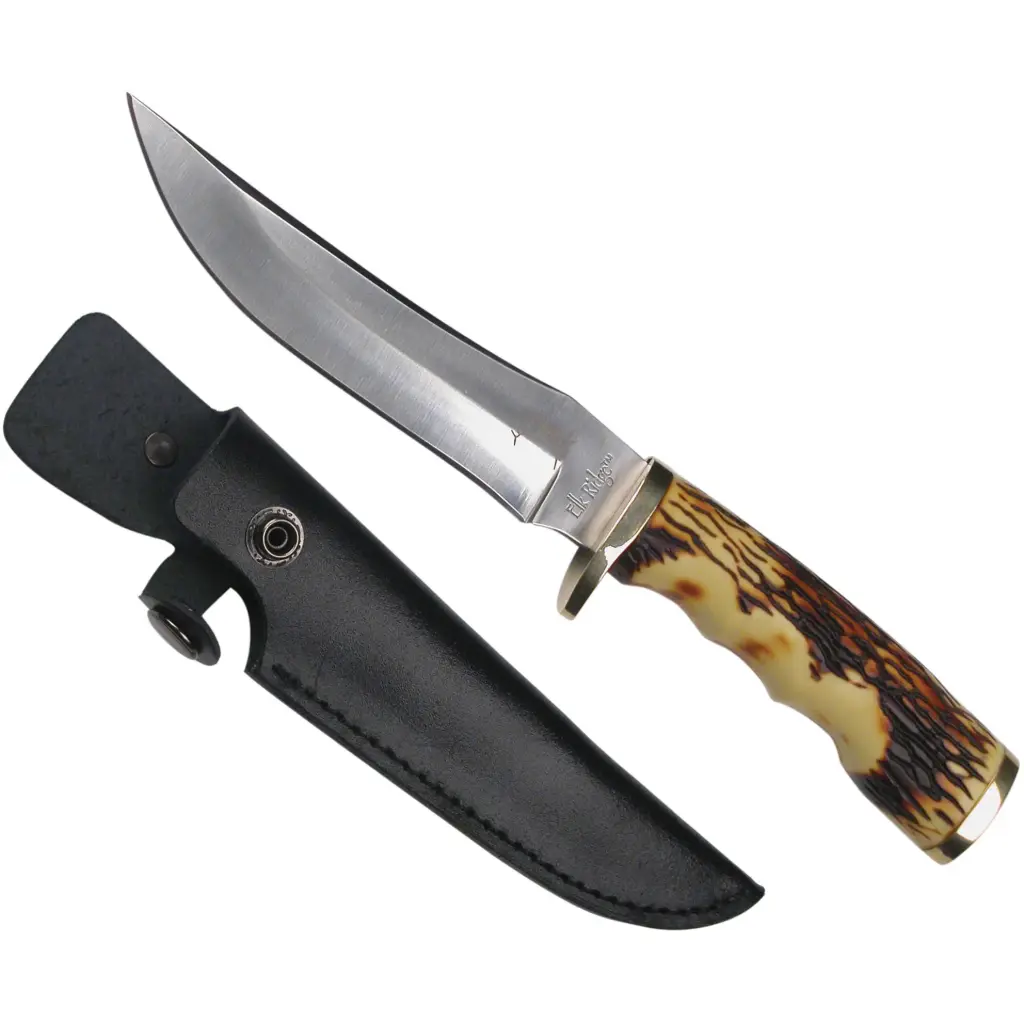
First light on a Panhandle lease, this fixed blade already feels like it’s been on your belt for years. The 4.5-inch satin clip point in stainless steel handles field dressing clean and quick, while the full-tang, finger-grooved simulated bone with gold bolster locks into your hand. At 8 inches overall with a leather belt sheath, it rides steady in the truck, on the ranch, or at deer camp—traditional look, work-ready build.
Brush Country Mornings and a Fixed Blade That Belongs There
It’s still dark over the South Texas brush when the first pickup eases through the gate. Coffee in the console, dust waking up under the tires, a cool edge to the air that won’t last past nine. On your belt, this fixed blade rides in leather like it’s been there since your first lease, not your latest order.
The satin clip point comes out clean—4.5 inches of stainless steel with enough belly for skinning a Hill Country whitetail, enough tip control for careful work around joints. Eight inches overall, full tang buried in a stag-textured simulated bone handle, gold bolster catching just a hint of dawn when you move. It’s not a showpiece. It just looks like the knife your granddad carried, built for the way you hunt now.
Why This Fixed Blade Hunting Knife Works for Texas Ground
Texas isn’t gentle on gear. One weekend it’s drizzle and mud outside Lufkin, the next it’s dry, powdery dust on a lease past San Angelo. A fixed blade hunting knife that lives here has to shrug off both. This one does it with stainless steel that resists sweat, rain, and blood, and a satin finish that wipes clean on the tailgate towel without fuss.
The 3.5mm spine gives you enough stiffness to split a ribcage or baton kindling for a quick mesquite fire without feeling bulky on the belt. That clip point nose lets you open a hog or whitetail from brisket to chin without blowing out the hide. The finger grooves in the simulated bone handle bite just enough when your hands are cold, wet, or slick, keeping the blade where it belongs—working, not wandering.
Carried Like a Texas Knife, Not a Drawer Queen
Plenty of knives look good in a box. This one is built to disappear on a belt and show up when you need it. The leather sheath rides close along jeans or brush pants, low-profile enough for a Saturday at the feed store, solid enough for a long sit in a West Texas blind. Snap it closed, and you’re not worrying about it while you climb into a box stand or crawl under a fence line.
In a single day it might quarter a Hill Country doe, slice feed bags in a tin barn in Gonzales County, and cut rope around a stock trailer in Lampasas. A fixed blade hunting knife that can move from deer lease to pasture to back porch is the kind that actually earns a permanent place in your kit. The gold bolster and pommel give it the look of an heirloom, but the build is plain-spoken: full tang, solid hardware, and scales shaped for hours of use.
Texas Knife Law and Everyday Belt Carry
Texas knife law used to make people second-guess what they strapped on before heading into town. That’s changed. As of the state law updates in 2017, what Texas calls a “location-restricted knife” is about blade length over 5.5 inches and where you take it—not about whether it’s fixed, folding, or a switchblade. This hunting knife sits under that 5.5-inch line, which matters when you’re moving between ranch, gas station, and small-town hardware store.
Because it’s a fixed blade under that threshold, it fits squarely into what many Texans treat as a practical, everyday belt tool outside of the obvious restricted locations like schools or certain government buildings. The leather sheath keeps it low-key; from a distance, it looks like what it is: a traditional field knife, not some aggressive tacticool conversation starter.
Field Use in Real Texas Conditions
On a damp morning in the Pineywoods, the leather sheath doesn’t squeak or shift. You step over downed logs, push through yaupon, and the sheath hugs the belt. At the skinning rack, that satin blade glides through hide and meat without tearing, and the clip point helps you sneak the tip along bone when you’re trying to save capes for a mount.
By afternoon, the same edge is trimming back rope on a coastal hay trailer or breaking down cardboard in the shop. Wipe it with an oily rag, slide it back into leather, and it’s ready to ride out again.
From Hill Country Weekends to Panhandle Winters
Cold wind on the High Plains makes your fingers stiff. That’s when the scalloped, stag-style simulated bone handle earns its keep. The grooves give your hand a natural indexing point; thumb resting along the spine, fingers locked in around the swell. You’re not fighting the knife to keep control when you’re working inside a chest cavity or trimming back fat in the cold.
Back in the Hill Country, the same handle fills the hand of a teenager dressing their first deer, supervised at the tailgate under a fading sky. It’s the kind of fixed blade hunting knife that can move quietly from one generation to the next without needing a sales pitch.
Questions Texas Buyers Ask About Fixed Blade Hunting Knives
Are OTF knives legal to carry in Texas?
Texas rolled automatic knives and switchblades into legal territory several years back. Under current state law, OTF knives are legal to own and carry in most everyday situations, just like this fixed blade hunting knife. The key limit you need to remember isn’t mechanism—it’s blade length over 5.5 inches in certain restricted locations like schools, polling places during elections, and some government buildings. Outside those spots, Texans commonly carry everything from traditional folders to OTF knives to fixed blades like this one on ranches, leases, and in town.
Is this fixed blade hunting knife sized right for Texas whitetail and hogs?
For most Texas game, a 4.5-inch clip point hits the sweet spot. It’s long enough to open up big Hill Country bucks and mature East Texas hogs, but short and nimble enough to work inside the chest cavity without feeling like you’re overbladed. That 3.5mm spine gives it the stiffness to split cartilage and light bone without flexing all over the place. If your hunting runs from Hill Country whitetails to Panhandle pigs, this size is right in the wheelhouse.
How does this compare to carrying a folder or OTF knife in Texas?
Plenty of Texans keep an OTF knife or sturdy folder clipped in the pocket for daily chores—boxes, feed bags, roadside fixes. But when game hits the ground, a fixed blade hunting knife like this one is easier to clean, easier to control, and doesn’t rely on any mechanism in cold, mud, or blood. The leather sheath keeps it there when you’re on the move, and your pocket knife stays clean for the rest of the day. Many seasoned hunters in Texas run both: folder or OTF for everyday cutting, fixed blade for the hunt.
Built for the First Cut and the Hundredth Weekend
End of the day, the sun is sliding behind live oaks on a small place outside Kerrville. There’s a doe hanging in the oak limb, a cooler half-full, and the low murmur of stories that all sound a little alike but never get old. You slip this knife back into its leather, wipe your hands on your jeans, and lean against the truck bed.
It’s not the most expensive tool you own. It doesn’t have to be. What matters is that every time you step off a caliche road, climb into a blind, or walk a sendero at first light, this fixed blade hunting knife is there—familiar weight on the belt, ready for whatever the land puts in front of you.
| Blade Length (inches) | 4.5 |
| Overall Length (inches) | 8 |
| Blade Color | Silver |
| Blade Finish | Satin |
| Blade Style | Clip Point |
| Blade Edge | Plain |
| Blade Material | Stainless Steel |
| Handle Material | Simulated Bone |
| Theme | None |
| Handle Length (inches) | 3.5 |
| Spine Thickness (inches) | 0.1375 |
| Pommel/Butt Cap | Gold Color |
| Sheath/Holster | Leather Sheath |