Calavera Nightfall Collector Sword Cane - Black Resin
8 sold in last 24 hours
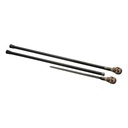
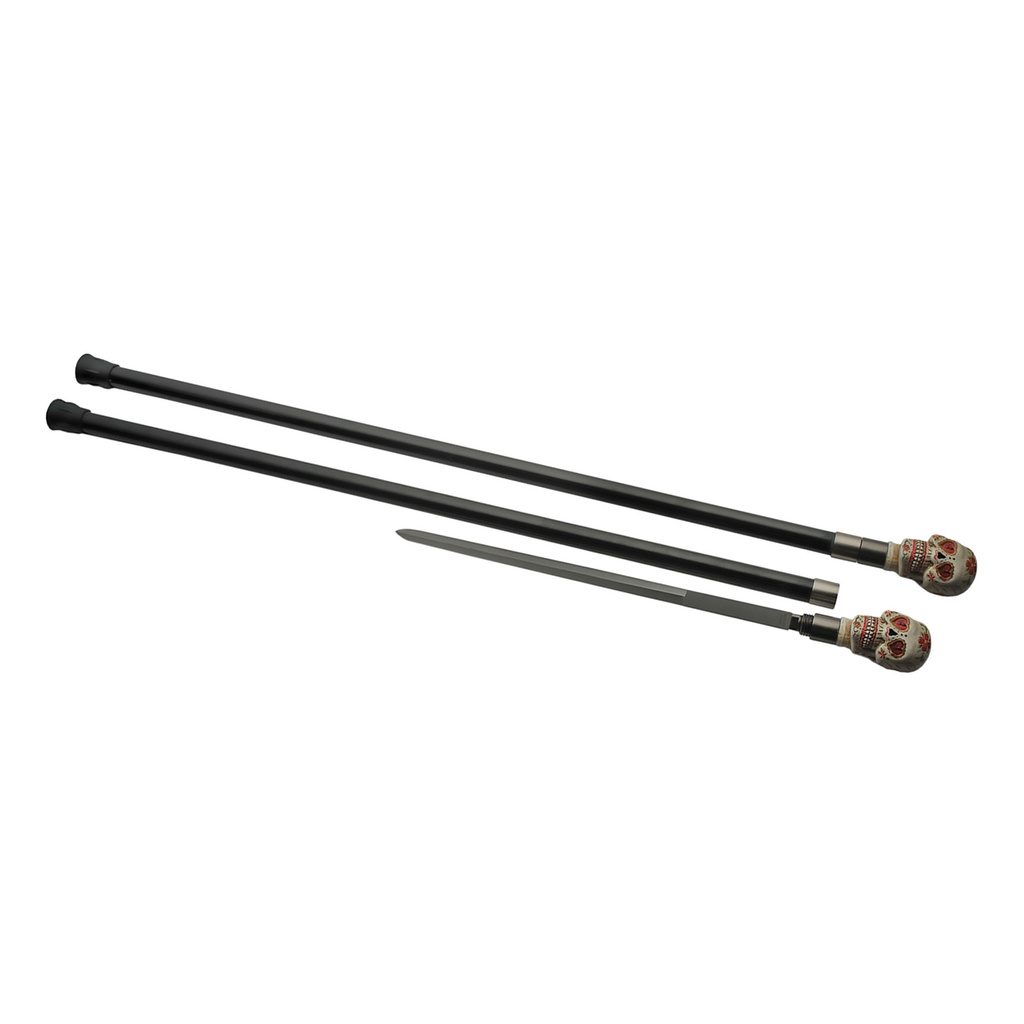
South of San Antonio, walking past a roadside shrine at dusk, this sugar skull cane doesn’t blend in—it belongs. The Calavera Nightfall Collector Sword Cane hides a 12-inch stainless blade inside a straight black shaft, capped by a vivid skull handle. It’s built for display shelves, study corners, and backroom bars where Texas stories get told a little later and a little darker.
When a Walking Stick Looks Back at You
There’s a certain stretch of sidewalk in San Antonio where the light hits old stucco just right and painted skulls watch from bodega windows. The Calavera Nightfall Collector Sword Cane feels like it came off that block—too vivid to ignore, too composed to be a prop. In the hand, it balances like a real cane. In the corner of a room, it pulls every eye to the sugar skull handle and dares someone to ask about it.
This is a collector sword cane first, a walking cane second, and a conversation starter always. The black resin shaft runs clean and straight, a matte shadow under the bright, decorated skull. Twist the handle, and a 12-inch stainless steel blade slides free from the hollow core. It’s not a farm tool, not a work knife—this is for the Texan who keeps a little theater in their steel.
Why This Sword Cane Fits Texas Streets and Back Rooms
In Texas, people still notice what you lean on and what you carry. A plain cane can disappear. A skull-topped cane with a hidden blade becomes part of the room. In a Houston high-rise office, it leans against a bookshelf, the skull’s red and gold accents catching the afternoon glare off glass towers. In a South Texas bar, it hangs by the jukebox, looking like it wandered in from a Day of the Dead procession.
The shaft length runs about 35 inches, long enough to feel natural for most adults when used as a display cane or as an occasional walking aid on smooth floors or sidewalks. The rubber tip at the base grips tile, wood, and concrete better than bare metal, so it plants solidly when you set it down beside a poker table or at the foot of a leather chair. Inside, the sword section locks into the handle with a threaded collar, staying put until you choose to twist it open.
Collectors who like themed blades—skulls, saints, serpents—will feel at home here. The sugar skull motif isn’t cheap sticker work; it’s molded, colored resin shaped into a full skull with floral and swirl patterns that echo borderland murals from El Paso to the Valley. This isn’t a fantasy dragon or a movie copy. It looks like something you’d find in a small San Antonio shop that sells both prayer candles and pocketknives.
Texas Collector Culture and the Calavera Blade
Spend time at a gun show in Dallas or a weekend swap meet outside Lubbock and you’ll see them: tables where the practical knives sell steady, and one corner where the wild pieces stop people in their tracks. The Calavera Nightfall Collector Sword Cane belongs on that edge of the table—where function meets story.
The 12-inch stainless steel blade inside the cane gives it real steel credibility. It’s slim, bright, and simple—no serrations, no mirror-polish vanity. For a collector, that means less to fuss over and more to display. Wipe it down, slide it back into the cane, and the piece is ready to stand in a corner again. Retailers in Texas know this kind of item sells twice: once on the skull, once on the secret.
In a Brownsville living room dressed with sugar skull art and papel picado for a family gathering, this cane can sit against the wall and still feel on-theme. On a shelf in an Austin condo, it pairs with vinyl records, old concert posters, and a couple of fixed blades from the Hill Country. It’s a sword cane that doesn’t pretend to be Victorian or British—it feels born of borderland color and Texas concrete.
Texas Knife Law, Sword Canes, and What This Really Is
Knife law in this state got clearer when lawmakers quit dancing around blade types and started calling them what they are. Today, the big rule is about location-restricted knives, not old buzzwords like “switchblade.” A blade over 5.5 inches falls into that category, which puts this sword cane’s 12-inch internal blade firmly on the long side of Texas law.
Understanding Location-Restricted Knives in Texas
With that length, this piece is treated more like a short sword than a pocketknife. In many parts of Texas, an adult can legally own and possess a long blade, including at home, in a private collection, on private property, and in many public spaces that aren’t restricted. But there’s a clear list of places where location-restricted knives are not allowed—schools, polling places, certain government buildings, and a few other designated locations.
Add the fact that this is a concealed blade inside a cane, and you’re well past the realm of everyday carry. This is not your daily OTF knife Texas workers slide into a pocket before heading to the jobsite. It’s not the Texas OTF knife a ranch hand clips in his truck console. This is a display and collector cane with a hidden sword that should be treated like any other long blade: enjoyed at home, respected in transit, and kept clear of restricted spots.
Anyone serious about owning a sword cane in this state should read the current Texas statutes, paying special attention to how the law defines knives by length and where they can and can’t go. Laws can change, and city rules can add another wrinkle. The safe, smart play is to see this as an at-home or private-property piece with a strong side of theater—not as a daily walking companion in crowded or sensitive areas.
Texas Use Cases: Where This Sword Cane Makes Sense
So where does it belong? Picture a home bar in Midland dressed with oilfield photos, old belt buckles, and a couple of mounted blades. The Calavera Nightfall Collector Sword Cane leans in the corner, the skull catching low lamp light while the shaft disappears into the shadows. Someone eventually asks about it. That’s the moment it was made for.
Or think of a small shop in Corpus Christi that sells cigars, tequila, and curios. This cane by the counter isn’t just inventory—it’s atmosphere. The owner can unscrew the handle, show the hidden blade, and suddenly the question shifts from “What is that?” to “Do you have any more like it?” It’s a quiet sales engine because it feels like it belongs in that space.
Why Texas Buyers Pick a Sword Cane Over Another Blade
Most Texans who already own a solid OTF knife Texas carry every day aren’t hunting for another pocket tool—they’re hunting for a story piece. A Texas OTF knife lives in jeans, on a belt, or in a truck. A sword cane like this lives against a wall, next to a chair, or by a door. Different role, different satisfaction.
The black resin shaft and sugar skull handle speak to buyers who like a little ceremony with their steel. It walks that line between gothic and celebratory, the same way a Day of the Dead altar can hold candles, flowers, and painted skulls without being morbid. The cane’s presence says the owner cares about design as much as edge geometry.
If you’re the sort who compares handle texturing and deployment speed on an OTF, this cane asks you to shift gears. Here, what matters is how the skull feels in the hand—smooth curves, solid grip, enough heft to feel substantial but not so heavy it’s a burden. When you twist and draw the blade, it’s not about speed; it’s about reveal. You’re showing a secret, not preparing for a field chore.
Questions Texas Buyers Ask About Sword Canes
Are OTF knives legal to carry in Texas?
Yes. Texas removed the old switchblade ban years ago, so an automatic or OTF knife Texas buyer picks up is generally legal to own and carry, so long as the blade length stays under the 5.5-inch threshold for avoiding location-restricted status and you respect the usual no-knife zones that apply to certain facilities. The main concern now is length and where you bring it, not whether it’s an out-the-front design.
Can I use this sword cane as my everyday walking cane in Texas?
Physically, the Calavera Nightfall Collector Sword Cane has the right length and a rubber tip for light walking support on smooth ground. Legally and practically, it’s smarter to treat it as a collector and display piece. That 12-inch internal blade is long enough to trigger Texas location-restricted knife rules, and the concealed nature raises eyebrows where a normal cane never would. Around the house, at private gatherings, or in controlled spaces, it shines. As a daily mobility aid in public, it’s the wrong tool.
How should a Texas collector store and show this cane?
Most buyers here stand it in a corner of a home office, living room, or bar space where the skull can be seen and the shaft doesn’t invite handling by kids or guests without permission. Keep the blade lightly oiled, threaded snugly into the handle, and out of high-traffic or restricted areas. Think of it like hanging a long rifle on the wall: visible, admired, but clearly under your control.
First Night With the Calavera on Texas Ground
Picture a warm October evening in San Antonio. The windows are open, the neighbors’ music drifts through—accordion, guitar, a low bassline. Your lights throw long shadows across the room. In the corner by the bookcase, the Calavera Nightfall Collector Sword Cane stands still, skull handle catching just enough glow to show the reds and golds.
Someone walks in, notices it, and stops mid-sentence. You cross the room, pick it up, feel the weight settle into your palm. A twist, a smooth draw, twelve inches of steel slide free from the black shaft. No rush, no showmanship—just the quiet reveal of a hidden blade that fits this place, this state, this blend of art and edge. In a world of pocket clips and polymer grips, this is the piece that says you collect for more than utility—you collect for the story.
| Blade Length (inches) | 12 |
| Overall Length (inches) | 35 |
| Theme | Sugar Skull |
| Concealed Length (inches) | 35 |
| Concealment Type | Cane |