Lodge Emblem Heritage Sword Cane - Black Stainless
8 sold in last 24 hours
You step off a Houston sidewalk and onto polished lodge tile, cane in hand. The black shaft passes as a simple walking stick, but the silver knob tells another story. Behind the square-and-compass crest sits a 12-inch stainless blade, slim, straight, and ready when ceremony ends and the walk back to the truck begins. This sword cane carries tradition first, steel second — for the Mason who prefers meaning over ornament and substance over talk.
A Fraternal Cane With Steel Quietly Underneath
The meeting breaks up after dark in a small-town lodge off Highway 6. Porch light throws a soft circle on the concrete. You step out, cane in hand, just another man easing down the steps. To most folks it’s a simple black walking stick. To you, that round silver knob with the square and compasses means something more — and you know there’s twelve inches of stainless waiting in the shaft if the parking lot ever stops feeling friendly.
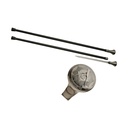
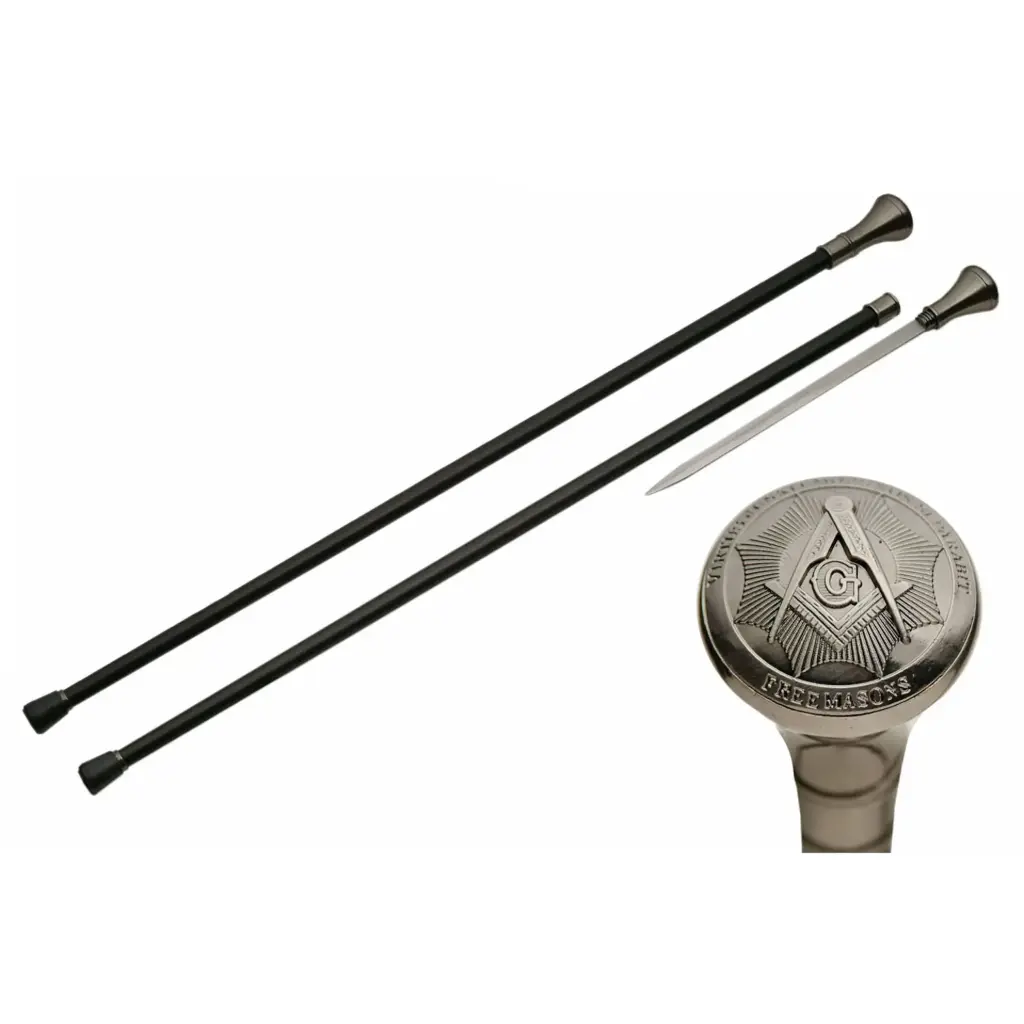
This isn’t a showpiece built to sit in a glass case. It’s a working-length sword cane with a concealed 12-inch stainless blade riding in a straight, matte-black shaft, topped by a polished metal knob that carries the Masonic emblem clear and proud. The weight feels right in the hand, the balance stays true whether you’re walking across Austin pavement or worn lodge carpet in Abilene.
Why This Heritage Sword Cane Belongs in Texas Carry Culture
Across this state, a cane isn’t just for age. On a San Antonio River Walk, in a Fort Worth lodge district, or crossing a gravel church lot in Nacogdoches, a walking cane reads as respect — as much a part of a man’s presence as his boots. This heritage sword cane fits that world without drawing heat.
The black shaft keeps a low profile under streetlights and in crowded hallways. The silver ferrule at the top gives a clean break to the round metal knob, where the Masonic square and compasses sit engraved in bright relief. When you draw the blade, it comes free in a straight pull — no tricks, no play, just a slim stainless edge meant for thrust, not chopping. For a Texas buyer, that means a ceremonial piece that can walk into a lodge in Lubbock, ride in a truck rack outside Waco, and rest by a front door in Kerrville without looking out of place.
Texas OTF Knife Buyers and the Appeal of a Fraternal Sword Cane
Folks who hunt down an OTF knife in Texas usually want fast steel in a compact frame. Same mindset shows up here, just stretched into a cane. It’s about readiness that doesn’t need to be announced. Where an OTF rides clipped in a pocket at a Houston job site, this sword cane leans in a corner or moves with you from lodge to truck, with the same quiet promise of steel close at hand.
Instead of a button or thumb slide, your grip closes around that emblemmed knob. A twist and draw brings out the concealed stainless blade. The blade’s length gives reach you’ll never get from a pocket folder. And while this isn’t your day-to-day utility cutter for breaking down boxes in a Dallas warehouse, it answers to a different need — ceremonial presence first, personal confidence second.
Build Details That Matter in Real Texas Use
Texas floors are rough on canes. Old lodge halls in the Panhandle have boards that catch edges, and Hill Country sidewalks chew up anything soft. This sword cane runs a rubber tip on the bottom of the straight black shaft, built to hold traction on slick marble, dusty tile, or an oil-spotted parking lot. The shaft itself wears a matte to semi-gloss black finish that shrugs off minor scuffs from truck steps and threshold plates.
Inside, the 12-inch stainless blade sits slim and straight. Stainless means it can handle Gulf Coast humidity, a Corpus Christi sea breeze, or the damp air after a spring storm rolling over College Station without demanding constant polishing. It’s not some broad cavalry saber; it’s a narrow sword-style insert built to stay hidden until you need it. The polished metal fittings at the top — ferrule and knob — tie the whole piece together so it reads as formal, not theatrical.
Texas Knife Law, Sword Canes, and How This Fits
Texas used to tangle folks up with blade length limits and bans on particular types. That changed. Under current Texas law, most knives — including automatics, OTF knives, and long blades — are legal to own and carry for adults, with location restrictions on so-called "location-restricted knives" in certain places like schools, polling places, and some government buildings.
Where Sword Canes Sit in Texas Law
This sword cane hides its blade, so it falls into the same general world as other concealed blades. While the state allows ownership and carry of long blades for most adults, local rules, posted property policies, and specific restricted locations still matter. A man walking into a lodge in Midland has more leeway than a man trying to take this through a courthouse entrance in El Paso.
It’s on you to match your carry to your stop — just like you’d think twice before clipping a big OTF knife on your pocket walking into a school event in San Antonio. Laws evolve, and local interpretations vary, so checking current Texas statutes and any city-specific rules before carrying this sword cane into public buildings is just good sense.
Texas OTF Knife Expectations, Sword Cane Attitude
A buyer who hunts for the best OTF knife in Texas is usually chasing three things: fast access, dependable steel, and a profile that fits local carry culture. This cane answers those same expectations, just in a different shape. You get discreet carry in plain sight, a stainless blade long enough to matter, and a build that reads as heritage instead of gimmick.
Ceremony, Parking Lots, and Long Walks Back to the Truck
Picture leaving a late lodge ceremony in Tyler, rain starting to come down. The black shaft plants steady on wet concrete, rubber tip holding firm. Under the streetlamp, the emblem on the knob catches a small circle of light. You’re not reaching for a belt sheath or digging for a pocket clip. If anything ever feels wrong in that far corner of the lot, steel sits in line with your hand already.
Back home, the cane stands by the doorway or leans against a gun safe. Unlike a flashy display sword, it doesn’t need a wall mount to justify itself. It belongs next to boots, hats, and that one OTF knife that never leaves your truck console.
Questions Texas Buyers Ask About Sword Canes and OTF Knives
Are OTF knives legal to carry in Texas?
Under current Texas law, OTF knives and other automatics are legal to own and carry for most adults. The old switchblade ban is gone. The main concern now is where you carry. Long blades and certain knives can be restricted in places like schools, polling locations, and secure government buildings. Before you clip an OTF knife on your pocket for a day in downtown Austin, or walk in with a sword cane like this, it’s smart to check the latest Texas statutes and any posted signs at your destination.
Is this Masonic sword cane meant for everyday walking around Texas towns?
It can serve as a functional walking cane in places like lodge halls, sidewalks, and short trips between truck and building, but it’s best understood as a ceremonial and collectible piece. The slim 12-inch stainless blade is made for discreet carry and symbolic presence, not daily abuse on caliche roads or rocky Hill Country trails. Around town, at meetings, and on clean pavement, it feels right at home. For ranch work or rough ground, you’d want a tougher stick and a separate fixed blade or OTF knife.
How should a Texas buyer decide between an OTF knife and this sword cane?
If you need a tool for opening feed bags in Amarillo, cutting hose on a job outside Odessa, or daily work in a Houston warehouse, an OTF knife or solid folder makes more sense. If you’re a lodge member or collector who wants a piece that carries fraternal meaning and discreet steel to formal events, this heritage sword cane is the better choice. Many Texans end up with both: OTF for work and roadside trouble, sword cane for ceremony, Sundays, and evenings where presence matters more than speed.
First Walk Out the Door
Next time the lodge doors open on a warm Waco night, you’ll take the steps slow, black cane planting clean on each tread. The emblem in your palm feels cool, solid, familiar. A truck idles under the sodium lights at the edge of the lot. Gravel crunches under your boots. Nobody gives the cane a second look. You know what rides inside that shaft — twelve inches of stainless and a lifetime of meaning — and that’s enough.