

Classified Archive Booby Trap Field Guide - Black Cover
7 sold in last 24 hours
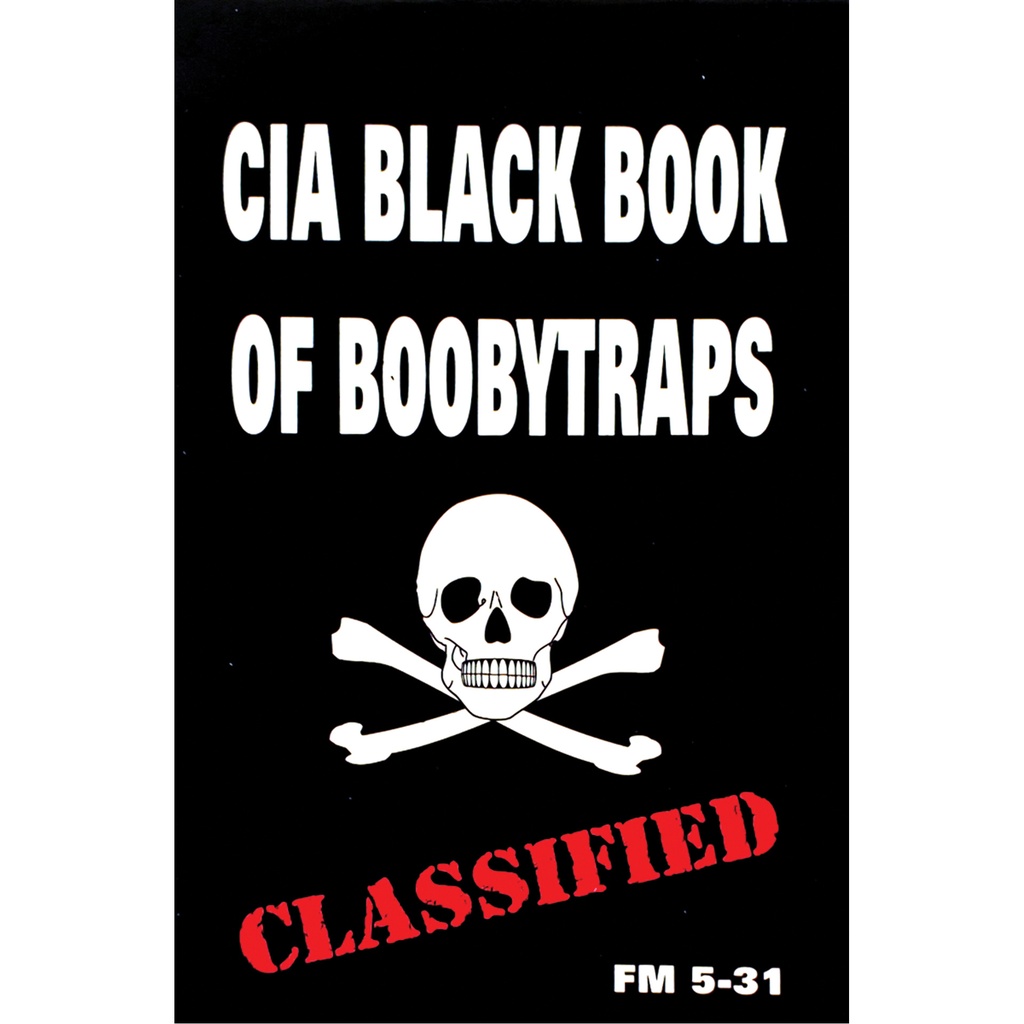
This isn’t a novelty paperback; it’s a compact booby trap field guide that looks like it came off a steel desk on base. The black cover, skull seal, and red CLASSIFIED banner frame 130 pages of illustrated historical instruction and countermeasure insight. At 5.5 by 8.5 inches, it slips into a range bag or training kit, giving instructors, collectors, and serious students a grab-and-go reference for understanding how traps were built—and how to read the signs before they go wrong.
Classified Pages Meant for a Range Table, Not a Coffee Table
Out past the last gas station between Abilene and Sweetwater, there’s always that one range where the gravel is chewed up, the cable spools are targets, and the regulars don’t waste words. This booby trap field guide belongs on that kind of table—wedged between ear pro, steel paint, and a thermos that’s seen a few winters.
From the skull seal to the red diagonal CLASSIFIED stamp, the cover looks less like a bookstore paperback and more like something pulled out of an armory cabinet. Inside, 130 pages of heavily illustrated, historical material lay out how traps were built, rigged, disguised, and countered. For Texans who take training seriously—whether they’re teaching a class outside Kerrville or walking students through countermeasure basics in a Dallas warehouse—this is reference, not decoration.
Why a Booby Trap Field Guide Matters in Texas Training Culture
Texas is full of land where people shoot, camp, and run drills on their own time. Old ranch roads in the Hill Country, rough mesquite draws outside San Angelo, pine breaks on the edges of East Texas leases—places where hand-me-down knowledge still matters. A historical booby trap manual fits that world because it turns abstract danger into diagrams, steps, and recognizable patterns.
This field guide doesn’t glorify devices; it breaks them down. It shows what they looked like, how they were commonly set, and what visual tells might give them away. For an instructor running a responsible training block in Houston, that matters. You can open a spread, lay it flat on the tailgate, and use clear illustrations to walk students through why blind curiosity on unknown ground is a bad idea.
Collectors in Austin or San Antonio who keep a shelf of Cold War and military texts will recognize the vibe immediately. The FM-style marking, stark black cover, and skull insignia echo those restricted manuals that never sat out front in a bookstore rack. It feels like it belongs next to declassified field texts and doctrinal binders, not comic books.
OTF Knife Texas Buyers Still Want the Right Books Beside Their Gear
Someone who spends time picking the right OTF knife for Texas carry—studying blade length, mechanism, and Texas Penal Code—usually doesn’t stop caring at the edge of the sheath. The same mindset that pushes a buyer to ask, “Are OTF knives legal in Texas now?” is what makes a historical booby trap field guide worth owning. It adds context to the tools they already keep in the truck or on the belt.
In a Fort Worth garage where a Texas OTF knife rides in the workbench drawer alongside a light and a tourniquet, this manual slides in without fanfare. When friends come over and the talk drifts from switchblade legality to real-world risks overseas, you can flip this open and show them how booby traps have been built and countered in the past. It turns stories into diagrams, and diagrams into a more grounded respect for what these devices can do.
Retailers who already answer questions about where to buy OTF knives in Texas can keep this near the register. A customer picking up a new automatic might also pick up a book that explains, in pictures and plain language, the kinds of traps that military and security professionals train to recognize. It’s a natural upsell without sales talk—gear next to knowledge.
Built Like a Real Field Manual, Sized for Texas Ranges
The 5.5 by 8.5 inch footprint feels familiar—halfway between a glovebox atlas and a standard field manual. It tucks into a range bag pocket alongside a Texas OTF knife and spare mags, or disappears in the lid of a hard case. At that size it’s easy to carry, but big enough to lay flat on a bench so a circle of students can see the illustrations.
The black cover does more than look tough. It hides range dust, sunscreen smears, and sweat from August afternoons near Laredo. The bold white title text and skull-and-crossbones emblem are easy to spot in a cluttered truck cab or on a gear shelf in a San Angelo shop. The red CLASSIFIED slash adds that familiar tension you see on restricted folders and briefing slides—enough to catch the eye, not enough to feel like a gimmick.
Inside, the pages are heavily illustrated. That matters when you’re explaining complex setups to a mixed group—some who learn best by reading, others who need to see a diagram of how a tripwire tracks back to a pressure device. Whether you’re an instructor in El Paso building a curriculum or a collector in Lubbock paging through old methods on a quiet night, the visuals do most of the talking.
Questions Texas Buyers Ask About Booby Trap Field Guides
Are OTF knives legal to carry in Texas?
Yes. Under current Texas law, automatic knives—including OTF and traditional switchblades—are legal to own and carry for most adults. The old switchblade ban was removed from the Penal Code years ago. The main restriction now is on what Texas defines as a “location-restricted knife,” which focuses on blade length and certain protected places like schools, courthouses, and secure government facilities. If your automatic stays within legal length and out of restricted locations, a Texas OTF knife is lawful to carry. Always check for local policies on private property and updates to state law before you clip it on.
Is this booby trap manual instructional or more historical context?
This field guide reads like a pulled-from-the-archives manual: it shows how historical booby traps were laid out, triggered, and concealed, and pairs that with countermeasure awareness. It’s not a flashy “DIY” project book—it’s closer to sitting in on an old-school briefing with diagrams. Texans who teach responsible firearms handling, run preparedness classes, or simply want to understand what military and security personnel have faced in the field will find it useful as a context and recognition tool, not as a blueprint for misuse.
How does this fit next to my Texas OTF knife and other gear?
If your nightstand, truck console, or safe shelf already has a Texas OTF knife, flashlight, spare mags, and a folded copy of Texas knife laws, this book fills the one gap most people ignore: historical threat literacy. It doesn’t compete with your gear—it explains why professionals move the way they do around unknown terrain, abandoned structures, or conflict zones. For a buyer who picks tools with purpose, this manual is the printed counterpart to the blades and lights they already trust.
Texas Law, Responsibility, and Why Knowledge Belongs with Steel
Texas has eased up on knife restrictions over the years, especially on automatics, but that shift came with an expectation: adults behave like adults. You can carry an automatic OTF knife Texas-wide in most places, but it’s on you to know where it’s prohibited, and when it’s inappropriate to flash it. The same goes for a book like this. It’s legal to own, legal to read, and legal to teach from—but it demands a responsible owner.
An instructor near Corpus Christi might keep it in a binder with lesson plans, using it to show students why curiosity on hostile ground is a liability. A shop owner in Midland might shelve it behind the counter, pulling it down when a regular asks serious questions about what troops have faced overseas. A veteran in Killeen might simply appreciate the familiar formatting and the way it captures techniques that defined whole tours of duty.
Owning this manual doesn’t make anyone an expert. It does something subtler: it reminds them that every device, every blade, every explosive, lives in a larger system of tactics and counter-tactics. In a state where land is wide, fences are long, and more than a few buyers split their time between ranch roads and overseas contracts, that perspective is worth more than another gadget.
First Use: Tailgate Light, West Texas Wind, Pages Spread Wide
Picture a late finish on a private range outside Big Spring. Targets are down, brass mostly picked, and the last wind is kicking caliche dust across the trucks. Someone asks about stories from downrange—IED lanes, patrol briefs, the things that never make it into movies. Instead of just talking, you reach into the range bag and pull this black-covered manual out alongside your Texas OTF knife.
The skull seal catches the LED beam. You thumb it open on the tailgate, pages flattening under a calloused hand, and show them the layout of a classic tripwire, the angles of concealment, the simple mistakes that cost lives. No drama, no bragging. Just ink, diagrams, and quiet respect for what others walked into. In that moment, this isn’t just a book. It’s the bridge between the gear in your hands and the history behind it—and it fits Texas like dust on a pair of boots.