Cold War Guerrilla Operations Field Manual - Yellow Army Edition
13 sold in last 24 hours
You don’t have to wear a tab or a trident to learn from this one. This 1961 Army field manual on guerrilla warfare and Special Forces operations reads like sitting in on the brief before things get loud. Clean doctrine, clear structure, bold yellow cover that jumps off any shelf. For Texas instructors, collectors, and history-minded shooters, it’s a compact piece of the Cold War you can thumb through between range trips.
Cold War Doctrine That Still Speaks to the Field
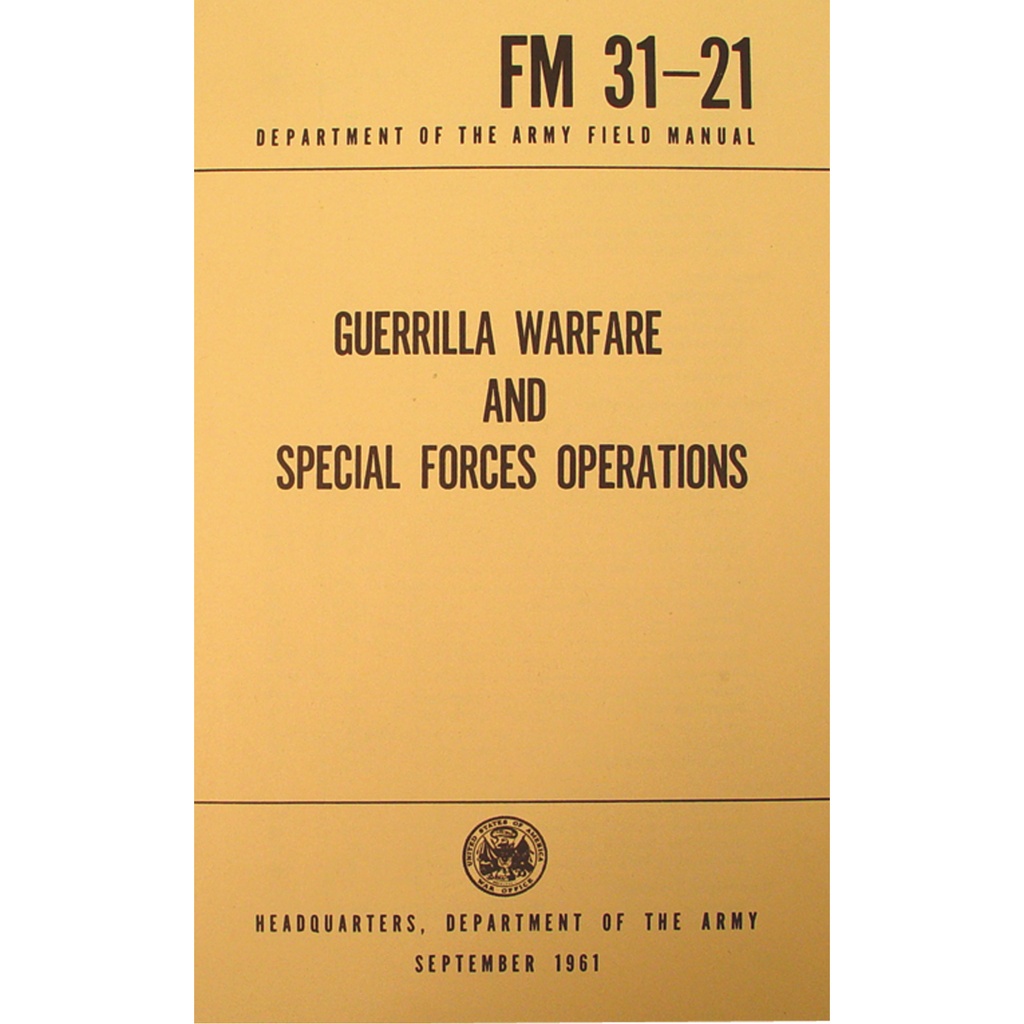
Long before anyone argued online about tactics, small teams were slipping across borders with nothing but orders, a radio plan, and doctrine that looked exactly like this. A simple yellow cover. Black government type. September 1961 stamped at the bottom. This guerrilla warfare and Special Forces operations manual isn’t theory from a blogger; it’s how the Army put unconventional war into writing when the Cold War was running hot in the shadows.
In a Texas context, it fits right in. Out past Killeen, San Antonio, or any town with more trucks than sedans, you’ll find ranges, pastureland, and back shops where people still care how missions are planned, not just how fast a drill looks on video. This field manual gives structure to that interest—area commands, logistics, intelligence, communications—laid out in the same clipped language instructors still lean on today.
Why a Cold War Field Manual Belongs on a Texas Shelf
This isn’t coffee-table decor. It’s a working reference that happens to be bound in a bold yellow softcover that stands out whether it’s in a gun room in New Braunfels or a training office near Fort Cavazos. The pages walk through fundamentals of guerrilla warfare and Special Forces operations with the kind of plain structure Texans respect: mission, control, support, execution.
Retailers from Houston surplus shops to small-town pawn counters like it because the story sells itself. A 1961 Department of the Army field manual, FM 31-21, reprinted in full. No spin. No modern rewrite. Just the original doctrine as it was handed to soldiers learning to work in places that never made the news. Instructors and trainers appreciate it because they can break a weekend class into the same buckets: organization, logistics, communications, intelligence gathering, and area command.
Texas Buyers Read Doctrine Differently
In a state where bases, Guard units, and veterans are never too far away, this kind of manual doesn’t feel abstract. A retired Special Forces NCO in San Antonio might keep it on a desk as a reminder of how the job used to be taught. A college student in Austin digging into Cold War history can mark passages on insurgent support, information operations, and resistance networks that still echo in today’s conflicts.
For the Texas reader who already knows their way around modern TTPs, the value here is context. How did an earlier generation frame guerrilla warfare on paper? What did the Army think Special Forces operations should look like before Vietnam fully erupted, before the term “unconventional warfare” became a catch-all? Those answers are printed in dense, no-nonsense paragraphs that assume the reader is going to work, not argue.
Official Army Structure, Without the Clutter
The cover is pure government issue: yellow field, black block type, circular Army seal, and the FM 31-21 designation up top. Inside, the language is just as stripped-down. The manual moves from fundamentals to control, then into logistics, intelligence, communications, and area command with the same rhythm you’d hear in a briefing at a Texas Guard armory—short, direct, and organized for action.
Because it’s a softcover with a matte yellow finish, it rides well in a ruck, range bag, or truck door pocket. It’s not fragile or precious. You can thumb it with dusty hands on a ranch outside Abilene while sketching out a field exercise, or drop it on the table at a training night in Lubbock when you want to show students how planning used to be laid out, line by line.
Texas Context: Doctrine, Law, and How This Fits
Most Texans who reach for this book already have a handle on the state’s more relaxed posture toward weapons and training. Modern Texas law treats switchblades and OTF knives as legal to own and carry for most adults, and the culture around that carries over into how people study conflict. If you’re teaching a class on irregular warfare, asymmetric threats, or rural defense concepts, having an original-style Cold War Special Forces manual on the table lends weight that a slide deck never will.
There’s also the legal reality of instruction itself. In Texas, it’s common to see private ranges hosting carbine courses, low-light work, or small-unit movement refreshers for veterans and responsible civilians. When you’re explaining the why behind your drills, this manual gives you period-correct language on guerrilla support, organization, and command relationships that you can quote, contrast, or critique.
Using the Manual in Texas Training Scenarios
Picture a weekend class outside San Angelo. Students camp on-site, rifles cased, radios charged. Around the fire on Friday night, an instructor opens this yellow-covered field manual and reads a short section on area command and guerrilla support. The talk that follows connects 1961 doctrine to current thinking, ground truth here in the brush and mesquite of West Texas.
Or in a Houston-area university, a security studies professor assigns chapters from this manual alongside modern counterinsurgency texts. Students compare how the Army of 1961 viewed guerrilla warfare against what they see in current conflicts. The yellow cover becomes a visual anchor on the desk, its simple design cutting through laptops and tangled power cords.
Collectors, Surplus Fans, and Texas History Buffs
For the collector who already has field gear, patches, and a line of Cold War helmets on a shelf, this manual fills a gap. It’s the paper side of the story: the doctrine that stood behind the equipment. The fact that the reprint preserves the original September 1961 layout and wording matters. In a state that sends a steady stream of people into uniform, that kind of authenticity doesn’t feel like a novelty item—it feels like respect.
Questions Texas Buyers Ask About Special Forces Field Manuals
Are OTF knives legal to carry in Texas?
Yes. Under current Texas law, automatic knives—including OTFs and traditional switchblades—are legal to own and carry for most adults. The key legal line now is blade length and location, not the opening mechanism. There are still restrictions on carrying blades over certain lengths into specific places like schools, some government buildings, and secure areas, but the old ban on switchblades is gone. That’s why you’ll see Texans pairing serious blades with serious reading, from field manuals like this to modern training texts.
Is this Cold War field manual useful beyond historical interest in Texas?
It is. Instructors at Texas ranges pull sections to illustrate how planning, logistics, and intelligence support were framed before modern doctrine. The structure—mission, command, support, execution—still lines up with how many Texas veterans think and teach. Even if you never plan to run a guerrilla cell, the way this manual breaks down support networks, communications, and area commands can inform everything from emergency planning to academic work.
Should I buy this if I already own modern Special Forces and guerrilla warfare books?
If you live in Texas and already study tactics, this fills in the origin story. Modern books tell you what’s current; this one shows what the Army thought unconventional war should look like at the height of the Cold War. That contrast can sharpen your thinking, whether you’re a former soldier in El Paso, a student in Denton, or a range owner outside Waco planning your next course outline.
Bringing 1961 Doctrine Into a Modern Texas Day
Picture a late evening in a small Texas town. The day’s work is done, the shop is swept, and the only sounds are a cooler humming and a train in the distance. On the counter sits this yellow-covered field manual, open beside a notepad. You’re sketching ideas—for a class, a story, a research project—drawing lines between what the Army wrote in 1961 and what you see now on the news and at the range.
That’s where this Cold War Special Forces field manual earns its place. Not as a relic, but as a working piece of doctrine you can still learn from under a Texas sky.