Covert Field Manual Tactical Reference Book - Black Paperback
5 sold in last 24 hours
In a dry West Texas summer, fire is no joke. This technical paperback looks and reads like a military field manual, focused on incendiary materials, systems, and theory. Packed with diagrams and dense instruction, it’s a reference for understanding how these devices work, not a toy. If you collect controversial manuals or study energetic materials from a safety and academic angle, this black-coated guide sits right beside your other serious texts.
When a Book Reads Like a Field Manual
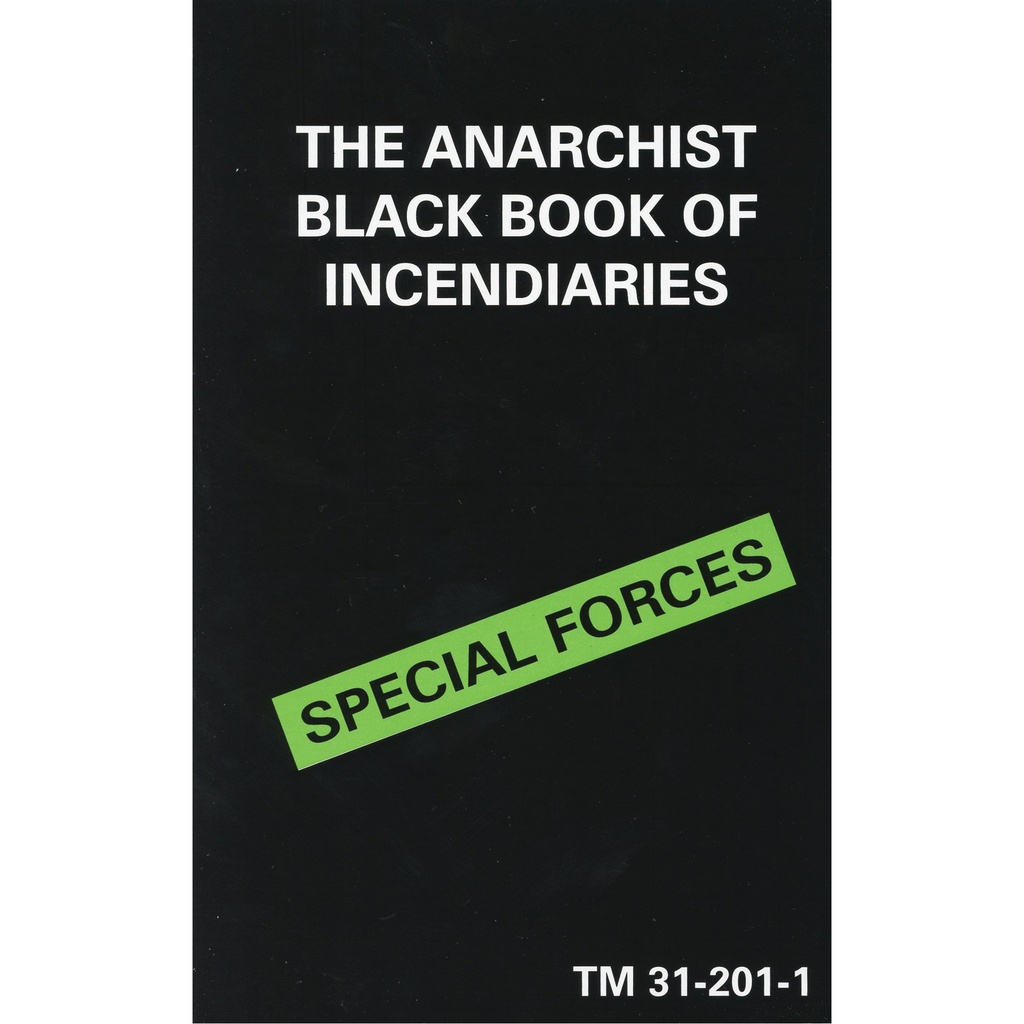
There are paperbacks you toss in the truck, and there are manuals you store like evidence. This one falls in the second camp. Black cover, hard white type, a green SPECIAL FORCES stripe and a TM number in the corner — it looks like something pulled from a government locker, not a mall bookstore display.
Inside are 155 pages of tightly packed instruction on incendiary systems, tools, and materials. Diagrams. Formulas. Procedures. It’s laid out like a training text, not a casual read. In a state where one careless spark can roll a grass fire across a Panhandle pasture line in an afternoon, understanding exactly how these systems work is not theoretical — it’s the kind of knowledge that separates respect for fire from casual foolishness.
How This Technical Book Fits a Texas Reality
Spend time along Highway 277 in late August and you see the signs: burn bans posted, volunteer departments on edge, bar ditches dry as tinder. Out here, anyone who works around fuel, welding rigs, or demolition understands that energetic materials demand respect. A manual like this is not for play; it’s for study.
This tactical reference book walks through incendiary systems, initiators, fuse cord, improvised string fuse, and more. It explains sugar–chlorate mixes, fire fudge subigniters for thermite, napalm-style blends, paraffin sawdust charges, and bottle-type fire devices. Every page underscores a simple truth Texans already know: if you don’t fully understand what heat and ignition will do, you have no business being near it.
For a reloader on the outskirts of Lubbock, a rancher dealing with controlled pasture burns outside Kerrville, or a safety officer on an industrial site in Baytown, technical comprehension matters. This book belongs on the shelf of someone who wants to understand mechanisms and chemistry, not improvise recklessly in the back forty.
Inside the Covert Field Manual Tactical Reference Book
The layout mirrors a government-style TM. Chapters move from principles and components to applications. Incendiary systems and tools come first — what they are, how they’re constructed, the logic behind each element. From there it steps into initiators and fusing: cord, improvised string fuse, subigniters designed to light thermite charges, delay concepts, and firing sequences.
Further in, incendiary materials take center stage. Napalm-style mixes built around thickened fuel. Sugar–oxidizer combinations. Paraffin–sawdust packs meant to burn hot and long. Bottle-based fire devices, their behavior, and limitations. Each topic is supported by illustrations that clarify what the text describes. The tone stays dry and procedural, like a range instructor who’s seen enough bad outcomes to skip the jokes.
In Texas, that tone fits. A refinery hand in Deer Park, a pipeline welder working river crossings near the Guadalupe, or an industrial fire trainer in Midland doesn’t need drama — they need process, limits, and failure modes. This book stays in that lane.
Texas Law, Responsibility, and Books Like This
Why Information Alone Still Demands Judgment
Texas law draws hard lines around arson, criminal mischief, and reckless endangerment. Lighting up a cedar break in the Hill Country or a storage yard outside Odessa isn’t just a bad idea — it can be a felony carrying real time and serious restitution. That’s before you get to federal attention when certain devices cross into defined destructive ordnance.
This manual is ink on paper. Owning a book is different from building or deploying what it describes. But anyone in Texas who keeps a field manual on incendiaries should treat it like they treat their firearms: as a responsibility, not a novelty. The only smart use for this material in-state is controlled, lawful, and professional — academic study, historical reference, safety training, or formal explosive ordnance and fire science work done inside the law.
Context for Texans Who Work Around Fire
Across the state, fire and heat are part of the job. Welders on oil leases outside Pecos, structural firefighters in Dallas, and wildland crews along the Balcones Escarpment all see what happens when heat meets fuel and oxygen in the wrong way. Many of those professionals study worst-case devices so they can recognize them, counter them, and train others.
On a training table in a central Texas fire academy, this book might sit next to NFPA texts, used not to glorify devices, but to break down how they’re built and what signatures they leave behind. In a criminal justice classroom in Huntsville, a chapter on improvised fusing could serve as a talking point for evidence recognition. The value here, in Texas, is in prevention and understanding — not in experimentation.
Questions Texas Buyers Ask About Incendiary Manuals
Are books on incendiaries legal to own in Texas?
Texas law does not ban ownership of printed information, even when the subject is explosives or incendiaries. What the state does prosecute hard is action: building, placing, or using devices to damage property, start unlawful fires, or injure people. Federal law layers on additional penalties for certain destructive devices. If you choose to keep a manual like this in Texas, use it only for lawful study, historical research, or formal training, and never as a how-to for real-world deployment.
Who in Texas actually uses a tactical incendiary reference book?
Most buyers who make sense in this state already take fire and blast risk seriously. That includes industrial safety trainers along the Gulf Coast, fire investigators anywhere wildland and structure meet, criminal justice instructors, and collectors of military and special operations manuals. For them, this book is a technical reference that helps them understand methods they might encounter, not a project guide. If you’re simply curious without a professional or academic angle, consider whether the content level is more than you need.
How should a Texan store a book like this?
Treat it the way a seasoned ranch family treats a loaded rifle or a key to the gun safe: out of reach of kids, away from people who treat dangerous tools like toys. A closed drawer in a home office, a locked cabinet in a training center, or a dedicated shelf in a serious reference library all make more sense than tossing it in a dorm room pile. If anyone in your orbit has a history of arson, vandalism, or unstable behavior, this is not the kind of text you leave lying around.
Where This Manual Actually Belongs in Texas
Picture a metal training table in a fire academy outside San Marcos. Turnout gear hangs on pegs along the wall, and a whiteboard holds a sketch of a burned-out storage unit. On the table sits a stack of standard texts — fire dynamics, building construction, investigation procedure — and beside them, this black-covered special forces manual, corners already getting soft from use.
An instructor flips it open not to romanticize anything, but to walk a class through how someone with bad intent might try to stretch a small charge into a warehouse fire — and how to read those signs early. Out beyond the bay doors, a line of live-burn containers waits in the heat. Inside, the message is simple: understand the worst so you can prevent it. In a state that knows how fast fire can run, that’s the only kind of reason this book needs to exist on a Texas shelf.