Dojo Rhythm Balanced Bokken Trainer Sword - Natural Wood
5 sold in last 24 hours
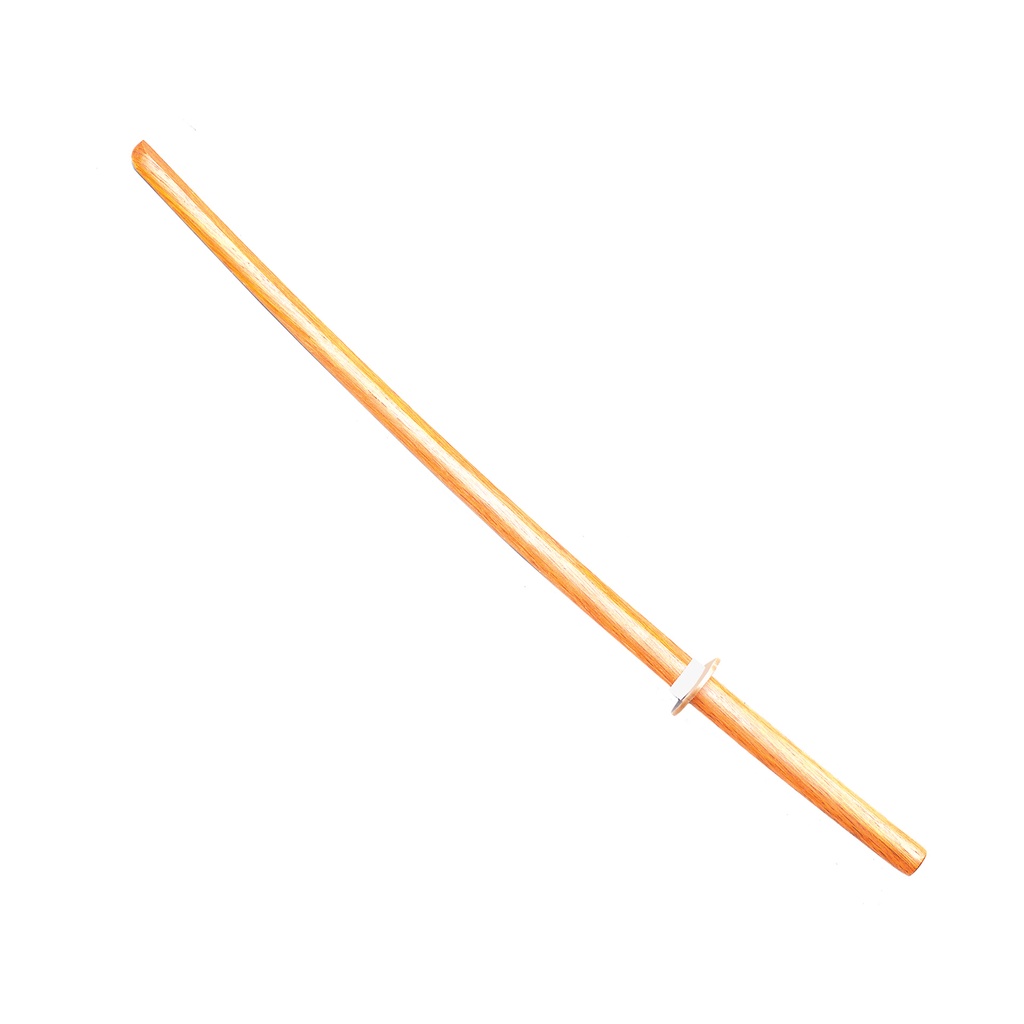
Late class in a Houston dojo, floor still slick from drills. This one-piece natural wood bokken feels steady from first grip, the balance right where you need it. At 40 inches with a smooth finish and integrated round guard, it tracks clean through suburi, kata, and partner work. Built for instructors, students, and busy schools that need trainers tough enough for daily use, straight off the rack.
When A Dojo Needs A Sword That Just Works
End of class in a Dallas aikido school. Gi jackets are damp, feet are sore, and there’s still ten minutes left for suburi. Nobody reaches for the prettiest wooden sword; they reach for the one that always feels right in the hand. This one-piece natural wood bokken is built for that moment — steady, balanced, and honest enough to disappear when the work starts.
At a full 40 inches with a gentle katana curve and rounded tip, it moves the way students expect a proper practice katana to move. The integrated round guard stays out of the way, but it’s there when you close on partner drills and need that little bit of hand security. Nothing extra. Nothing fragile. Just a trainer that can live on the rack, day in and day out.
Dojo Rhythm In A One-Piece Bokken Practice Sword
In a San Antonio dojo running back-to-back kids and adult classes, gear doesn’t get coddled. It gets dropped, passed around, leaned in the corner. This bokken trainer sword is one solid piece of natural wood front to back, so there are no seams to loosen and no pieces to rattle free after a long week of drills.
The balance point falls naturally forward of the hand, letting new students feel the line of the cut without fighting the weight. The smooth, semi-gloss finish keeps the grain closed so sweat, dust, and Texas humidity don’t raise rough spots after a month of use. It slides clean through repeated overhead swings, then settles calm in chudan for kata without that nose-heavy wobble cheaper trainers get.
Because the handle and blade are cut from the same continuous piece, there’s a consistent feel from tsuba to tip. Instructors can demonstrate precise hasuji, and students can follow that same track without wondering if the tool is working against them. It’s the kind of bokken you assign to beginners, then quietly keep one aside for your own practice after everyone’s gone.
Built For Long Miles In Texas Dojos
From strip-mall karate schools in El Paso to polished hardwood kendo floors in Austin, a training sword that survives matters more than one that photographs well. The natural wood on this bokken is finished for real mileage, not showroom shine. It shrugs off the bumps from crowded weapon racks and the light contact of partner kata without splintering at the edges.
At 40 inches overall, it tracks like a standard katana-length trainer: long enough to make distance and timing honest, short enough for teenagers and adults to share in mixed classes. The rounded tip takes the edge off close work in aikido or kenjutsu-style entry drills, giving instructors a little more margin when students are still learning range and control.
Partner practice — whether it’s bo vs. bokken in a Houston mixed-arts school or bokken vs. empty hand in a jujutsu class — demands a stable, predictable profile. The straight, clean spine and subtle curve let you repeat the same motions hundreds of times without fighting twist or warp. This trainer is meant to live on the line with the others, not on a wall.
Texas Training Culture: From Garage Dojos To Full Schools
Not every martial arts space in Texas has mirrors and a sign on the road. Plenty of teachers work out of garage mats in Fort Worth suburbs or church rec rooms in Lubbock. For those dojos, a wooden practice sword has to pull double duty: teaching tool, demo piece, and shared training gear for students who don’t own their own yet.
This bokken practice sword fits that reality. The light natural wood tone makes dings and wear easier to track, so instructors know when it’s time to rotate a piece to lighter use. The integrated round guard gives beginners a clear cue where the hands belong without adding hardware that can crack or spin loose. It’s the kind of bokken a small program can buy by the dozen and trust through the first year of classes.
In bigger Texas schools, this is the rack standard: the trainer you hand to a new student without explanation, because it needs none. Grip, stance, cut — the bokken simply follows the training. No logos to distract, no flashy paint to chip, just the plain-line silhouette serious dojos prefer.
Questions Texas Buyers Ask About Bokken Practice Swords
Are OTF knives legal to carry in Texas?
Texas law allows ownership and carry of automatic knives, including OTF and traditional switchblades, for adults, with restrictions mainly tied to location and certain blade-length categories defined as "location-restricted knives." This wooden bokken, though, is a practice sword — not a knife and not a live blade. It falls into the realm of training equipment and martial arts gear. For transport to and from the dojo in places like Dallas, Houston, or Amarillo, most practitioners simply case or cover their training weapons and head straight to class, treating them as sports equipment. If you’re unsure about carrying any martial arts weapon into a specific venue — school campus, government building, or event space — check local policies even when state law doesn’t call it a knife.
Is this wooden bokken suited for hard contact drills in my Texas dojo?
This one-piece natural wood trainer is meant first for suburi, kata, and controlled partner work — the backbone of most dojo programs from Corpus Christi to Lubbock. It will handle light contact in paired forms and timing drills, but it’s not a stick-fighting club and shouldn’t be smashed edge-to-edge at full force. Instructors who mix in heavy impact work usually keep one set of trainers for form and a different, heavier set for full-power contact. Used as intended, this bokken will serve through long cycles of students without the premature chipping that comes from treating it like a striking baton.
How many of these should I stock for my Texas school or program?
Most Texas dojo owners figure numbers by rank and class size. A Houston kendo or aikido school might keep one bokken per adult student, plus a small buffer for visitors and lost gear. Strip-mall karate programs that only touch weapons during certain cycles often stock by class set: a dozen to cover a crowded beginner class, a dozen for intermediates, and a handful reserved for instructors. Because this bokken practice sword is priced and built with wholesale in mind, it works well as the standard issue — the piece you line in a barrel by the door and tell every new student, "Grab one of those. We’ll start from there."
Putting This Bokken To Work In Your Own Space
Picture a Tuesday night in a small school outside Waco. The sun’s gone, the lot is quiet, and the last class is lining up for weapons. You pull this natural wood bokken from the rack, feel the balance settle in your hand, and call the first cut. Thirty students move as one line, wood tracking through the same path in the same air.
No one’s thinking about the sword. They’re thinking about distance, timing, shoulders, breath. That’s what a good dojo trainer does in Texas or anywhere else — it steps out of the way so the work can happen. This bokken is built for that kind of night, and for all the ones that follow.