Duskline Rose Field Compass - Brass
3 sold in last 24 hours
You lose the sun fast on a long Texas lease road. This brass pocket compass keeps you honest when the mesquite and cedar start to look the same. The liquid-filled rose dial settles quick; the glow bezel and north marks stay readable after the truck lights go dark. Solid brass and a steady thumb loop make it feel like an instrument, not a trinket. It disappears in a pocket until you actually need direction.
When the Road Runs Out and the Sky Goes Dark
Out past the last caliche turnoff, your phone map turns into a gray blank. That’s where a small, honest brass compass still earns its keep. Slip the Duskline Rose Field Compass into your pocket leaving San Angelo, step off into the pastures near Sterling City at dusk, and you’ve got something that doesn’t care about signal bars or battery life. It only cares about where north is.
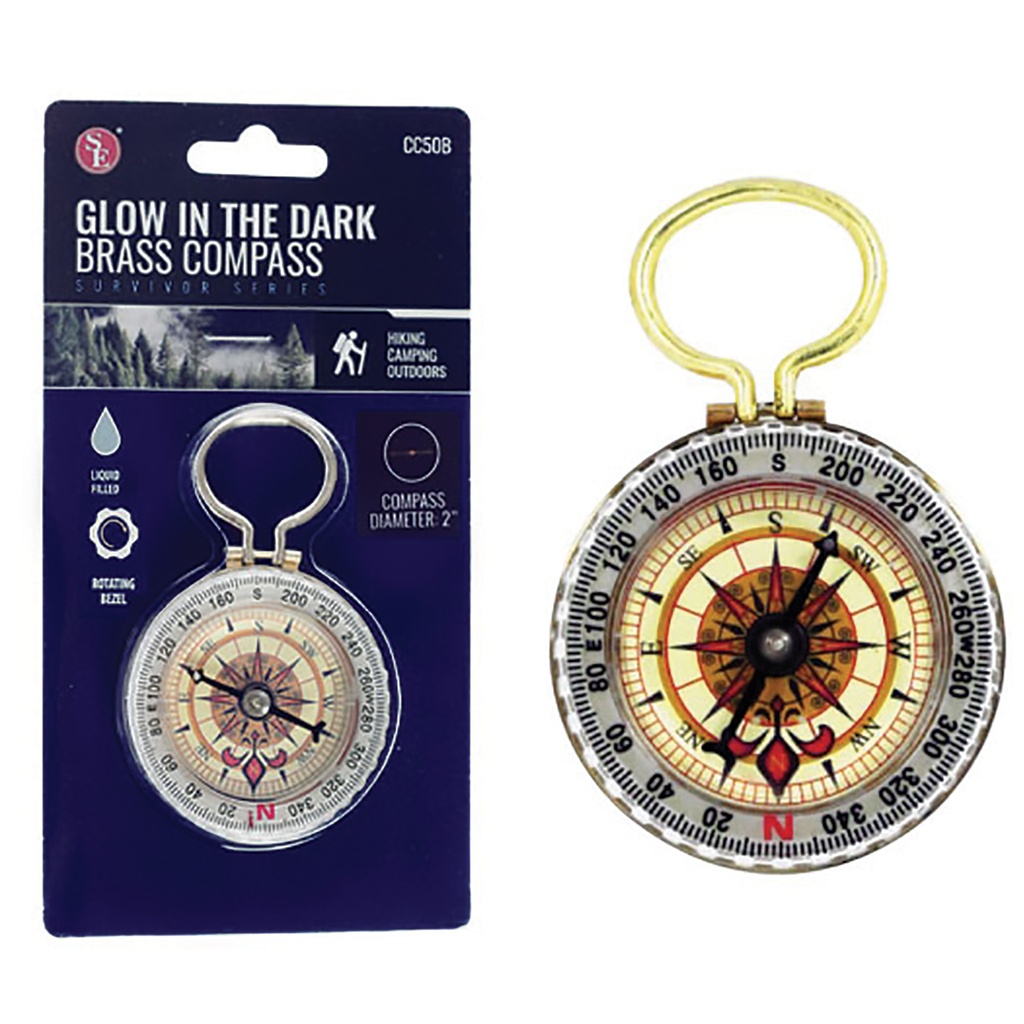
The case is solid brass, not painted pot metal. It warms in your hand like a piece of gear meant to be kept, not clipped in a blister pack and forgotten. At two inches across, this pocket compass rides easy in your jeans, day pack, or glove box, never in the way, always there when the mesquite silhouettes start to blur together.
A Pocket Compass Built for Real Texas Ground
Texas country is big, broken, and honest. Your tools ought to match. This pocket compass sits right in that middle ground between old surveyor instrument and modern camp gear. The rose-style dial floats in liquid, which means the needle settles down fast when you stop to check your bearing along a sendero in Webb County or a live oak line outside Llano. No wobble, no waiting.
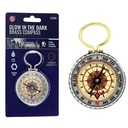
The dial’s compass rose isn’t for decoration. That bold star and clear cardinal points are easy to read when your eyes are tired from watching fencelines all afternoon. Direction letters print dark and sharp, with north punched up in red so your brain can catch it in one glance. Around the outside, a rotating bezel with degree marks lets you walk a rough azimuth across open pasture or line up a distant windmill and keep heading toward it without drifting.
Where this really separates from throwaway camp trinkets is the glow treatment. The bezel ring and north indicators are luminous, charging off the last of the West Texas sunset or your truck dome light. When you’re easing back through cedar breaks above the Guadalupe after legal light, you don’t have to fumble with a flashlight just to confirm you’re walking the same line you came in on.
Why a Brass Pocket Compass Still Matters in Texas Country
Across this state, it’s common to step off the beaten path—into a Hill Country creek bottom, a Panhandle playa edge, or the back side of a timber lease outside Lufkin. Electronic maps get you to the gate. After that, your sense of direction and a simple pocket compass do the rest.
The Duskline Rose Field Compass is small enough that you’ll actually carry it. Hook a finger through the oval thumb loop and it steadies the whole instrument as you sight past it toward a radio tower or windmill. That loop gives you control in a stiff north wind rolling down the Caprock or when your hands are cold on an East Texas winter hog hunt.
Brass holds up to the kind of abuse Texas throws at pocket gear—dusty dash storage, sweat in August, mud and grit from coastal marsh. It scuffs, it darkens, but it doesn’t quit. That patina just tells the miles you’ve walked with it.
Navigating Texas Wild Spaces After Dark
Finding Camp Again in Hill Country Canyons
Set up a small camp below the bluffs along the Frio or the Pedernales, and the sky disappears behind limestone walls once the sun drops. Trails twist, game tracks crisscross, and every dry wash starts to look like the one you followed out at daylight. With this pocket compass, you take a bearing from camp while there’s still light, spin the rotating bezel to lock it in, and you’ve got a simple, quiet promise: follow that heading back and you’ll see your lantern again.
The luminous bezel and north markers mean you can keep that bearing alive under starlight alone. No need to blast your night vision with a bright phone screen. Just a faint green halo of numbers and a steady rose dial pointing true.
Walking Straight Lines on Open Texas Pasture
On big, flat country—coastal prairie outside Bay City, wheat ground outside Vernon—it’s easy to slowly arc off your intended course without a landmark. That’s where a liquid-filled pocket compass like this matters. You pick your line against a far-off tree line, adjust the bezel to that degree mark, and check it every few minutes. The liquid damping keeps the dial from whipping around in the constant South Texas wind, so every glance gives you a clean reading.
No GPS track, no breadcrumb trail, just you, a heading, and the same kind of instrument that guided folks across this state long before service towers showed up.
Texas Practicality: Tools That Don’t Need Charging
Across Texas, from lease roads in the Eagle Ford to trailheads outside Palo Duro Canyon, the pattern is the same: people rely on electronics right up until they fail. Then they lean on whatever is simple, analog, and honest enough to still work.
The Duskline Rose Field Compass doesn’t ask for updates or power. It doesn’t care if you’re in a canyon near Big Bend where a phone goes dead by lunchtime. It sits in a console or pack until the one moment you realize the truck is farther than you thought, the sun is lower than you planned, and the path is not as obvious as it was coming in. Then that little brass circle in your palm becomes the most important tool you’re carrying.
Paired with a paper map of a state park or lease, it lets you move with intent instead of hope. You’re no longer “heading kind of north.” You’re walking a line you can explain and repeat.
Questions Texas Buyers Ask About Pocket Compasses
Are pocket compasses still reliable in Texas heat?
Yes. This pocket compass is liquid filled, and the sealed capsule is built to handle the temperature swings that come with a Texas year—from cold Panhandle mornings to August heat in the brush country. The brass case protects the internals from most everyday bumps and drops. Store it out of direct windshield sun when you can, the same way you’d treat any serious instrument, and it will stay true season after season.
Will this compass work for hunting on Texas leases at night?
It will, and that’s where the glow features start to matter. Take a bearing from camp or the truck while it’s still light, turn the rotating bezel to mark that direction, and you can walk back toward that heading after dark with quick checks of the luminous ring and north arrow. It won’t replace a headlamp or common sense, but it will keep you from wandering in wide circles when the senderos all start to look the same under a crescent moon.
Is a pocket compass worth carrying if I already use GPS?
In most Texas spots with clear sky and coverage, GPS is fine—right up until you step into a canyon, heavy timber, or out-of-service lease where the map lags or dies. A pocket compass like this is quiet insurance. It weighs next to nothing, doesn’t need charging, and gives you instant bearings across unfamiliar ranch roads, river bottoms, and backcountry trails. For many Texans, it’s the backup that ends up getting used more than the primary.
First Night Out With It in Your Pocket
Picture stepping out of the truck on a cool November evening outside Junction. You follow a faint two-track past cactus and cedar, watching the sky fade from blue to a deep, bruised purple. You push farther than you meant to. It’s darker than you thought it’d be. The truck lights are gone behind a low rise.
You pull the Duskline Rose Field Compass from your pocket. The brass feels solid, warmed by your hand and the day. The dial settles in a couple of heartbeats, the faint green ring of the bezel and north paint just bright enough to read without killing your night vision. You line up the bearing you took from the truck at daylight, turn, and start walking a straight line back through country that suddenly feels a lot bigger.
That’s when a small, simple brass circle stops being a novelty and becomes part of how you move across Texas ground.