Survey Line Prism Tactical Compass - OD Green Aluminum
15 sold in last 24 hours
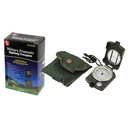
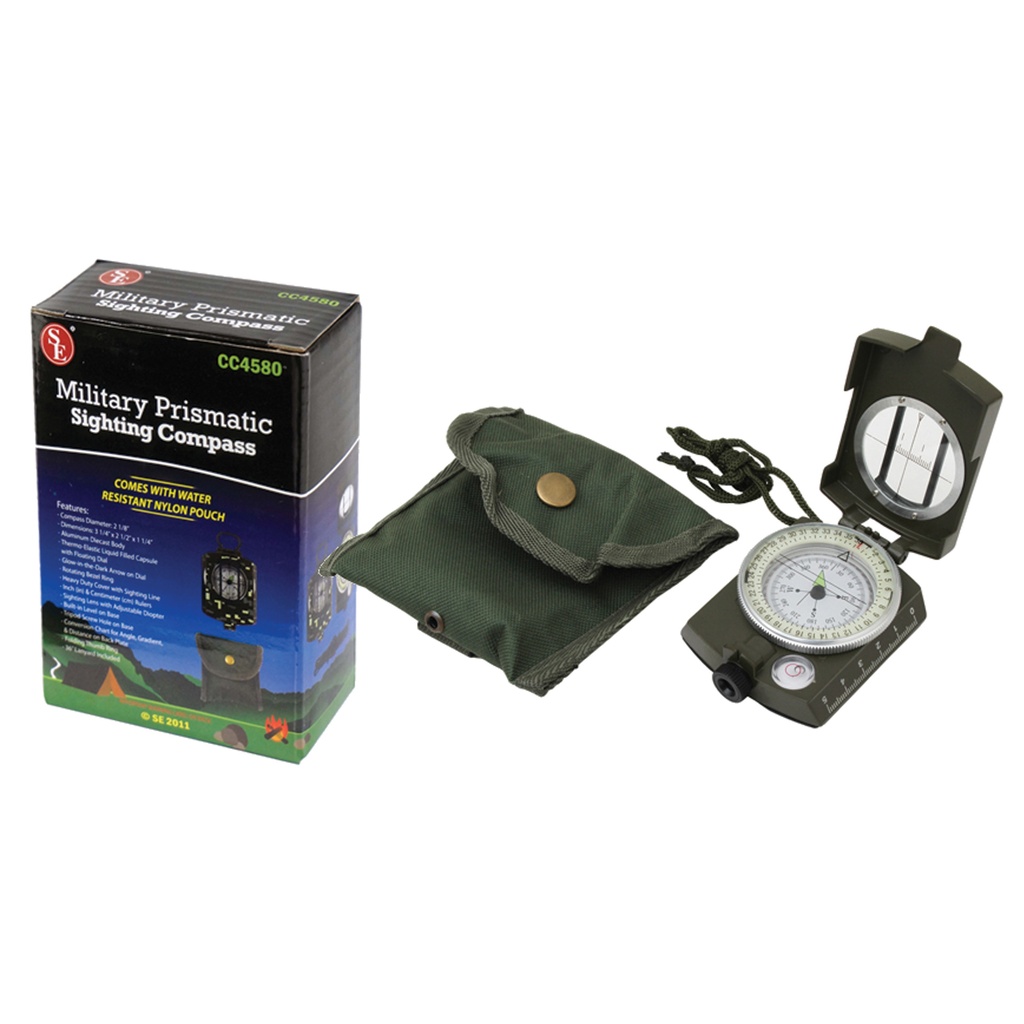
Out past cell service, crossing mesquite flats or walking a new fenceline, you don’t guess at direction. This military-style lensatic compass snaps open, levels quick, and sights clean through the prism. The liquid-filled capsule settles fast, the glow dial carries you past sundown, and the tripod socket lets you lock in bearings when the map and the land have to agree.
Survey Line Bearings When Screens Go Dark
Out on a lease road west of Midland, the signal bars fade long before the sun does. You’re checking a new section, wind kicking dust across the hood, and the GPS has already tried to send you across a dry creek that hasn’t run right in ten years. That’s when this tripod-ready lensatic compass stops being a backup and becomes the only instrument you trust.
The OD green aluminum rides quiet in its nylon pouch, tucked on a belt or clipped inside a console. When the road ends and the walk starts, it opens with that familiar military hinge—cover up, base down, sighting arm ready. The liquid-filled capsule settles while you’re still planting your boots, and the glow dial gives you a steady, honest bearing in the kind of light where a phone screen either blinds you or dies trying.
Why This Lensatic Compass Belongs in Texas Country
Texas doesn’t offer one kind of land; it offers all of them. Pine shade in East Texas, broken rock in the Hill Country, flat nothing between fencelines in the Panhandle. A compass that works here has to do more than point north—it has to stay readable when you’re sweating through a July survey or picking your way back to camp after a long stalk.
This military lensatic build takes to that work. The die-cast aluminum body shrugs off truck door slams, rock shelves, and getting tossed into a range bag. The prismatic sighting lens pulls distant fence posts, towers, and windmill legs into a clean, readable line, so you’re not guessing over a wide sendero or across a tank dam. An adjustable diopter lets older eyes sharpen the numbers without squinting, even under a white August sky.
Built-in rulers along the base let you walk a paper topo or printed aerial map like the old hands did, pacing off draws and ridges instead of trusting a blue dot. When the storm rolls in and the first thing to go is power, that simple, mechanical honesty matters.
Tripod-Ready Stability for Long Texas Lines
On bigger spreads, direction becomes more than a feel—it becomes math. Marking a new fenceline on blackland soil outside Waco, or shooting a bearing across a playa near Lubbock, you need more than a quick glance. You need to hold a line over distance.
This compass earns its keep with the tripod socket in its base. Screw it onto a lightweight field tripod or a survey stand, level it with the bubble window, and the instrument stops shaking with your pulse and starts acting like a proper navigation tool. The rotating bezel clicks into place as you dial in bearings, letting you swing from a gatepost to a tree line without losing your starting reference.
That kind of stability pays off at the deer lease too. Stand on a sendero before first light, compass leveled, sighting prism lined on a far mesquite. Note the bearing, tie it to your map or your mental picture, and you’ll know exactly which cut or draw you’re hearing trucks in when more headlights than expected show up at camp.
Rugged Build for Real Texas Field Use
A tool doesn’t last long in Texas if it can’t take heat, dust, and a truck floorboard. This compass was put together with that in mind. The OD green die-cast aluminum body doesn’t warp in a locked truck under August sun, and it doesn’t crack when it meets caliche or granite. The liquid-filled capsule cushions the needle through washboard roads and pasture ruts, so you get smooth movement instead of jittery swings.
The dial’s glow-in-the-dark markings hold a charge after a few minutes of West Texas dusk, giving you bearings without killing your night vision. That matters when you’re stepping through cactus and broken limestone with only a red headlamp, trying to make it back to camp without lighting up the whole ridge.
The water-resistant nylon pouch rides tight on a belt or MOLLE panel, snaps closed with a simple fastener you can work in gloves, and sheds the kind of mud you pick up on a low-water crossing. A woven lanyard ties the compass to your kit or around your neck when you’re wading a creek bed outside Junction and don’t feel like watching gear float away if you slip.
Texas Navigation Confidence Without Electronics
This isn’t a gadget you show off. It’s a quiet piece of kit you reach for when you’ve already put the phone away. Hikers in the Lost Maples canyons, dove hunters near Hondo, and search volunteers on the edge of Big Bend country have one thing in common: when you’re off the grid, you navigate by what you can see and what you can trust in your hand.
The lensatic design is made for that. Flip the cover to use it as a straightedge on a map. Open it halfway, raise it to eye level, and let the prism show you both the distant feature and the degree reading at the same time. The diopter ring turns until the numbers snap into focus, then stays there, ready for the next walkout or the next call from a neighbor needing help checking a line in the dark.
Questions Texas Buyers Ask About Lensatic Compasses
Are lensatic compasses legal to carry in Texas?
There’s no restriction in Texas law on carrying a compass, lensatic or otherwise. It isn’t a weapon under any Texas statute, and it doesn’t fall under blade, club, or firearm rules. You can keep this compass on your belt, in a pack, or in your truck across the state without worrying about location-based carry limits that apply to knives or handguns.
Will this compass hold up in Texas heat and dust?
Texas summers test anything made of plastic and cheap metal. The die-cast aluminum body on this compass tolerates locked-truck heat better than consumer-grade housings, and the liquid-filled capsule keeps the needle moving cleanly even after long runs on caliche and gravel. Dust will find its way onto any tool, but the folding cover shields the dial and prism when you’re not using it, so you’re not wiping grit off the glass every time you check a bearing.
Do I need a compass like this if I already use GPS on my phone?
Plenty of Texans rely on GPS for day-to-day driving, and that’s fine until you leave paved roads or lose service for a whole county. A lensatic compass doesn’t replace a map app; it backs it up when you’re walking a dry creek, following an old two-track through mesquite, or guiding folks out of a low spot after a flash flood. It gives you a true, independent bearing you can bet your walk home on when the batteries die, the screen cracks, or the route line leads somewhere it shouldn’t.
First Use on a Texas Line
Picture a late fall evening outside Llano. The sun is dropping behind live oaks, and you’re halfway along a rocky fence, checking T-posts before the first real cold snap. Phone’s tucked away—no service anyway. You snap open the compass, level it on a corner post, and sight across to a ridge you know you’ll have to reach by dark. The prism shows a steady bearing, the glow dial is easy to read in the last orange light, and for a moment the whole place—rock, cedar, wire—lines up on a simple number. That’s the kind of quiet certainty this compass brings to Texas ground.