Loadmaster 1968 Army Rigging Manual - Signal Yellow
10 sold in last 24 hours
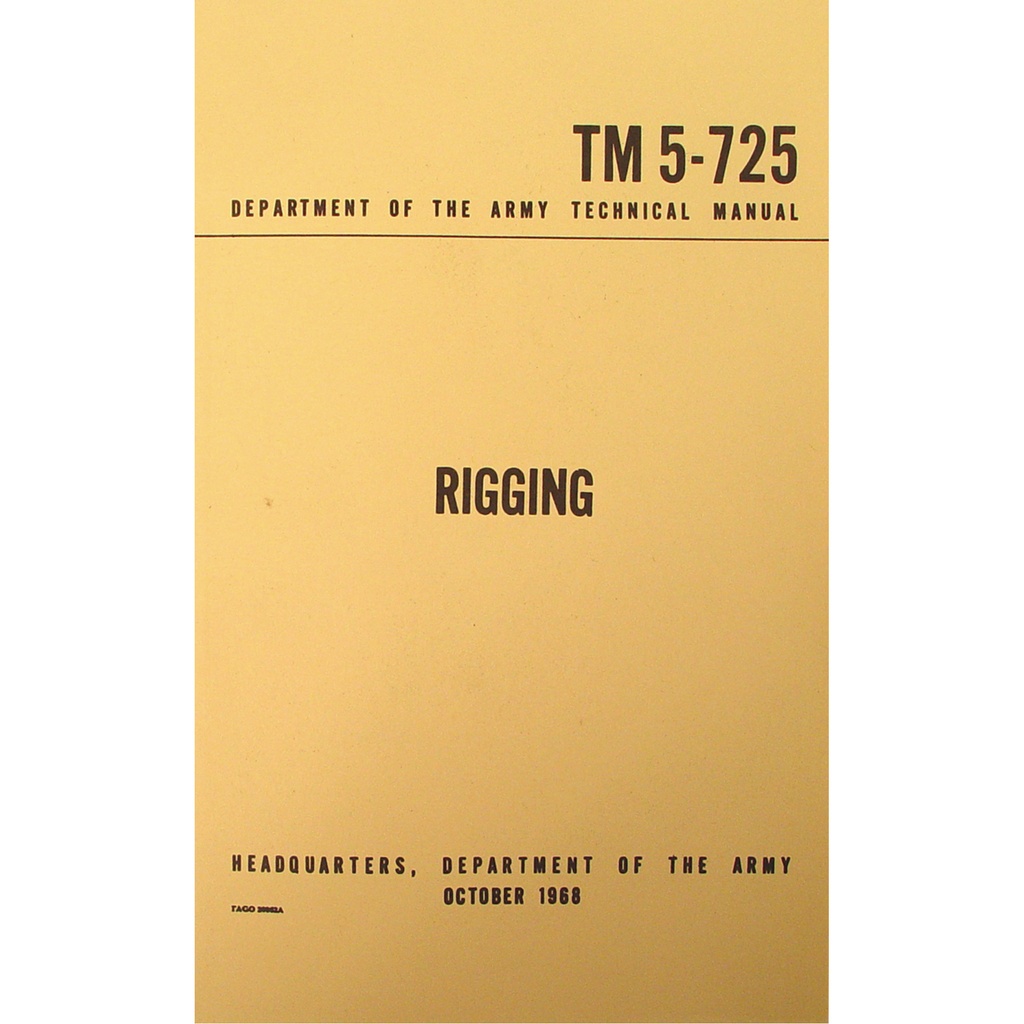
Out on a West Texas yard, this 1968 Army rigging manual earns its space on the gang box. The signal-yellow cover stands out in dust, rain, and bad light. Inside, wire rope charts, chain limits, knots, hitches, and splice methods turn questions into quick, confident calls. New hands use it to learn; old hands use it to prove they’re right. When the hook’s in the air and lawyers come later, this is the book you want backing your decision.
Field-Proven Rigging Knowledge for Real Texas Lifts
On a hot afternoon outside Odessa, a boom truck is set up crooked on caliche that never packed quite right. Crew’s tired, foreman’s behind, and a bad call on that pick could put steel through a trailer, or worse. That’s when the old hand reaches past the tape measure and chalk, grabs a signal-yellow book from the truck door pocket, and sets it on the tailgate. The cover reads like a promise: a 1968 Army rigging manual that treats load charts and safe working limits the way Texans treat land deeds — serious, final, and not open for guesswork.
Why Texas Crews Still Trust This Rigging Manual
This reprint of the October 1968 Army technical rigging manual wasn’t written for hobby lifts. It was built for cranes, winches, chainfalls, and wire rope doing real work day after day. Texas yards, refineries, wind farms, and ranch shops still rely on the same core truths it lays down: what a given wire rope can safely lift, how a chain sling behaves in a choked pull, where a fiber rope splice will fail if it’s done wrong.
The signal-yellow softcover doesn’t try to look fancy. It tries to be seen — on a welding table in Port Arthur humidity, on a service bed rolling through the Eagle Ford, on a training desk in a Dallas safety classroom. Chapters run straight into the work: wire rope construction and limits, chain selection, fiber rope sizing, knots, hitches, splices, and how to run safe-load calculations without stalling a job.
Built for Texas Job Sites, Not Bookshelves
Texas work doesn’t happen in clean rooms. This rigging manual was meant to live in the dirt, dust, and hydraulic oil that coat every serious yard from Houston Ship Channel shops to Panhandle grain elevators. The matte signal-yellow cover shrugs off glare under high sun. Bold black all-caps text stays readable with gloves on and sweat in your eyes. Thin, flexible pages lie flat enough on a tailgate that three men can lean in and settle an argument fast.
Because it’s a faithful Army field manual reprint, the layout stays simple and direct. No glossy marketing photos. Just diagrams, tables, and procedures written by engineers who assumed the reader might be cold, wet, tired, and still responsible for getting a heavy load from A to B in one piece. In a state where a lot of work happens miles from the nearest cell signal, paper still wins. When your phone is dead, this book still answers.
Texas Safety Culture in Plain Print
Across Texas, from Gulf Coast plants to small-town equipment rentals, the best crews know one thing: if it can fall, swing, or crush, it deserves respect. This 1968 Army rigging manual lines up perfectly with that mindset. It doesn’t sugarcoat. It sets conservative safe loads. It walks through knots and hitches as if the person tying them might be standing under the lift.
Shop leads use it when they’re setting standards for new hands. Safety trainers lean on it in classrooms from San Antonio to Amarillo, breaking down how sling angle changes tension and why a pretty splice can still be wrong. Foremen throw it in the passenger door and pull it out when they need proof more than opinion. In a state where one bad lift can shut down a whole job, this book offers a common language everyone can point to and say, “We did it by the manual.”
Texas Loads, Texas Conditions, Proven Army Standards
There’s a reason a 1968 Army rigging standard still makes sense in today’s Texas work. Steel is still heavy. Gravity still wins. Wire rope still fails the same way when it’s abused. What changes is the backdrop — maybe it’s a crane setting HVAC on a Plano rooftop, a telehandler moving drill pipe near Midland, or a boom truck trimming pecans over a Hill Country road. The physics don’t care, and neither does this manual.
Inside, crews find clear methods for sizing wire rope to the lift, matching chain grade to the job, and choosing the right fiber rope when steel isn’t the answer. Knots and hitches are shown with the kind of clarity only old technical art seems to have. Splices are broken down step by step. Safe-load calculations are written for someone who has to get to a number fast, write it on a glove, and move on.
Questions Texas Buyers Ask About Rigging Manuals
Are these Army rigging standards still relevant for Texas work?
Yes. While specific OSHA and company policies may add layers, the mechanical truths in this 1968 Army rigging manual still line up with how Texas cranes, hoists, and winches actually behave. Many Texas safety programs use this kind of military-standard rigging manual as a foundation, then build their own rules on top.
Will this manual help train new Texas hands on the yard?
It will. Foremen in Texas yards use this kind of rigging manual to back up what they teach on chokers, sling angles, and safe working loads. New hires can study it off the clock, then see the same knots, hitches, and wire rope charts applied on real equipment the next day.
Is this better as a truck book or a classroom book?
Both. In a Houston or Corpus Christi training room, it anchors a rigging basics course with solid, repeatable standards. In a service truck out near Lubbock or Pecos, it lives behind the seat and comes out when someone says, “I think it’ll hold,” and the person in charge wants more than a hunch.
Field-Ready on Any Texas Job, From Yard to Right-of-Way
Picture a gray morning on a South Texas right-of-way, light drizzle spotting the hood of the truck. You’re setting pole hardware with a small crane, watching outriggers sink just enough to make you uneasy. Before you lift again, you pull the signal-yellow rigging manual from the cab, flip straight to the wire rope and sling angle charts, and do the math. Men stand clear, load stays inside its limit, and the work finishes quiet.
That’s where this manual earns its keep in Texas — not on a shelf, but in the moment between doubt and decision, when numbers, not opinions, need to run the job.